Soena Naturals Vitamin C Serum Review: 2 Bottles & My Results
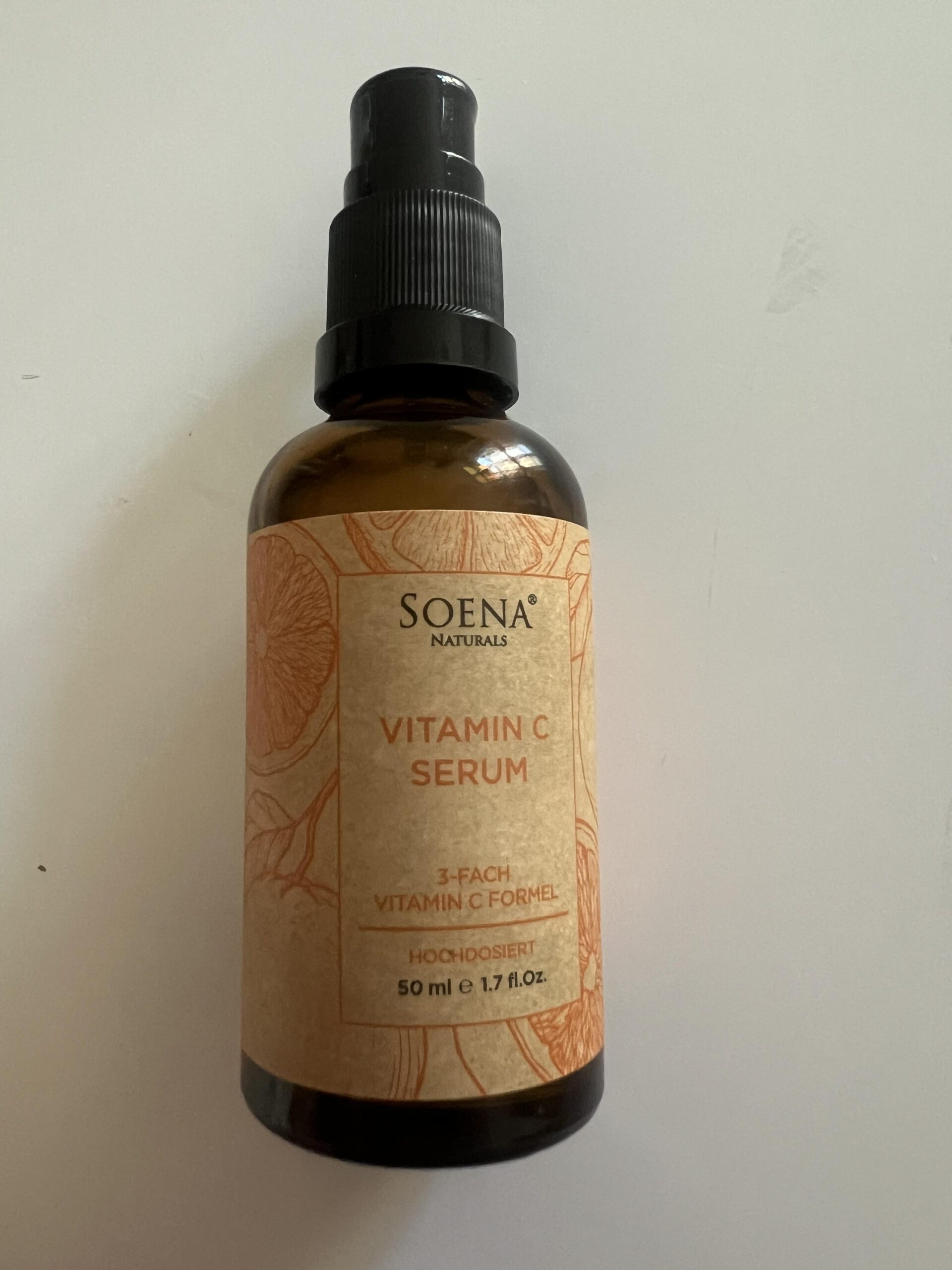
My Soena Naturals Vitamin C Serum review after buying two 50 ml bottles: 4.5/5 for its everyday skincare performance. I bought my first on May 12, 2026 for €15.28 and a second on July 4, 2026 for €17.99, both with my own money and no discount, gift, sponsorship or compensation. By October 2026, I am still using it. My favourite things are the fast absorption, comfortable moisture and smooth finish; the biggest drawback is the price. I think my skin looks a little better, but I cannot honestly say that this serum by itself reduced my wrinkles.
I chose it because my face can feel dry in the morning after washing off my retinol night cream. I wanted moisture alongside an antioxidant serum in a broader skincare routine, not a miracle replacement for sunscreen or retinol. I usually use about three pumps, sometimes three to four, on my face. It spreads easily, feels pleasantly hydrating and never caused me noticeable redness, stinging or irritation during my use.
Affiliate disclosure: This article contains a paid Amazon link. As an Amazon Associate I earn from qualifying purchases, at no additional cost to you. I bought both bottles myself, without discounts, sponsorship, gifted products or compensation. My 4.5/5 rating is my transparent editorial assessment, not an Amazon customer rating. See my full affiliate disclosure.
My use: Since May 2026 · ~3 pumps to face · one nearly full bottle remains
I paid: €15.28 + €17.99 = €33.27 for two 50 ml bottles
Paid link · verify the 50 ml Soena Naturals bottle / ASIN B0FNRT8LDS when buying
Soena Naturals Vitamin C Serum 50 ml — my 4.5/5 verdict
Quick verdict: A very pleasant, fast-spreading vitamin C serum that makes my morning skin feel less dry, with a slightly dewy rather than greasy finish. I would buy it again. The anti-wrinkle benefit is much harder to separate from the rest of my routine.
Best for: someone wanting an easy-to-layer, comfortably hydrating serum, three vitamin C derivatives and a lightweight feel.
Skip if: you want a low-cost basic moisturizer, require independently proven wrinkle reduction from this exact bottle, or expect SPF protection from your serum.
Repurchase: Yes, based on my experience; I would still compare prices before ordering.
What I liked
- My face feels softer, more comfortable and moisturized
- Easy to distribute with a pleasant, quick-absorbing consistency
- Light, slightly dewy finish without feeling excessively oily
- No noticeable stinging, redness or irritation in my use
- Convenient pump and an attractive, practical amber-glass bottle
- A second purchase reflects my real willingness to keep using it
What I would change
- The €17.99 repurchase price feels relatively high for 50 ml
- A faint shine remains: not perfectly matte
- I cannot attribute subtle wrinkle or pigmentation changes to the serum alone
- No SPF: sunscreen remains a separate required step
- Manufacturer does not publish the percentages of the three vitamin C forms on the label I photographed
Bottom line — 4.5/5 for my real-world routine. As a comfortable morning serum, it performs very well for me. My score rewards feel, hydration and usability, not proof that this specific formula prevents skin aging. The higher second-bottle price is its most meaningful weakness.
What exactly did I buy?
| Specification | Verified detail | Why it matters |
|---|---|---|
| Exact item | Soena Naturals Bio Vitamin-C Serum, 50 ml / 1.7 fl oz | Match the product and bottle size, not another brand’s vitamin C serum |
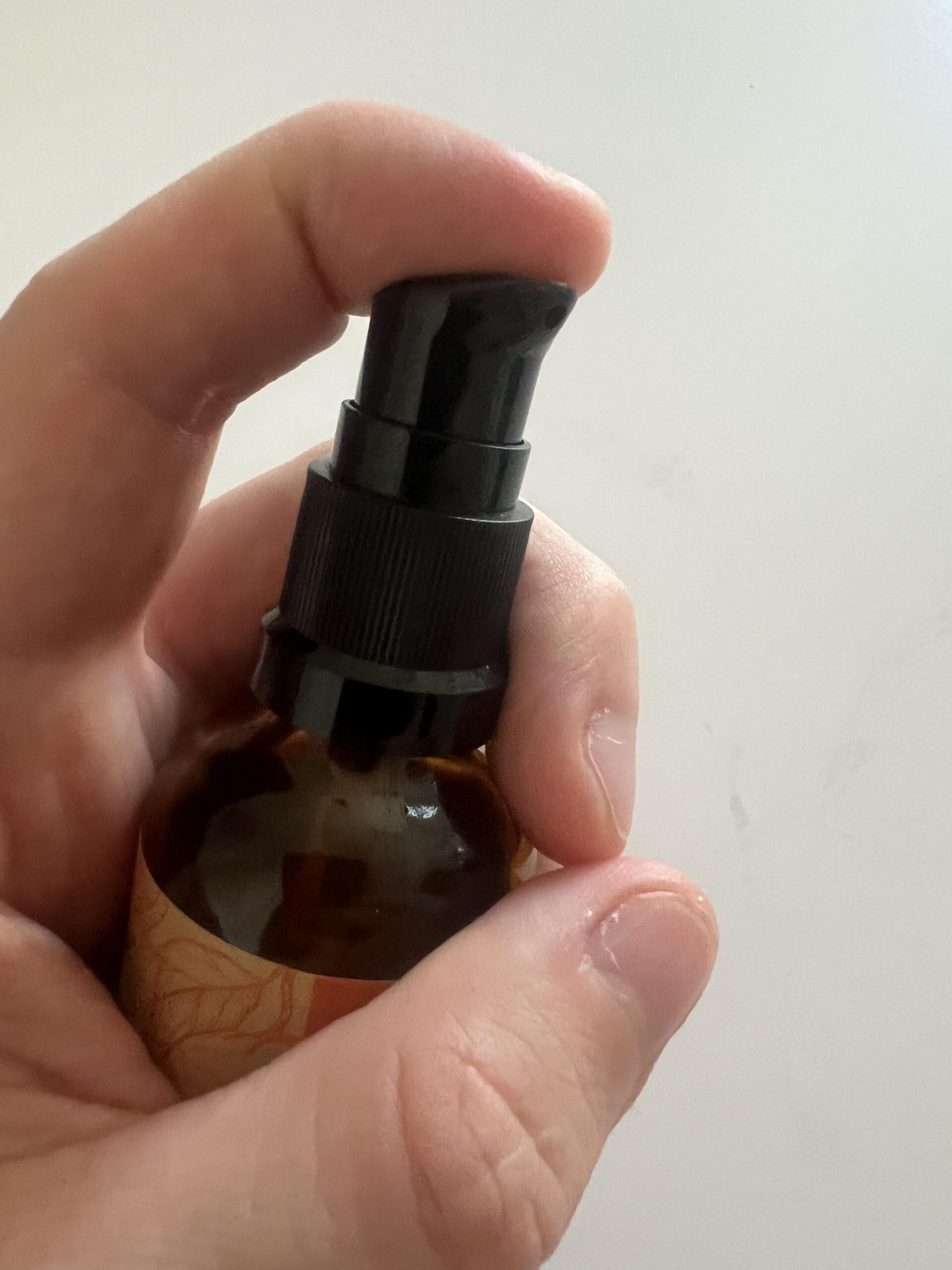
| Packaging | Amber glass bottle with a black pump, as shown in my original photos | Easy controlled dispensing; dark glass can limit light exposure |
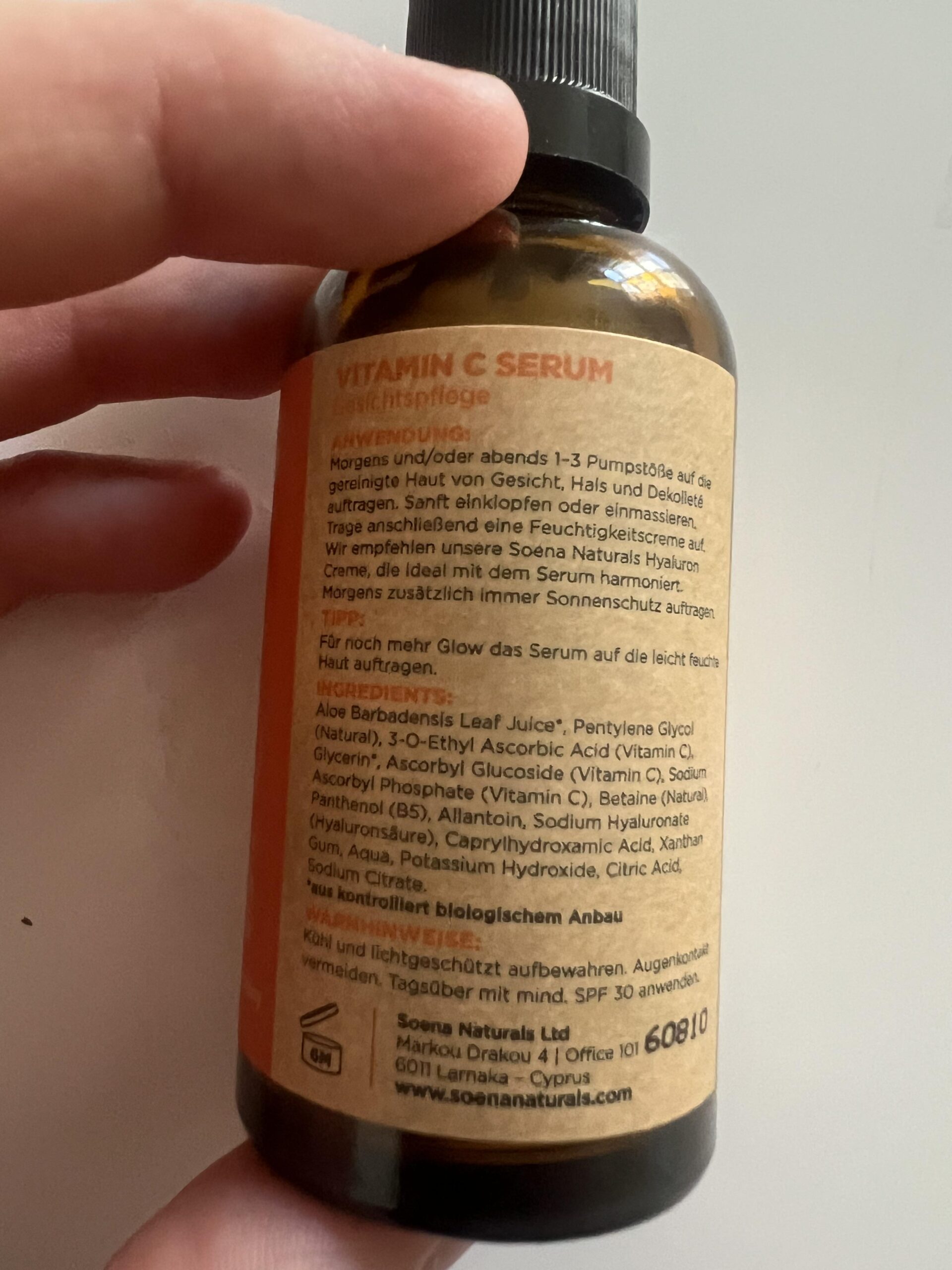
| Three vitamin C forms | 3-O-Ethyl Ascorbic Acid, Ascorbyl Glucoside, Sodium Ascorbyl Phosphate | Distinct derivative chemistry, but not proof of superior results |
| Supporting ingredients | Aloe vera leaf juice, glycerin, pentylene glycol, betaine, panthenol, allantoin, sodium hyaluronate | Several humectant/comfort ingredients support its moisturizing role |
| Vitamin C percentages | Not disclosed on my photographed bottle or the checked official ingredient page | “High dose” cannot be translated into a verified concentration |
| Sun protection | No SPF | Apply a separate broad-spectrum sunscreen as appropriate |
| Market identifier | Amazon.de ASIN B0FNRT8LDS (50 ml listing) | Check the exact seller, bottle and formula before buying |
The manufacturer’s ingredient list and use instructions agree with the ingredients printed on my own bottle. The manufacturer markets the formula as organic/natural and vegan. I can verify the printed ingredient list and what the bottle claims; I have not independently certified the entire supply chain or percentages. These are derivatives of vitamin C, not three bottles’ worth of pure L-ascorbic acid.
My morning routine: why I wanted this serum
My motivation was twofold. I wanted to care for skin that feels dry after my morning face wash, and I wanted a sensible supporting product in a longer-term anti-aging routine. At night I use a retinol cream. In the morning I wash my face, use roughly three pumps of the Soena serum, and sometimes finish with a separate SPF 50 moisturizing face cream, particularly in summer. The sunscreen is not an interchangeable alternative: it provides UV protection the serum does not.
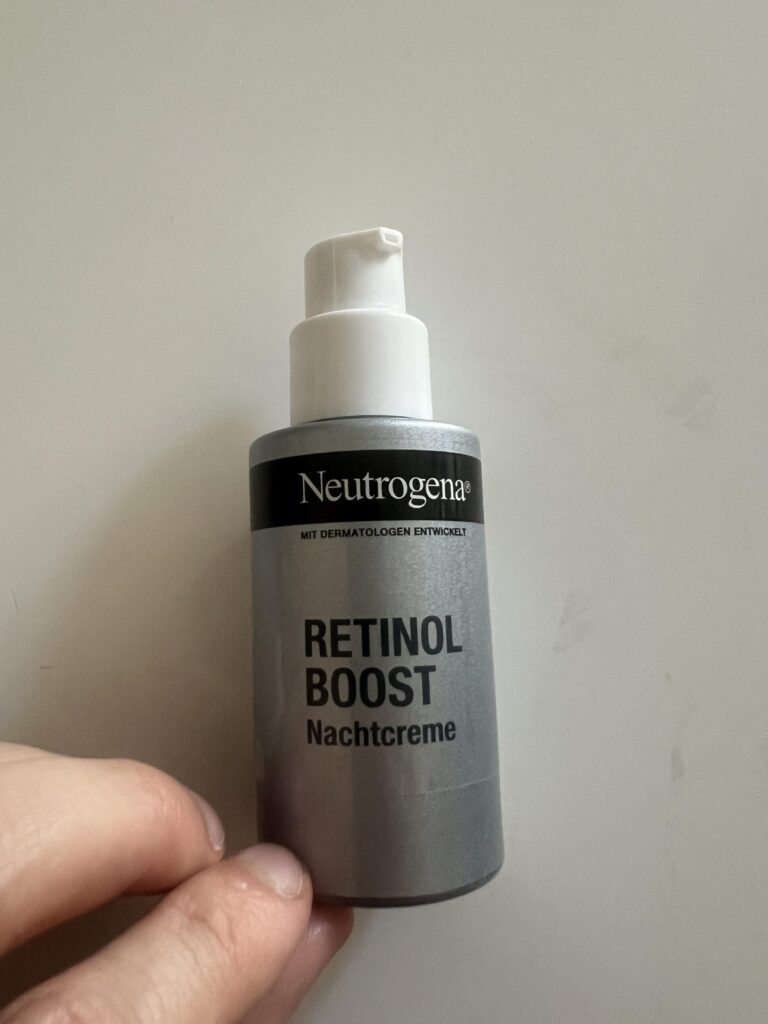
The retinol cream is another active part of my routine. That matters when interpreting results. If my fine lines or tone have subtly improved, I cannot separate effects from retinol, hydration, sun protection, season or other changes. For my first-hand experience with the nighttime step, see my Neutrogena Retinol Boost Night Cream review. The American Academy of Dermatology also describes using vitamin C in the morning before sunscreen and discusses retinoids as a different skincare tool.
Absorption and skin feel: the strongest result I can report
Within my morning routine, the most reliable positive is how comfortable my skin feels afterwards. I describe the texture as pleasant and easy to spread, and I notice that it absorbs relatively quickly. Unlike some creams that have felt heavy or too oily to me, Soena stays close to the balance I want: my face feels moisturized, a little dewy, but not soaking wet or greasy.
The pump is convenient. Approximately three pushes are enough for the way I apply it, and I can spread the serum around without hassle. I have not weighed the product per pump or timed absorption with a stopwatch.
Did it make my wrinkles or dark spots better?
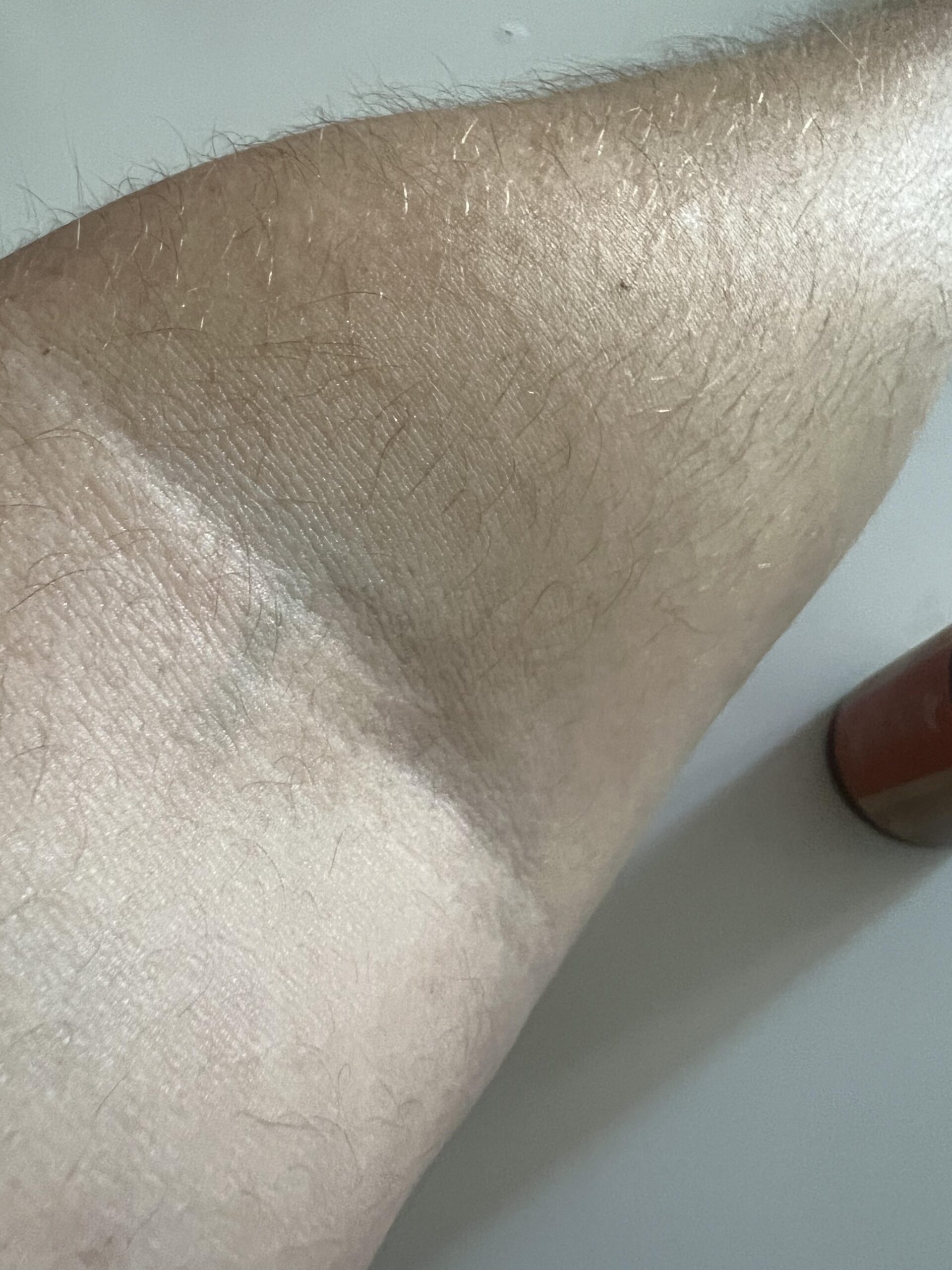
Perhaps a little, in my subjective impression—but this is the least certain part of my review. I think my skin’s glow, surface texture, fine lines and pigmentation look slightly better now. The change is modest, and I have no standardized before-and-after facial photographs, instrument readings, or period of using only this serum. I will not represent my arm photos as clinical evidence of reduced facial wrinkles.
What does the broader evidence say? A 2023 systematic review of seven publications (139 participants) found signals that topical vitamin C could improve visible photoaging and pigmentation, while emphasizing the limited number of studies and uncertainty around optimal concentrations. Another 2023 review focused on wrinkles noted that many trials combined vitamin C with other ingredients, which makes attribution difficult. These studies are about vitamin C formulations generally, not trials of this Soena Naturals product.
Soena lists three vitamin C derivatives, but ingredient names alone do not establish delivered skin concentrations, formulation stability over time, or a guaranteed result. I can say it feels good and that I have a favorable impression of my skin’s appearance. I cannot say it has clinically prevented wrinkles.
How the ingredients translate to everyday use
| Ingredient group | Why it is included | What I can legitimately conclude |
|---|---|---|
| 3-O-Ethyl Ascorbic Acid, Ascorbyl Glucoside, Sodium Ascorbyl Phosphate | Vitamin C derivatives used in brightening and antioxidant skincare | The types are verified; concentrations and clinical superiority of this blend are not |
| Glycerin, betaine, pentylene glycol, sodium hyaluronate | Humectant-type ingredients that help formulate a hydrated feel | Consistent with the comfortable moisture I subjectively experience |
| Panthenol, allantoin, aloe vera | Common supportive skincare ingredients | Cannot isolate which ingredient made my skin feel comfortable |
| Amber bottle with pump | Convenient dispensing, reduced light exposure compared with clear glass | The bottle is dark and dispensing works well; I did not test shelf-life chemically |
Does it irritate my face or smell strongly?
In my own use I have experienced no visible redness, stinging or irritation. I also like the way the product smells. The brand markets it as free of added fragrance; that does not mean a finished ingredient mixture is literally odorless to everyone. My pleasant scent impression should not be interpreted as proof that a fragrance additive is present.
I have not patch-tested this on a panel of sensitive-skin volunteers. Anyone with highly reactive skin should check the full ingredient list and test carefully, because tolerability differs. Eye contact should be avoided. If irritation develops, stop using the product and seek professional advice where necessary.
Two purchases: is it worth the money?
My first 50 ml bottle cost €15.28 on May 12, 2026; my second cost €17.99 on July 4, 2026. Together I spent €33.27 on 100 ml. That is an average of €16.64 per 50 ml bottle, or about €0.33 per ml across my two historical purchases, without delivery charges or exchange-rate conversion added. These are my real historical prices, not a claim about today’s Amazon price.
I still have approximately one nearly full bottle, so I am not able to give an honest, precise cost per day or bottles-per-year estimate. I do like how little fuss the product requires, and I am satisfied enough to say I would buy it again. Still, the higher €17.99 purchase made me more price-conscious. A basic moisturizer may be cheaper if you only need moisture, while a separate SPF product is indispensable if you also want sun protection.
How it fits alongside retinol and SPF
| Step | Main job | My practical conclusion |
|---|---|---|
| Soena Vitamin C Serum | Hydrating serum plus vitamin C derivatives | Comfortable morning layer in my routine; no SPF and no proven personal wrinkle reduction |
| Neutrogena Retinol Boost Night Cream | Retinol-based nighttime skincare | Separately used by me, so I cannot isolate appearance changes to this serum |
| Broad-spectrum SPF 30+ sunscreen (my face product is SPF 50) | UV protection | Different purpose; add it after other skincare in the morning, and reapply as needed outdoors |
| Plain moisturizer | Moisture and skin comfort | Worth considering if hydrating effect matters more to you than adding vitamin C |
This is a comparison of roles in a skincare routine, not a controlled head-to-head test of specific competing vitamin C serums. For example, if your primary goal is lower-cost hydration, comparing a simple moisturizing cream may make more sense than paying for vitamin C derivatives. The American Academy of Dermatology particularly emphasizes sunscreen and moisturizer as foundational anti-aging purchases.
My 4.5/5 rating: how I calculated it
This is a weighted editorial rating based on my own purchase and use, not a laboratory performance score, manufacturer claim, or average of Amazon reviews. I chose factors that mattered in my real use, with the biggest weight on hydration and comfort. I did not assign a separate wrinkle-reduction efficacy score, because other treatments make that impossible to judge fairly.
| Criterion | Weight | My score | What supports it |
|---|---|---|---|
| Hydration and skin comfort | 30% | 4.8/5 | My dry morning face consistently feels softer and more comfortable |
| Absorption and finish | 20% | 4.7/5 | Spreads quickly, a little sheen but not unpleasantly oily |
| Perceived cosmetic appearance | 15% | 4.0/5 | I notice only subtle subjective improvements; attribution remains uncertain |
| Dispenser and ease of use | 15% | 4.7/5 | Reliable pump, typically three pushes, easy morning step |
| Personal tolerability | 10% | 4.9/5 | No noticeable redness, stinging or irritation in my own use |
| Value at my paid prices | 10% | 3.6/5 | I would repurchase, but €17.99 for 50 ml is my biggest objection |
Calculation: (4.8 × 0.30) + (4.7 × 0.20) + (4.0 × 0.15) + (4.7 × 0.15) + (4.9 × 0.10) + (3.6 × 0.10) = 4.535/5, rounded to 4.5/5. These values are transparent subjective judgments of my experience—not instrument readings. A future change in formulation, irritation, or more extensive use could change my score.
Who should buy it, and who should skip it?
Buy or shortlist it if you enjoy a lightweight yet moisturizing serum in the morning, value a good pump and are comfortable paying around my historical price range. My positive experience also makes it a reasonable candidate to try alongside a thoughtfully chosen nighttime retinol and proper daily sun protection.
Skip or compare alternatives first if you want the most inexpensive moisture possible, demand an objectively demonstrated improvement in wrinkles from this exact product, need a matte finish, or want one all-in-one product that includes SPF. This is not a sunscreen and is not a substitute for a tailored treatment plan for pigmentation or other skin conditions.
Frequently asked questions
Does Soena Naturals Vitamin C Serum work for wrinkles?
I have a mild impression that my fine lines look better, but I cannot attribute that change to this serum alone because I also use retinol and SPF. Research on some topical vitamin C formulas is promising, but I found no controlled clinical trial establishing wrinkle results for this exact Soena bottle.
Is Soena’s 50 ml vitamin C serum good for dry skin?
For my own dry morning skin, yes: it feels nicely hydrating and comfortable. It contains several moisture-related ingredients. My experience is subjective and other skin types may respond differently.
Can it replace a moisturizer or sunscreen?
It gives me enough immediate comfort on some mornings, but it has no SPF and cannot replace broad-spectrum sunscreen. The manufacturer recommends applying a moisturizing cream afterwards if desired.
Is it oily or sticky?
On my face it feels lightly dewy, sometimes a touch oily, but not unpleasantly greasy. It spreads and absorbs quickly by my personal impression. The arm photographs illustrate appearance, not a timed absorption test.
How many pumps should I use?
I typically use about three pumps and occasionally four. The manufacturer recommends one to three pumps for face, neck and décolletage; adapt application to your needs rather than treating my habit as a tested optimum.
Sources and methodology
I bought and used the exact photographed 50 ml product myself. Purchases, routine, texture, comfort and my score come from my own firsthand experience. Ingredient identities and manufacturer instructions come from the Soena Naturals official product page and the label photo above. For independent context rather than product-specific proof, see Correia & Magina’s 2023 review of topical vitamin C and photoaging, Sanabria et al.’s 2023 review of wrinkle studies, and the American Academy of Dermatology’s skincare advice. No standardized facial photographs, blinded tests, ingredient potency assays, or instrument-measured outcomes were performed for this article.