Mixa Urea Cica Repair+ Review: My First Week vs CeraVe
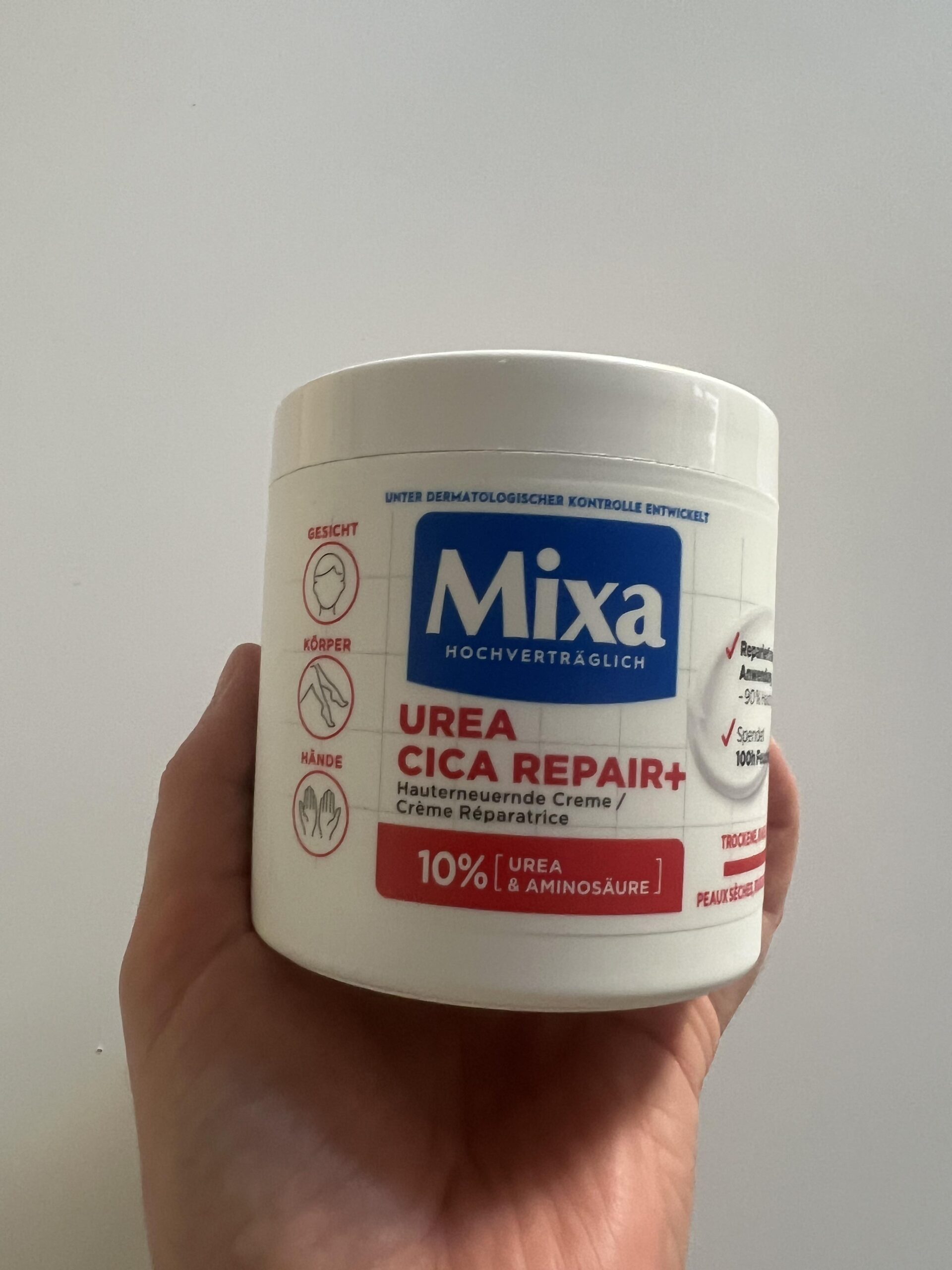
Mixa Urea Cica Repair+ 10% Urea (400 ml)
Quick verdict: Very good value and immediate moisturising comfort, but I strongly dislike the fragrance. It is too early to assess its effect on my red bumps.
Best for: Budget-conscious shoppers seeking a rich body moisturiser who do not mind a noticeable fragrance.
Less suitable for: People sensitive to strong scents, those wanting an entirely dry finish before bed, or anyone expecting proven red-bump treatment.
- Excellent €6.34 purchase price for 400 ml
- Cream spreads easily and feels comfortable immediately
- My skin feels less dry and itchy
- Slightly quicker absorption than CeraVe in my experience
- I strongly dislike the scent
- Skin feels slightly damp before bed
- No pump, although the open jar is easy to access
- Only a week of testing; red-bump effect unknown
Provisional rating: 4.0/5 after roughly one week of use. I bought Mixa Urea Cica Repair+ 10% Urea, 400 ml, for €6.34 on May 1, 2026, without any discount, sponsorship or compensation. I did not begin using it until October 2026, after finishing CeraVe. This is an early first-hand review, not a long-term test.
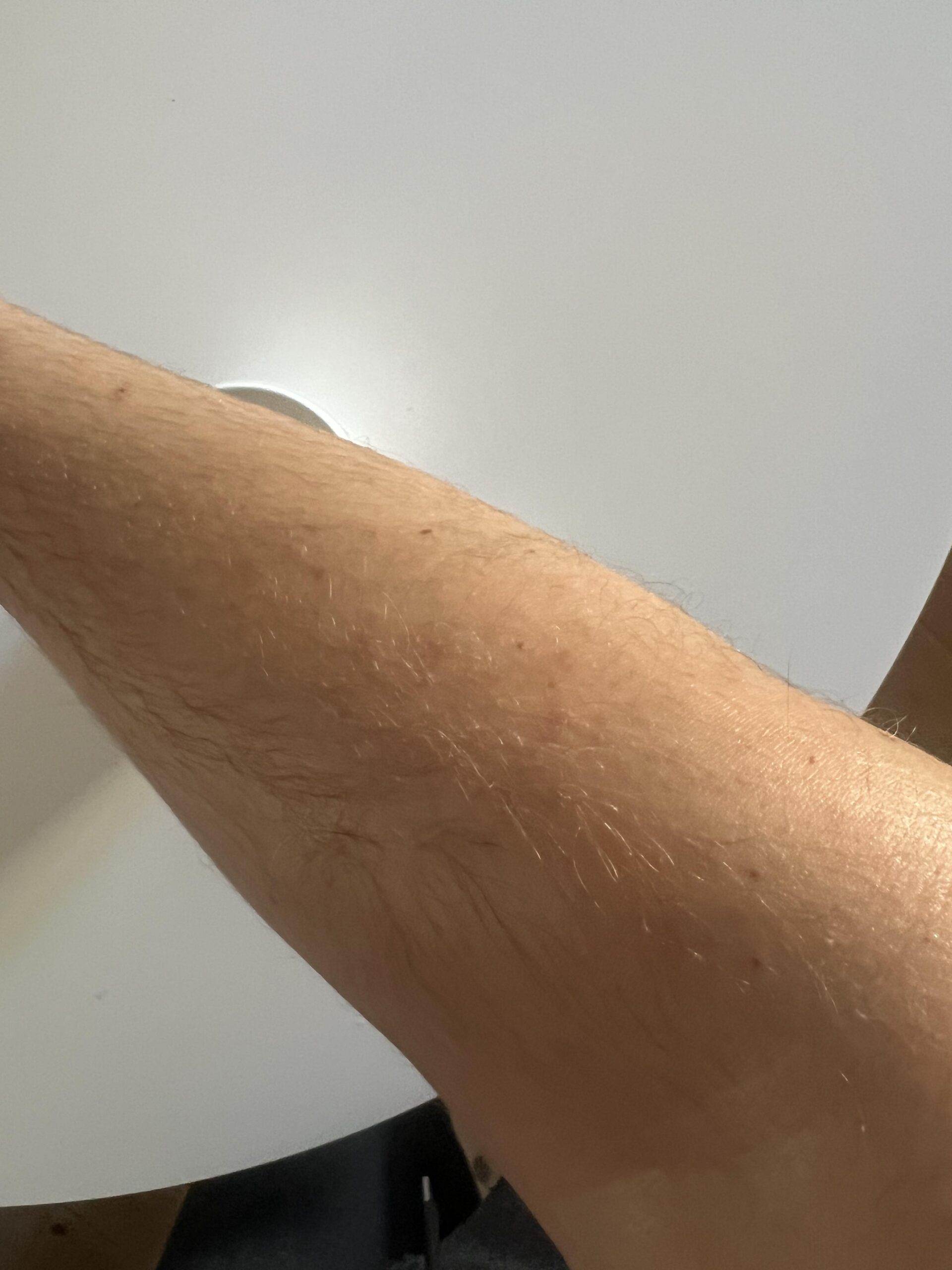
I now aim to apply it after every shower, mainly to my arms and elbows and sometimes to my chest or back. My skin feels less dry and itchy almost immediately. The cream is rich, easy to spread and may absorb marginally faster than CeraVe, but it still leaves a slightly damp feeling when I go straight to bed.
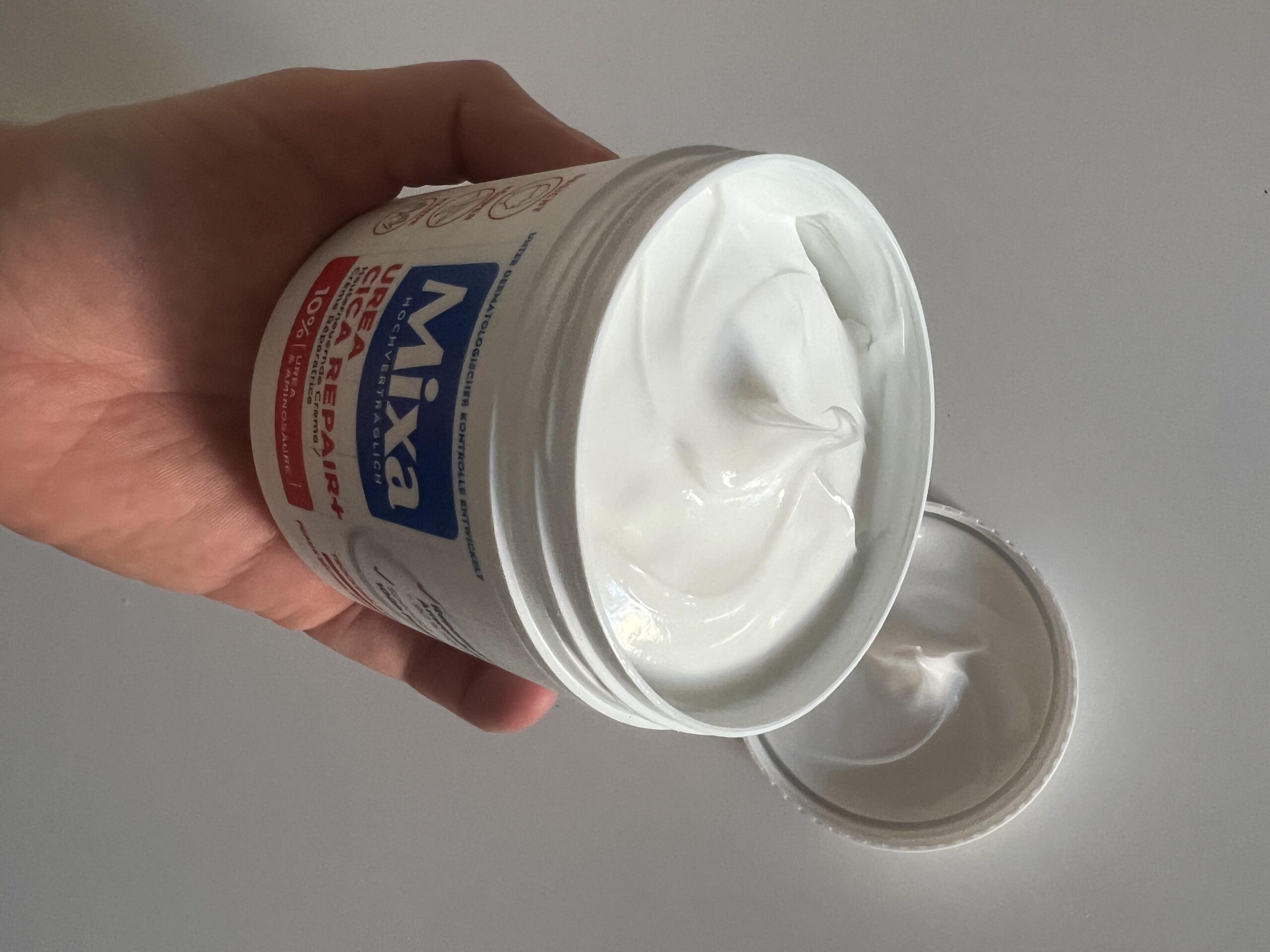
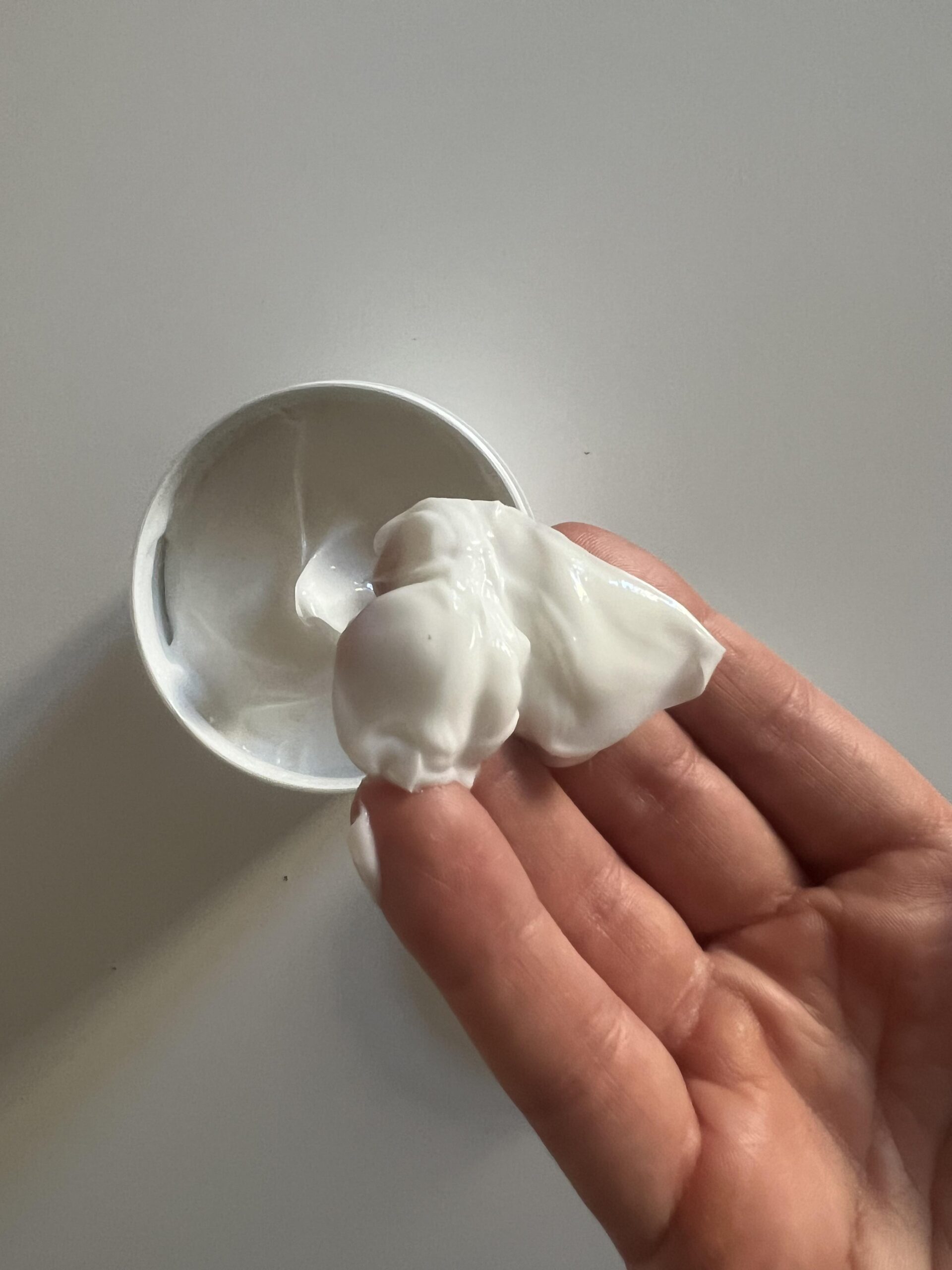
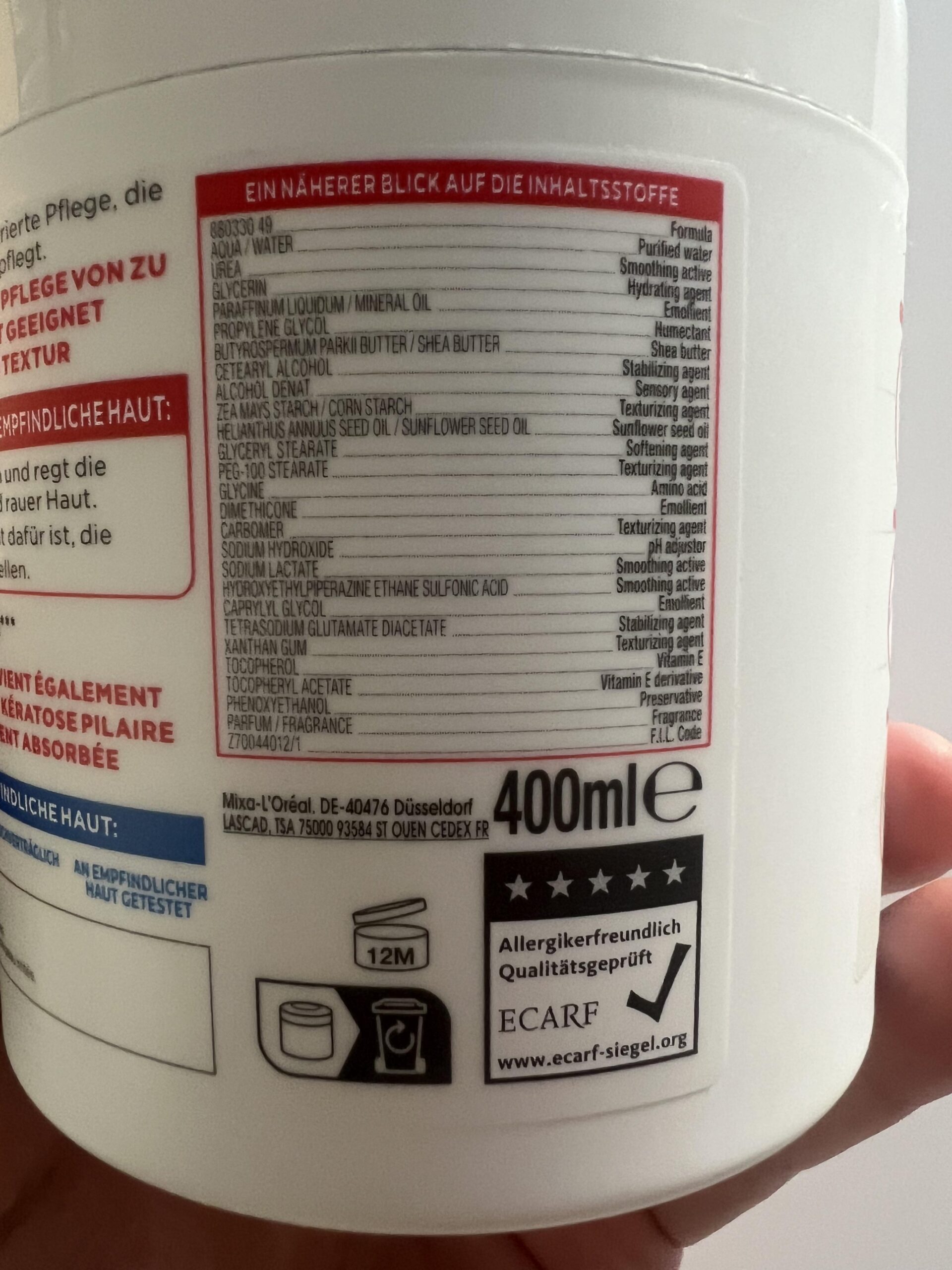
My biggest complaint is the smell. I strongly dislike it and prefer CeraVe’s milder scent. My Mixa ingredient label lists fragrance. I have not noticed irritation or other unwanted reactions so far.
Red bumps: I bought the cream hoping to improve the red bumps on my arms, but after only about a week I cannot judge the result. The jar’s keratosis-pilaris-related marketing is not proof of a diagnosis or an effect on my skin.
Value: I paid €1.59 per 100 ml for Mixa versus €3.96 per 100 g for CeraVe. The units differ, so this is not a precise like-for-like unit comparison, but Mixa’s lower purchase price is a major advantage. The open jar is easy to use, although I slightly prefer CeraVe’s pump for convenience.
What is actually on the label?
My jar is labelled Mixa Urea Cica Repair+ 10% Urea, 400 ml. The ingredient photo lists urea, glycerin, shea butter and Parfum/Fragrance. The packaging also refers to skin prone to keratosis pilaris, but I cannot confirm that my red bumps are this condition. These label details are not a substitute for medical advice.
My one-week test: what is still unknown?
I have not measured hydration, timed absorption, emptied the jar or tracked the bumps with standardised before-and-after photographs. I have not tested long-term tolerance or whether regular use over several weeks changes my skin. The 4.0/5 score covers early comfort, price, texture, scent and packaging only; I will revisit it when I have better evidence.
My provisional weighted score: price 5.0/5 (30%), comfort 4.3/5 (30%), texture 4.0/5 (15%), scent 1.5/5 (15%), jar 3.5/5 (10%). Weighted result 3.965, rounded to 4.0/5. I have not scored red-bump results because they are unknown.
I would not commit to buying Mixa again yet, partly because of its smell. But if choosing only between Mixa and CeraVe today, I lean toward Mixa for the price. I will keep testing.
Frequently asked questions
Is Mixa Urea Cica Repair+ better than CeraVe?
It is better value at my purchase prices, and may absorb a little faster, but I prefer CeraVe’s smell. I have only used Mixa for about a week versus nearly 11 months of intermittent CeraVe use.
Does Mixa Urea Cica Repair+ smell strong?
I strongly dislike its scent. My jar’s ingredients include Parfum/Fragrance. Scent preference varies by person.
Does 10% urea cream help red bumps?
I cannot tell from my first week. The label mentions keratosis-pilaris-prone skin, but I do not know the diagnosis behind my own bumps and cannot claim a treatment result.
Does Mixa feel greasy or wet?
It leaves a slightly damp feeling on my arms when I go straight to bed after applying it, much like CeraVe.
Affiliate disclosure: I paid for the product myself and received no compensation. As an Amazon Associate I earn from qualifying purchases. Full disclosure.
Check Mixa on Amazon Germany (affiliate link). Verify the exact 400 ml 10% urea variant and current price; the shortlink’s final destination has not been independently checked. Read my CeraVe review.