NIVEA SUN UV Face Q10 SPF 50 Review: My Summer Use
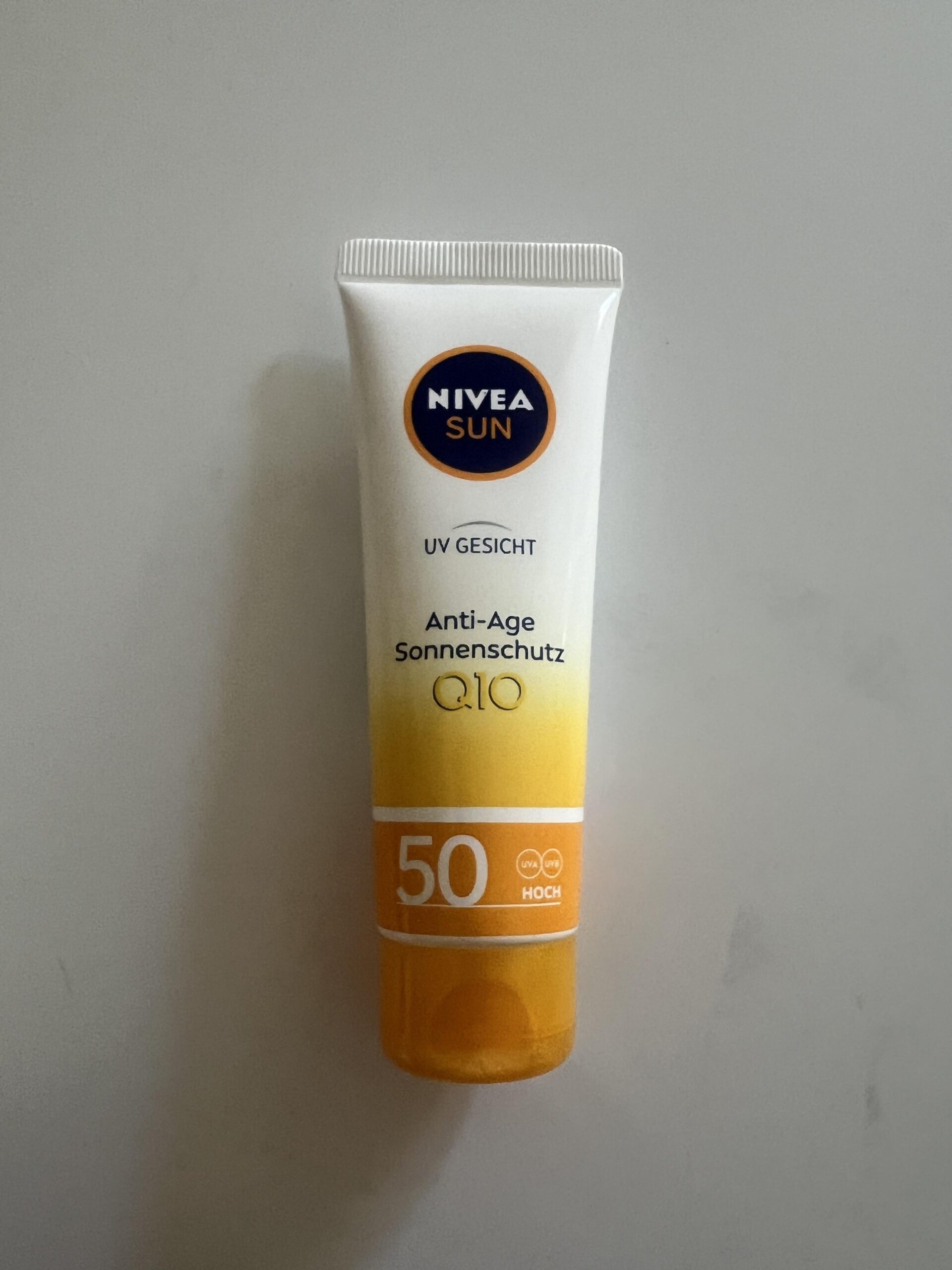
My NIVEA SUN UV Face Q10 Anti-Age SPF 50 (50 ml) review after a summer of use: 4.8/5. This comfortable, moisturising facial sunscreen became my go-to morning cream, and I plan to buy it again. I purchased four 50 ml tubes between 26 May and 20 August 2026, spending €41.74 in total. I chose it because I wanted higher labelled sun protection than my previous SPF 30 face cream and liked the combination of SPF 50, Q10 and a moisturising daily face cream at what felt like a good price.
During summer 2026 I used it daily in the morning after my vitamin C serum, starting after I finished my previous SPF 30 product, approximately a month and a half after the first purchase. Now that it is autumn, I apply it more sporadically. I like the texture: it does not feel particularly greasy or sticky to me, it absorbs quickly, leaves essentially no noticeable white residue and makes my facial skin feel soft and moisturised. The smell is fairly neutral, and I have not noticed spots, irritation or other problems.
About the anti-age claim: I think a few fine lines may look a little better, but I already had relatively few wrinkles and cannot confidently attribute a change to this cream. What I can independently describe is the feel, ease of use, price and how it fitted into my routine. The SPF 50 and UVA/UVB protection are manufacturer-tested product claims, not results of my own UV testing. Daily sunscreen use is supported for preventing further photoaging, but my observations do not prove this particular formula reversed existing wrinkles.
Affiliate disclosure: This first-hand review includes a paid Amazon shopping link supplied by the site owner. JonTests may earn a commission from qualifying purchases, without additional cost to you. I bought the product myself. My approved 4.8/5 rating is a transparent, weighted personal editorial assessment—not an Amazon customer average or laboratory-measured SPF/anti-wrinkle result. No brand supplied my experience or score. See my affiliate disclosure. The exact destination of the shortened Amazon link was not independently verified, so check the 50 ml SPF 50 variant before buying.
I paid: €41.74 for four 50 ml tubes · €10.44 per tube on average
My use: Daily during summer 2026, sporadic in autumn
Check current price on Amazon →Paid shopping link · check 50 ml SPF 50, not the newer 40 ml SPF 50+ variant. The shortened link’s redirect was not independently inspected.
My verdict: 4.8/5 — a face cream I would buy again
Why I bought it: I wanted an SPF 50 daily face cream to replace a previous SPF 30 moisturiser during the higher-UV summer months, with an anti-age formula and good price for the combination.
What impressed me: It feels comfortable, non-sticky and not particularly greasy, absorbs quickly, leaves hardly any white cast on my skin and makes my face feel softer and more moisturised.
What I cannot verify: Any measured reversal of wrinkles, exact UVA/UVB protection achieved on my skin, resistance during swimming or sweating, or how long one tube lasts at the recommended application amount.
Would I buy it again? Yes. It became my preferred daily facial sunscreen/moisturiser, and I have already made repeated purchases.
What I liked
- SPF 50 labelled facial protection in a moisturising Q10 formula
- Comfortable feel; not especially greasy or sticky for me
- Absorbs quickly, with essentially no noticeable white residue in my use
- Leaves my face feeling soft and moisturised
- Neutral, unobtrusive scent and no breakouts or irritation noticed
- Good perceived value: four purchases and a willingness to repurchase
What I would keep in mind
- Any improvement in my few fine lines is uncertain; I did not run a controlled test
- My occasional autumn use is less consistent than my preferred summer routine
- I avoid putting it very close to my eyes, so I cannot confirm tolerance right at the eye margin
- Daily face use does not replace correct reapplication during prolonged UV exposure
- Make sure you receive the exact 50 ml SPF 50 version, not the newer 40 ml SPF 50+ product
Why I switched from SPF 30 to NIVEA SUN UV Face Q10 SPF 50
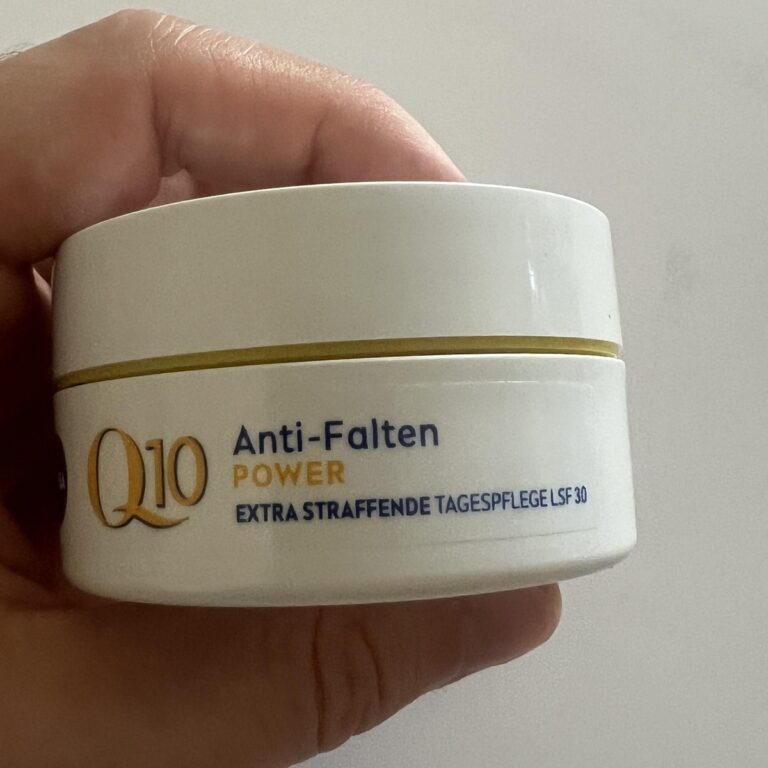
My earlier product was a facial cream labelled SPF 30. I bought this NIVEA while it was still in my skincare routine, then finished the older container before switching over. As the summer sun became stronger, I wanted an SPF 50 option for extra UV protection and, specifically, to reduce the likelihood of sun-related skin ageing.
I was also drawn to the value proposition. I wanted a single morning product combining facial sun care, moisturising comfort and Q10 anti-age positioning, rather than applying a separate everyday face cream and choosing another sunscreen by default.
My previous SPF 30 cream’s brand and purchase price are not established here, so my sense that this NIVEA offered better value for me is a personal buying decision, not an objective cost comparison with a verified competing SKU.
Exactly what I paid: four tubes for €41.74
Because I bought the same 50 ml product several times, I can give a more useful picture of my actual spending than a one-time review with a guessed current retail price.
| Purchase date | 50 ml tubes | Price per tube | Total paid |
|---|---|---|---|
| 26 May 2026 | 1 | €10.99 | €10.99 |
| 14 June 2026 | 2 | €10.95 | €21.90 |
| 20 August 2026 | 1 | €8.85 | €8.85 |
| Total / average | 4 (200 ml bought) | €10.44 average | €41.74 |
The average of €10.435 per tube rounds to €10.44 per 50 ml, roughly €20.87 per 100 ml based on the purchases above. The lowest price I actually paid was €8.85 for the August tube; this should not be mistaken for a live retailer price or promotional promise.
Important limitation: Four tubes purchased does not mean I have already finished four tubes. I have not recorded the remaining amounts, exact daily dosage or cost per completed application.
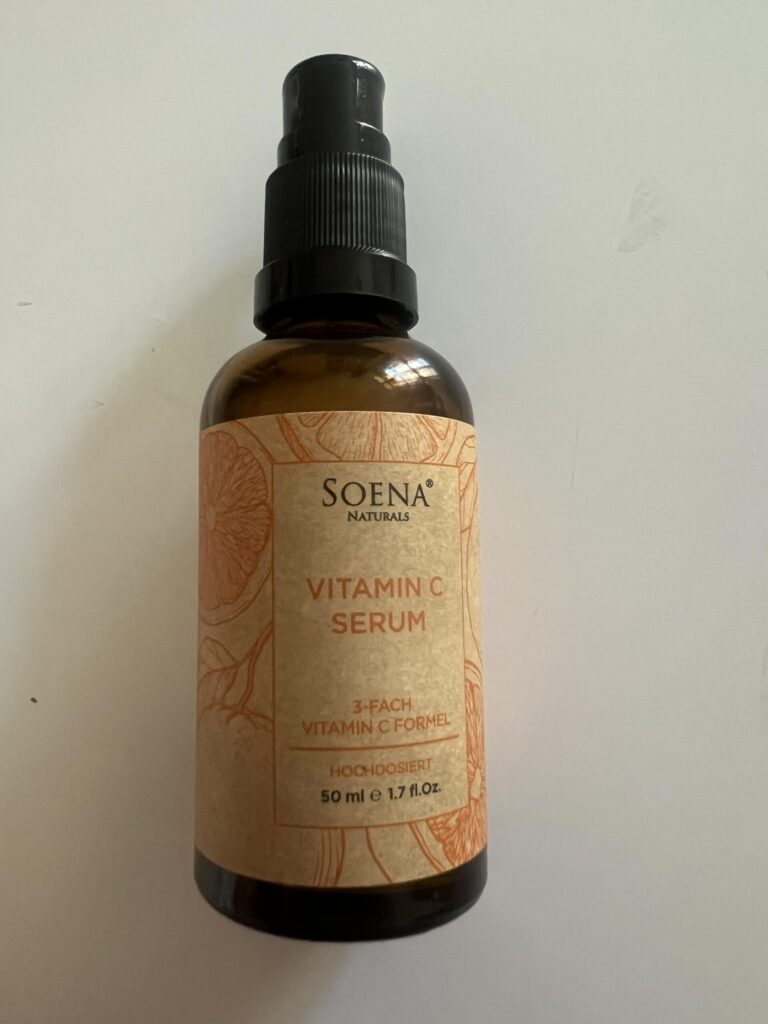
My routine: vitamin C serum, then NIVEA Q10 SPF 50
In summer 2026 I typically used this as my go-to morning face cream after vitamin C serum. I started using it around a month and a half after buying the first tube, once my previous SPF 30 cream was finished, so the changeover was roughly in July rather than immediately on the May purchase date.
For ordinary morning use, I liked that the cream sat comfortably on my face. It felt soft and moisturising without the greasy or tacky experience that sometimes makes sunscreen annoying. It absorbed quickly enough that applying it felt straightforward rather than like a chore.
With autumn here, my use has become more occasional. I know that UV exposure is not only a summer issue, and I would prefer to make protection more consistent whenever I spend time outside. That is a plan, not evidence that I already maintained daily year-round use.
Using an SPF product after a cosmetic serum can be part of a sensible routine, but I have not tested ingredient compatibility, performance over multiple skincare layers or SPF protection with that exact combination. I would allow the earlier layer to settle and follow the sunscreen’s quantity and reapplication directions.
Texture and finish: does this SPF 50 feel greasy or leave a white cast?
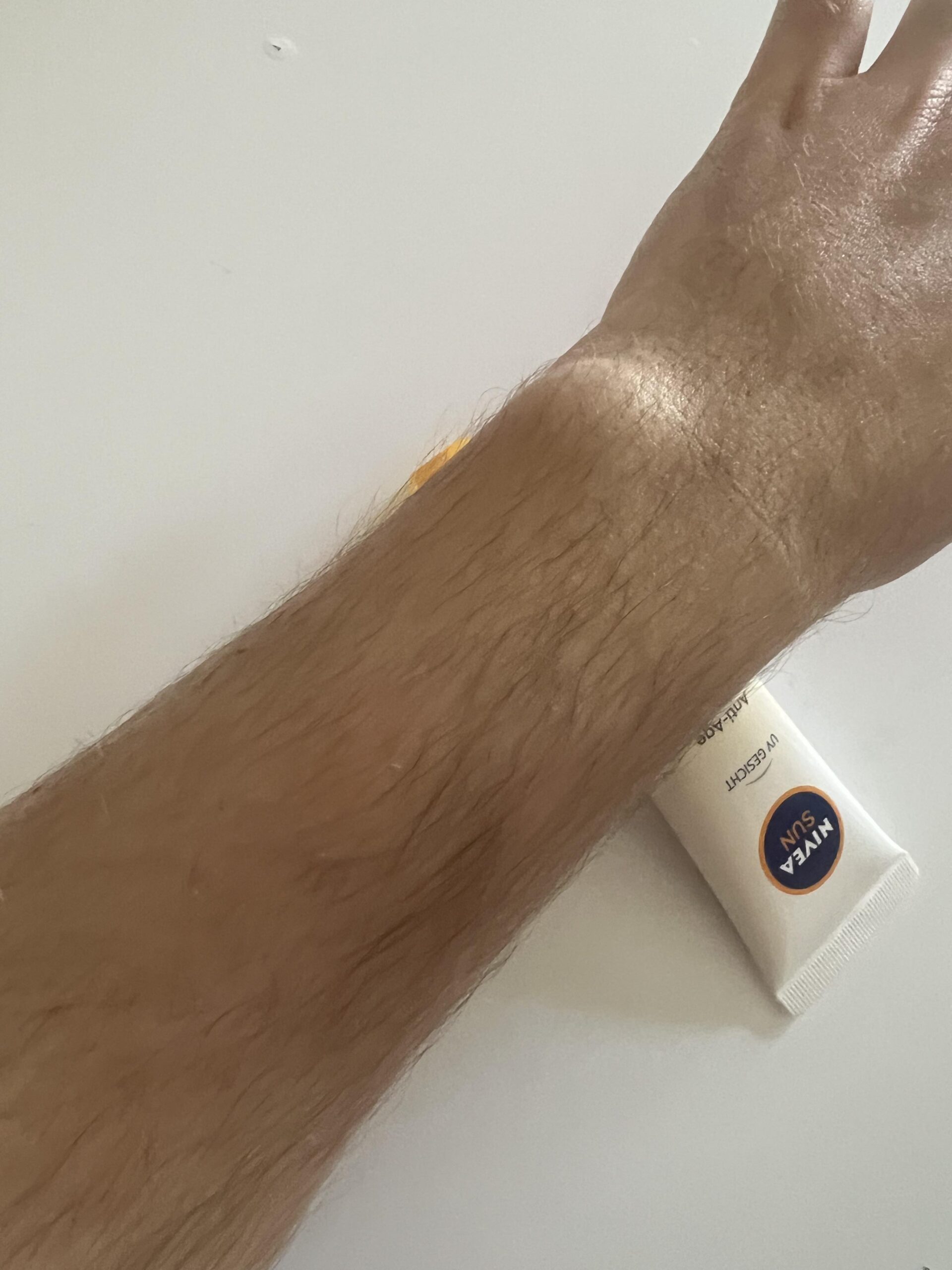
For my skin, no significant problem with either. The texture is good, comfortable and easy to distribute. I would not describe it as particularly greasy or sticky, and I barely notice any white residue once it is rubbed in.
That matters because a product intended for daily face use needs to be pleasant enough that I actually reach for it. I have repeated purchases partly because I like the way this one feels, not because I measured a lab result.
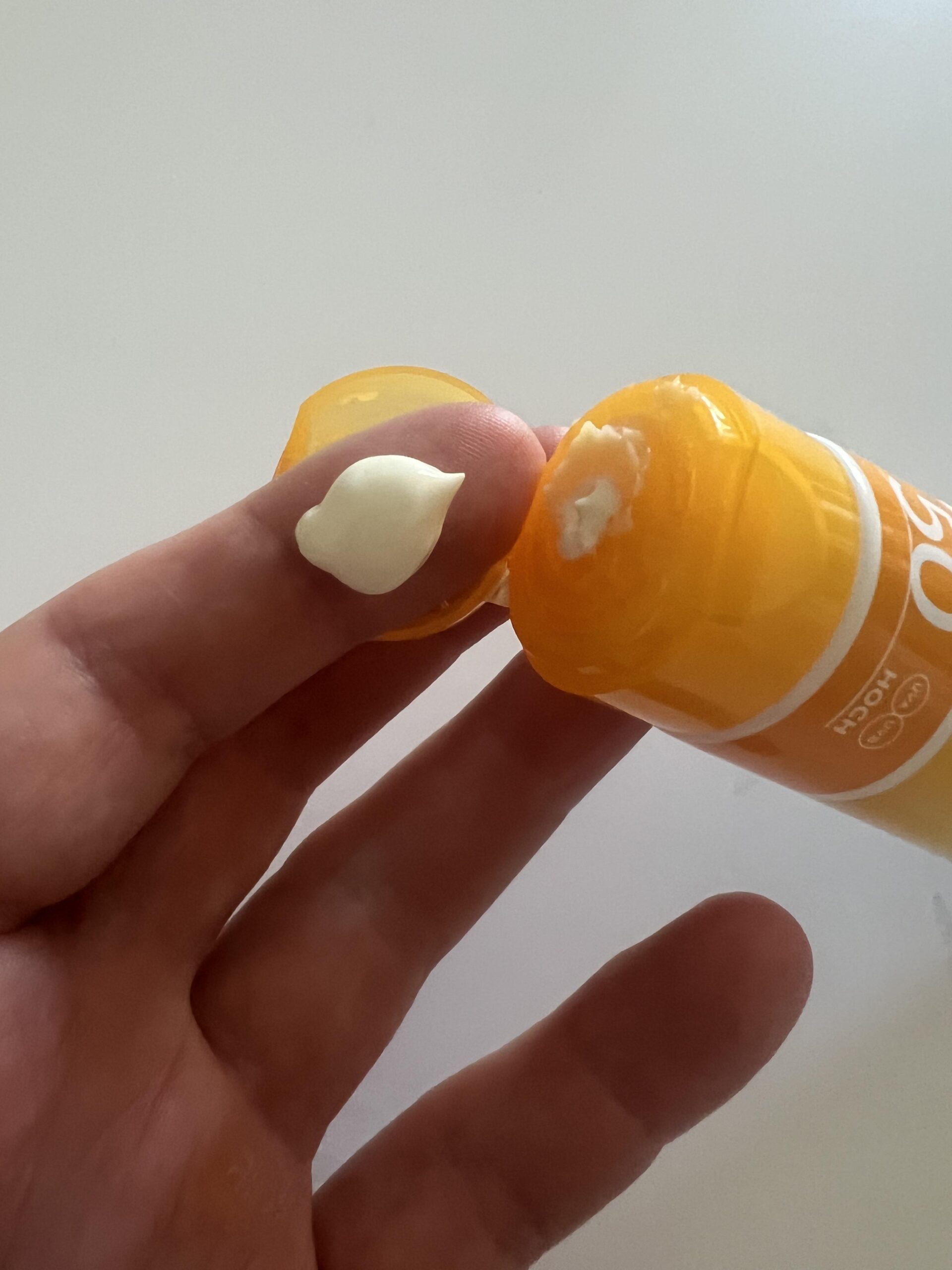
My original photos show the cream’s pale, fairly substantial texture when it first comes out of the tube. One photo shows it on a fingertip and another shows its appearance after being rubbed onto a forearm. Those are useful texture demonstrations, but forearm results do not prove the same cosmetic finish on every face or skin tone.
Scent, tolerance and applying near the eyes
The fragrance is unremarkable to me, in a good way: fairly neutral rather than a reason to avoid the product. I have not noticed irritation, an increase in spots or any other skincare problems while using it.
I also haven’t experienced eye stinging in normal use, but there is a relevant qualification: I deliberately avoid applying it too close to the eyes, particularly toward the inner corners by the nose. I therefore cannot claim it is safe to rub directly into the eyes or that it will never sting anyone else. Follow the package directions, avoid direct eye contact and discontinue use if irritation develops.
NIVEA describes the formula as suitable for facial skin and lists eye-tolerance testing for this version. Such manufacturer assessments do not override personal sensitivities or my limited firsthand observations.
Does the Q10 anti-age formula visibly improve wrinkles?
I began using the product mainly to help prevent future sun-related skin ageing through stronger labelled UV protection than my previous SPF 30 cream. I also liked the idea of a Q10-containing formula rather than sunscreen alone.
My skin feels softer and well moisturised with it. I already have relatively few fine lines, and I might have noticed some improvement in their appearance, but I’m not confident that this cream caused that change. I have no standardized before-and-after photos, blinded assessment or control product, and I also use a vitamin C serum. I would not claim this is proven personal evidence of wrinkle reversal.
NIVEA’s official SPF 50 50 ml information identifies Q10 (ubiquinone), licorice extract and vitamin E as part of its anti-age formula, and describes moisturising and anti-age benefits. Those are manufacturer ingredient and marketing claims. For the broader evidence, dermatologists at the American Academy of Dermatology emphasize daily sunscreen and moisturiser as major foundations of preventing premature visible ageing. My individual experience with one formula remains separate from those general recommendations.
Is SPF 50 really better than SPF 30?
The move to SPF 50 was one of my main reasons for buying it, and the SPF rating does represent a higher tested level of sunburn protection when the sunscreen is used correctly. But SPF numbers are not a simple linear measure of twice-as-good protection: SPF 50 does not mean nearly twice the UV defence of SPF 30, and the label alone does not guarantee the protection you get if you use too little or fail to reapply.
SPF mainly concerns protection against UV-induced sunburn; for skin ageing I also want appropriate UVA protection. The 50 ml Q10 product is advertised by NIVEA as UVA/UVB facial sunscreen. I did not personally measure either wavelength band or compare my previous SPF 30 product under controlled conditions.
In other words, this cream is a sensible kind of product for my morning face sunscreen, but my report of using it once in the morning is not proof that I had all-day protection during pickleball, long walks or beach visits.
Which NIVEA SUN Q10 version did I buy? 50 ml SPF 50 vs 40 ml SPF 50+
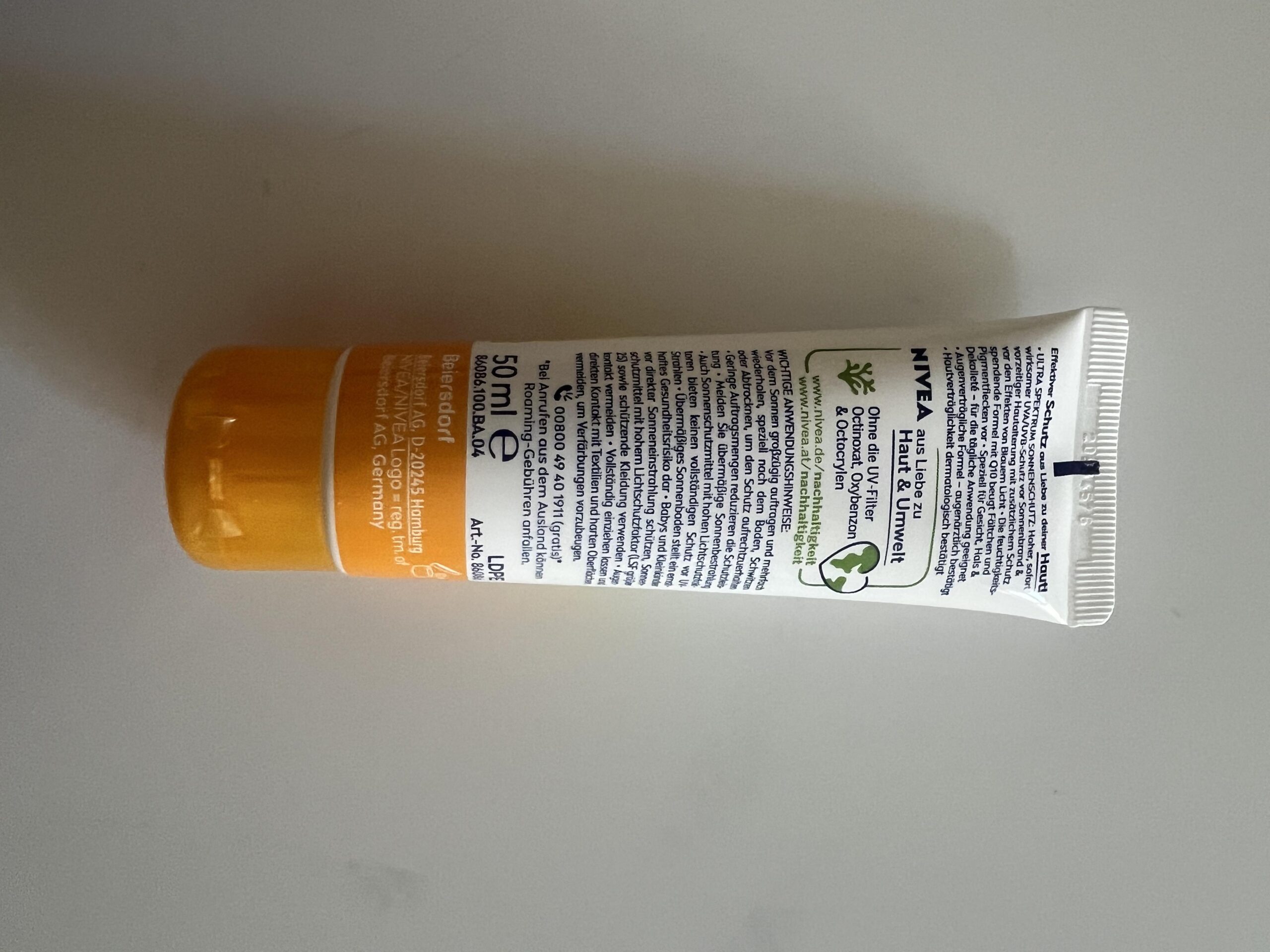
My original tube clearly shows NIVEA SUN, UV Gesicht, Anti-Age Sonnenschutz, Q10, LSF 50, 50 ml on the German label. It is a 50 ml SPF 50 tube, and I have photographed both its front and German back label.
There is now a newer, similarly named NIVEA UV Face Anti-Age Q10 SPF 50+ product sold in a 40 ml format. The updated version advertises additional ingredients and new performance claims. I have not tested that 40 ml version. Its advertised benefits, percentages and claimed short-term wrinkle results must not be transferred to the 50 ml product in this review.
| Detail | The version I personally used | What is / isn’t established |
|---|---|---|
| Product name | NIVEA SUN UV Gesicht Q10 Anti-Age Sonnenschutz | Original front-of-tube photo |
| SPF | SPF 50 (not 50+) | Front label and official 50 ml page; not independently measured by me |
| Size | 50 ml | Back-label photo |
| Purpose | Daily facial sunscreen with Q10 anti-age positioning | Manufacturer positioning; personally used as morning cream after vitamin C serum |
| Anti-age ingredients | Q10, licorice extract and vitamin E in the official product description | Manufacturer source, not ingredient laboratory testing |
| Texture | Light, moisturising, non-sticky claims | Comfortable and fast absorbing in my personal routine |
| Purchase price | €8.85–€10.99 per tube | Four recorded 2026 purchases, not live Amazon prices |
| Newer alternative | 40 ml SPF 50+ Q10 variant | Separate product/version; not tested in this review |
Would I choose it over ordinary NIVEA body sunscreen?
For my morning face routine, I prefer this dedicated face product as an everyday moisturiser and facial SPF. It is easy and comfortable to use after a serum, which is the purpose for which I bought it.
I also own a separate NIVEA SUN Protection & Care SPF 50+ body sunscreen, but that is a different product, package size and use case. I did not run a side-by-side lab comparison of the two on facial skin, so I’m not claiming the face product has measured superior UV protection or a quantitatively better finish. It simply suited my intended face routine.
Similarly, using a separate SPF lip balm is relevant because this cream is not meant to be rubbed into the lips or eyes.
My overall verdict: 4.8/5 — would I buy NIVEA SUN UV Face Q10 SPF 50 again?
Yes. My approved weighted rating is 4.8/5. Four purchases in a single summer are consistent with how satisfied I feel about it, though I did not personally finish all four tubes during the review period. My favourite aspect is the value of a moisturising, pleasant daily face cream with labelled SPF 50 and Q10 anti-age ingredients in one product.
It makes my skin feel soft, absorbs quickly and hasn’t given me meaningful irritation or a visible white cast. The slight possible improvement in my few fine lines is not established, and I value the cream primarily for sun protection, comfort and price.
I would choose it again for my morning routine and try to be more consistent with outdoor UV protection even during autumn. I would also check the pack size and SPF closely before repurchasing because current NIVEA Q10 variants have evolved.
Frequently asked questions
Can NIVEA Q10 SPF 50 replace a separate morning moisturiser?
It did for me during summer: I put it on after vitamin C serum, and my skin felt moisturised and soft. Whether it replaces a separate moisturiser depends on your skin and the quantity of sunscreen needed.
Does it leave a white cast or greasy finish?
I found it comfortable, fast absorbing and not particularly sticky or greasy, with little to no visible white residue on my skin. This is subjective and may vary across skin tones.
Did I see fewer wrinkles from using NIVEA Q10?
Perhaps a slight change in a few fine lines, but I’m not sure, and I wouldn’t credit this exact product with wrinkle reversal. My stronger observation is moisturising comfort; preventing further UV exposure is the better-supported long-term anti-age benefit of sunscreen.
Is it safe around the eyes?
I had no noticeable eye stinging during my routine, but I deliberately avoided applying it right near the inner eye area and avoided eye contact. That is not evidence that directly placing cream in or close to every person’s eyes is problem-free.
Is this the new NIVEA SPF 50+ 40 ml product?
No. The tube I purchased and photographed is the 50 ml SPF 50 version. The newer 40 ml SPF 50+ Q10 product is a different variant with different product claims.
How much did four tubes cost?
€41.74 for four 50 ml tubes. My average historical price was €10.44 for 50 ml, ranging from €8.85 to €10.99 in my 2026 purchases.
Do I need to reapply if I use it as my morning cream?
Yes when outdoor exposure continues. Applying a face cream only once in the morning doesn’t mean SPF 50 remains at the advertised level throughout an active outdoor day, especially after sweating or washing. Follow the manufacturer and dermatologist reapplication advice.
First-hand evidence and reference sources
- Ownership and use: My four self-funded purchases in May–August 2026 (€41.74), daily summer use after vitamin C serum, sporadic autumn use, and original photos of the exact German 50 ml SPF 50 tube and its texture.
- Manufacturer product identity and claims: NIVEA Germany — UV Gesicht Q10 Anti-Age Sonnenschutz SPF 50 50 ml and NIVEA Norway — UV Face Anti-Age Q10 SPF 50 50 ml.
- Different 40 ml product: NIVEA Denmark — newer UV Face Anti-Age Q10 SPF 50+ 40 ml.
- How to apply facial sunscreen and prevent photoaging: American Academy of Dermatology: sunscreen application and anti-aging product selection.
- Editorial standards: How I Test Products.
Editorial rating note: The owner explicitly approved the 4.8/5 weighted rating, calculated from five first-hand criteria totaling 100% (unrounded result 4.815). It represents subjective usability and value, not laboratory validation of SPF, measurable reduction in wrinkles or efficacy of the newer 40 ml variant.