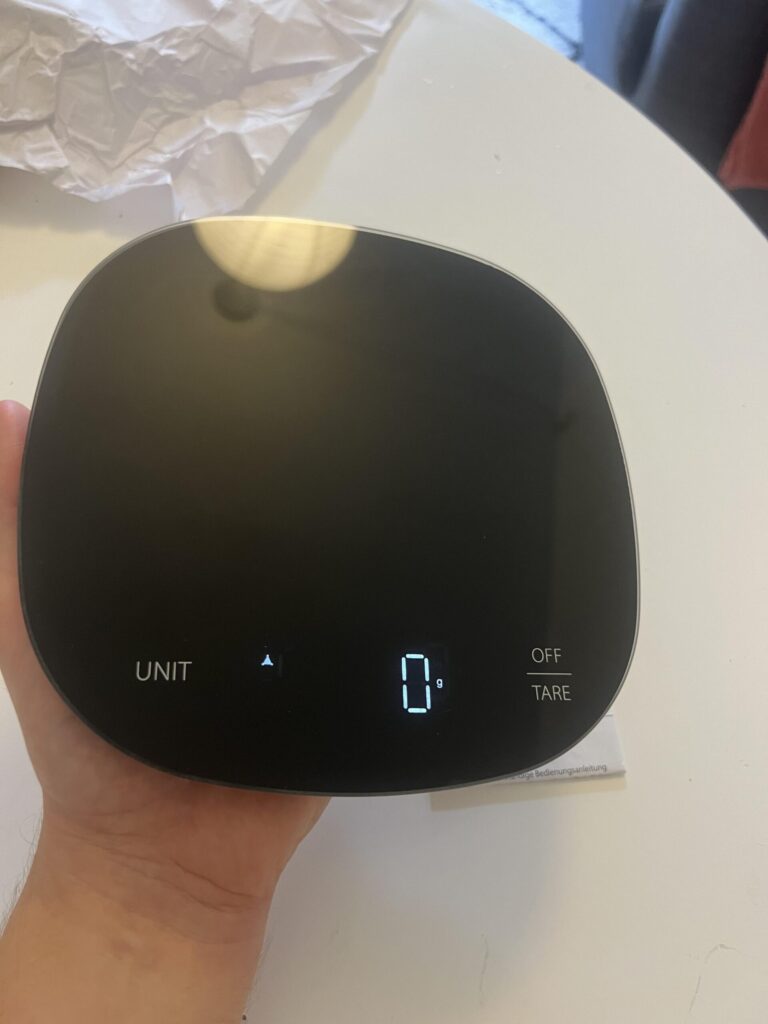
Letron K1H 10kg Kitchen Scale Review: My €11.99 Test
Letron K1H 10 kg kitchen scale review — my short hands-on verdict: 3.9/5. I bought this silver digital scale on 12 October 2026 for €11.99. Rather than claiming months of baking with it, I mainly used it for photographed weighing tests and to compare several kitchen scales I bought. It worked well, but the 15 kg model I ultimately kept offers a stronger overall deal for my needs.
The most useful result is specific: the same cashew nut I used on my other scales consistently showed 2 g on this Letron. My photographs also record an 11 g marker and a 1,071 g reading for a one-litre oat-drink carton. The display is genuinely clear to my eye, even though the illuminated digits can be difficult to capture on camera. These are documented readouts, not calibrated proof that the scale’s readings are accurate to ±1 g.
Affiliate disclosure: This review contains paid Amazon links. JonTests may earn a commission from qualifying purchases at no additional cost to you. I purchased and briefly tested this scale myself; the rating is my independent editorial assessment, not an Amazon customer average. Read the affiliate disclosure. The paid product link was supplied and checked by the owner; I have not independently audited its redirect or commission tracking.
My evidence and limits: I inspected nine original product photographs, examined the model and 10 kg/1 g markings on the actual unit and packaging, and used the owner’s confirmed responses about the buttons, stability, repeatability, small-item test and comparative preference. My use was brief and comparison-focused, not long-term; I have not tested it at 10 kg with traceable reference weights.
My test: same cashew repeatedly 2 g · marker 11 g · carton 1,071 g
I paid: €11.99 on 12 October 2026 · historical purchase price
Paid link · owner-provided exact-product destination · verify current price and variant
Letron K1H 10 kg kitchen scale — my 3.9/5 verdict
Quick verdict: This compact silver kitchen scale worked well in my brief comparative testing. Its blue-backlit screen is easy to read in person, the tare and buttons respond properly, and the same single cashew repeatedly registered 2 g. That is useful first-hand evidence of small-load detection, not certified accuracy.
Best for: someone who wants a straightforward 10 kg kitchen scale with responsive controls and a brightly illuminated display.
Skip if: you routinely use large bowls that hide the display, or simply want the most capacity for your money. My 15 kg Vitafit VT707 cost me €1 less and is the one I decided to keep.
My own choice: Good, but not my favourite. The 2 g cashew result is its clearest practical argument against the Vitafit, whose reading for that nut stayed at 0 g.
What I liked
- Same small cashew repeatedly showed 2 g in my own tests
- Fast, stable-looking readings for the objects I tried
- Clear blue-backlit display in normal use
- Responsive front buttons and working tare function
- Compact, stable scale with a surface I found easy to wipe clean
What holds it back
- Large bowls can obscure the screen
- Illuminated digits are surprisingly hard to capture clearly in photographs
- At €11.99, less capacity than the €10.99 Vitafit 15 kg scale I kept
- Only brief comparison use so far; long-term durability is unknown
- No calibrated accuracy test or full 10 kg load test
Bottom line: 3.9/5. A capable compact 10 kg scale, especially for someone who cares about detecting light ingredients. It did well in my real small-object tests, but I personally cannot justify choosing it over my cheaper 15 kg Vitafit for most everyday weighing.
The genuinely useful finding: the same cashew repeatedly showed 2 g
In my own small-weight test, the Letron K1H repeatedly displayed 2 g for one cashew nut. I confirmed this was the same cashew used in my other scale comparisons. This matters more to me than a generic advertisement of “1 g precision”: a scale with 1 g display increments can still fail to detect some very light additions.
There is a useful contrast here. My Vitafit VT707 15 kg, which I prefer overall and kept, repeatedly showed 0 g for the cashew. The HomeFashion GROSS 20 kg also showed 0 g, while the HomeFashion 5 kg registered 2 g. These observations are helpful for a real-world buyer, but they do not establish the cashew’s true mass, the minimum detectable mass across all conditions, or any model’s absolute measurement error.
If I regularly weighed tiny quantities, I would pay more attention to this result and test each candidate with proper known reference masses. In my own kitchen, a good screen, sufficient capacity, and everyday convenience matter more than measuring a single nut.
What my photographs show for ordinary items
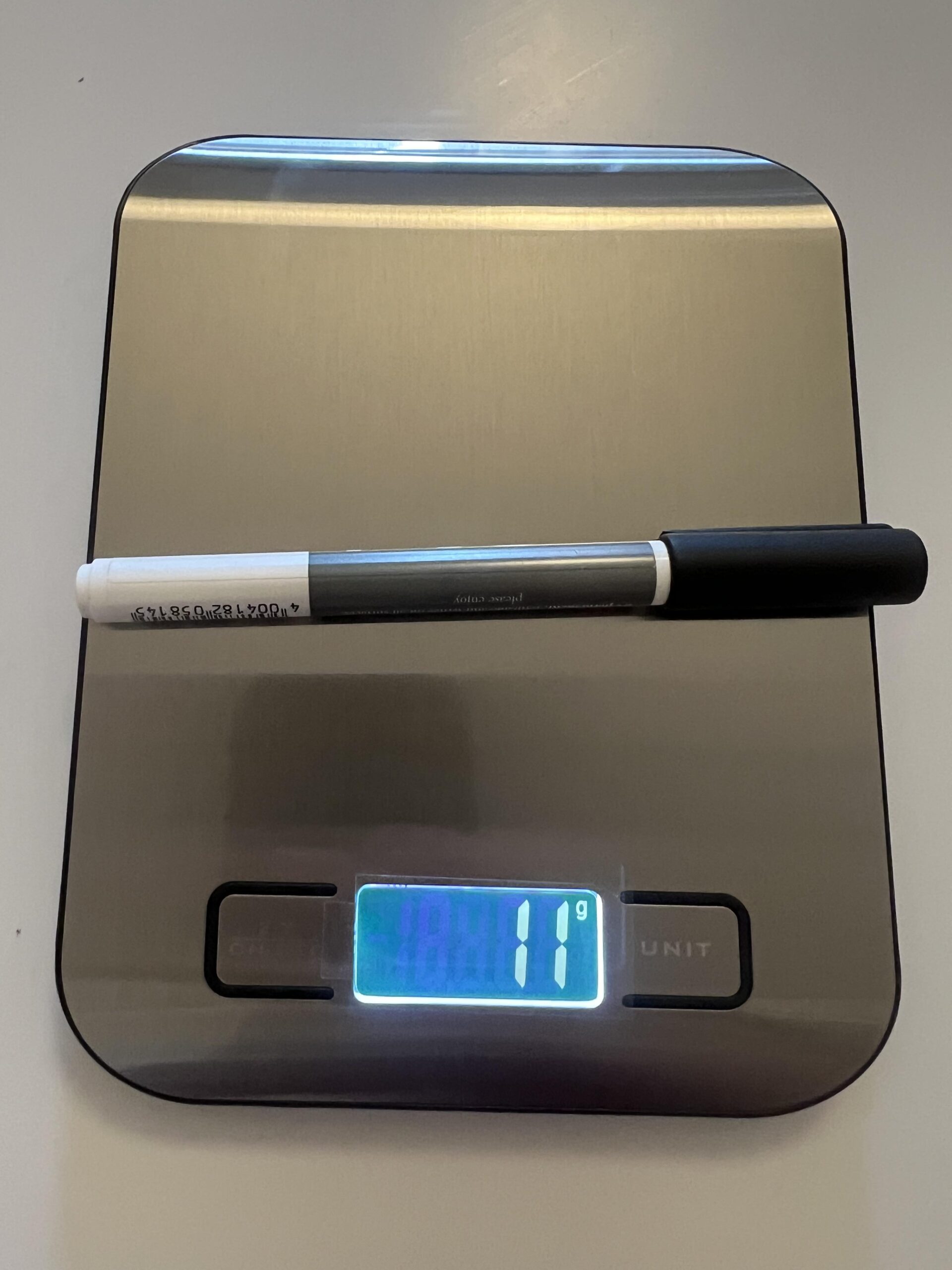
A marker pen displayed 11 g on the Letron. A one-litre oat-drink carton displayed 1,071 g. The readings appeared stable and sensible during my short tests, and I observed consistent repeat measurements. However, without a calibrated reference mass, I cannot know how close either display number was to the object’s true weight.
Different kitchen-scale articles on JonTests may show slightly different numbers for a carton. That is not evidence that one scale is wrong by the difference: package contents, handling, sessions, or setup conditions may have changed. For meaningful cross-model accuracy testing, the objects and reference loads must be controlled.
Display and buttons: good to use, harder to photograph
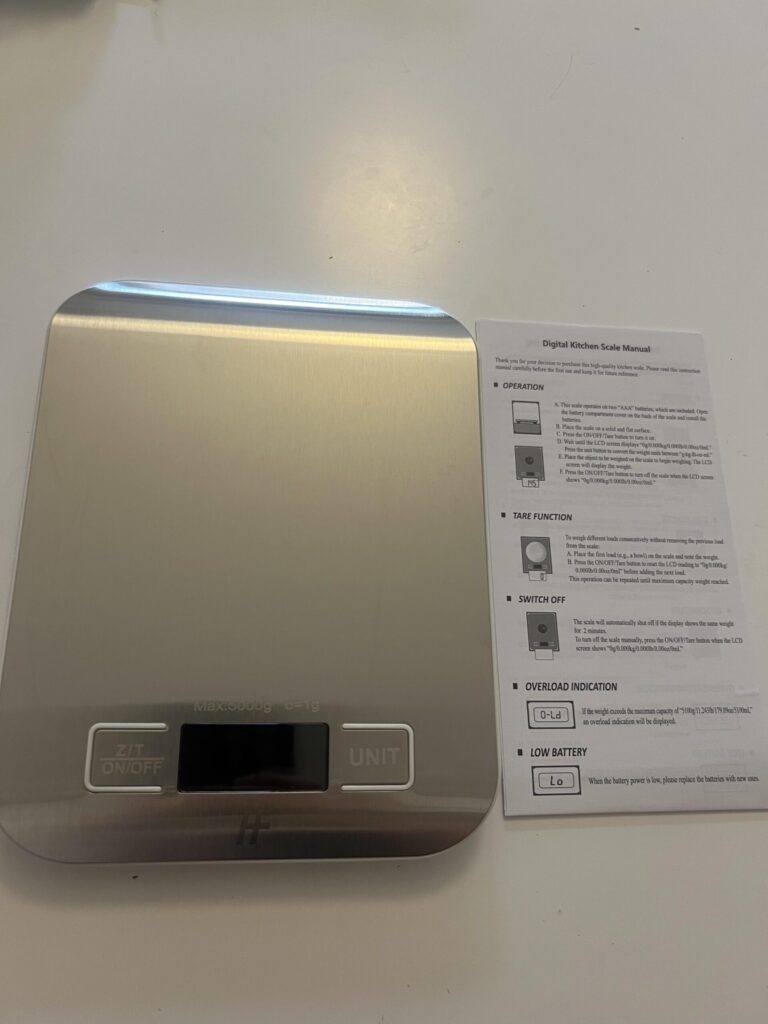
The blue-backlit LCD is one of this scale’s practical strengths. In person I found it clear and readable; the front controls responded reliably, and the tare feature was straightforward. I did not encounter a problem with ordinary button presses during my brief use.
There are two qualifications that a generic product listing may miss. First, the bright display is difficult to photograph cleanly: glare, shutter timing and contrast in camera images can make it look worse than it is to the eye. Second, a large mixing bowl can hide the readout, depending on how it sits on the platform. That is worth checking if you regularly use broad containers.
Tare lets me place a container on the scale and zero its displayed weight before adding ingredients. It worked in the use I tried, although I have not measured the scale’s maximum load with a large tared bowl.
Design, stability and upkeep
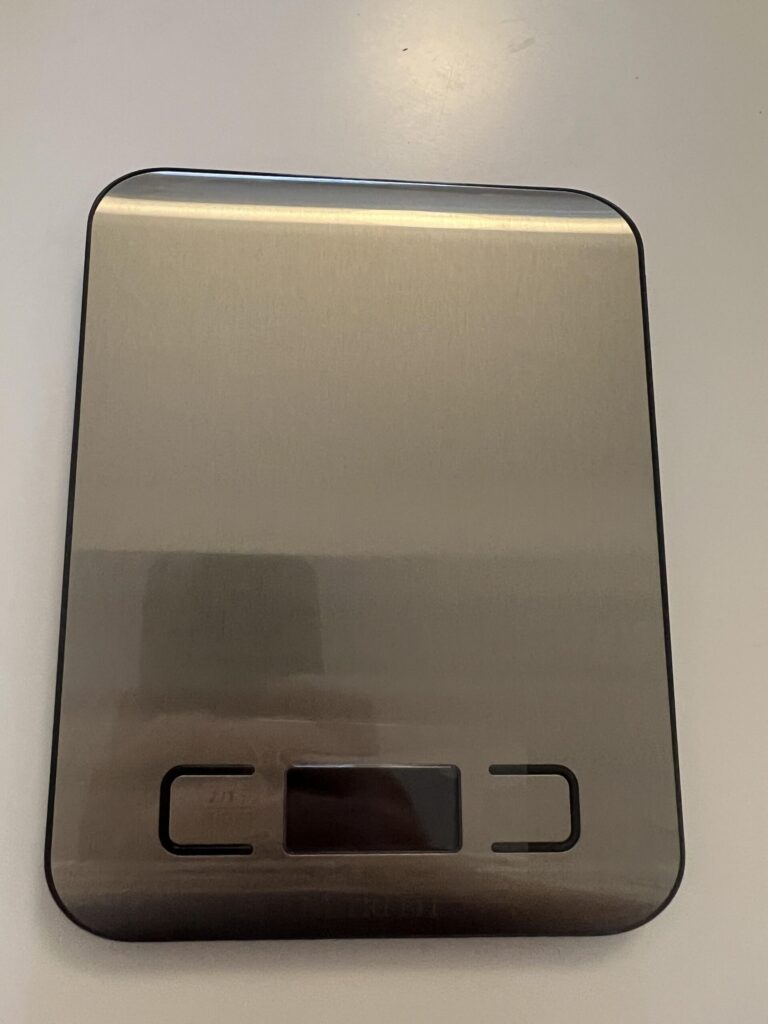
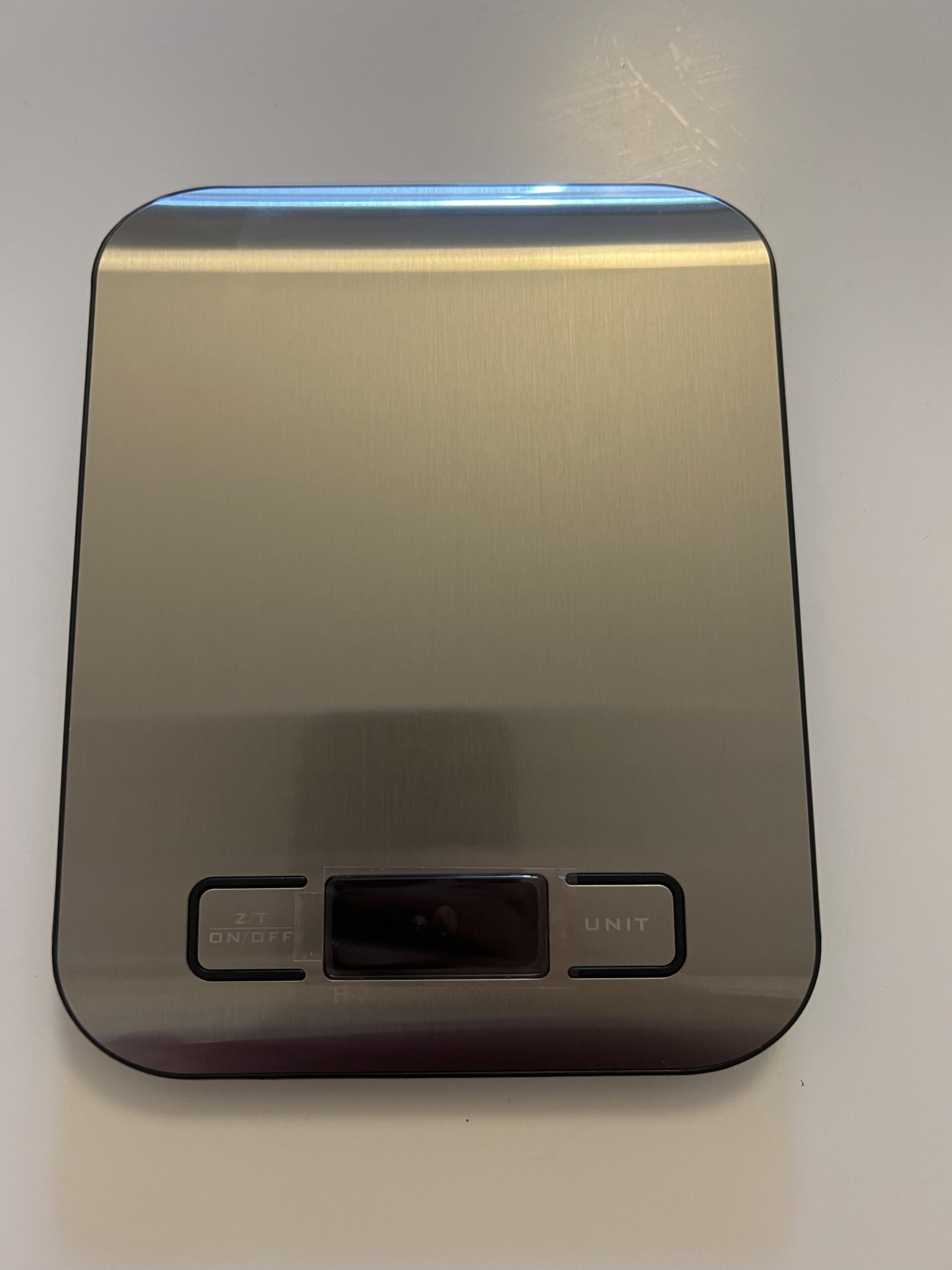
This is a neat, silver rectangular kitchen scale with a raised-looking metal weighing surface and a black lower body. I found it compact, stable, and easy to wipe clean. I also liked that it did not demand much countertop or storage space.
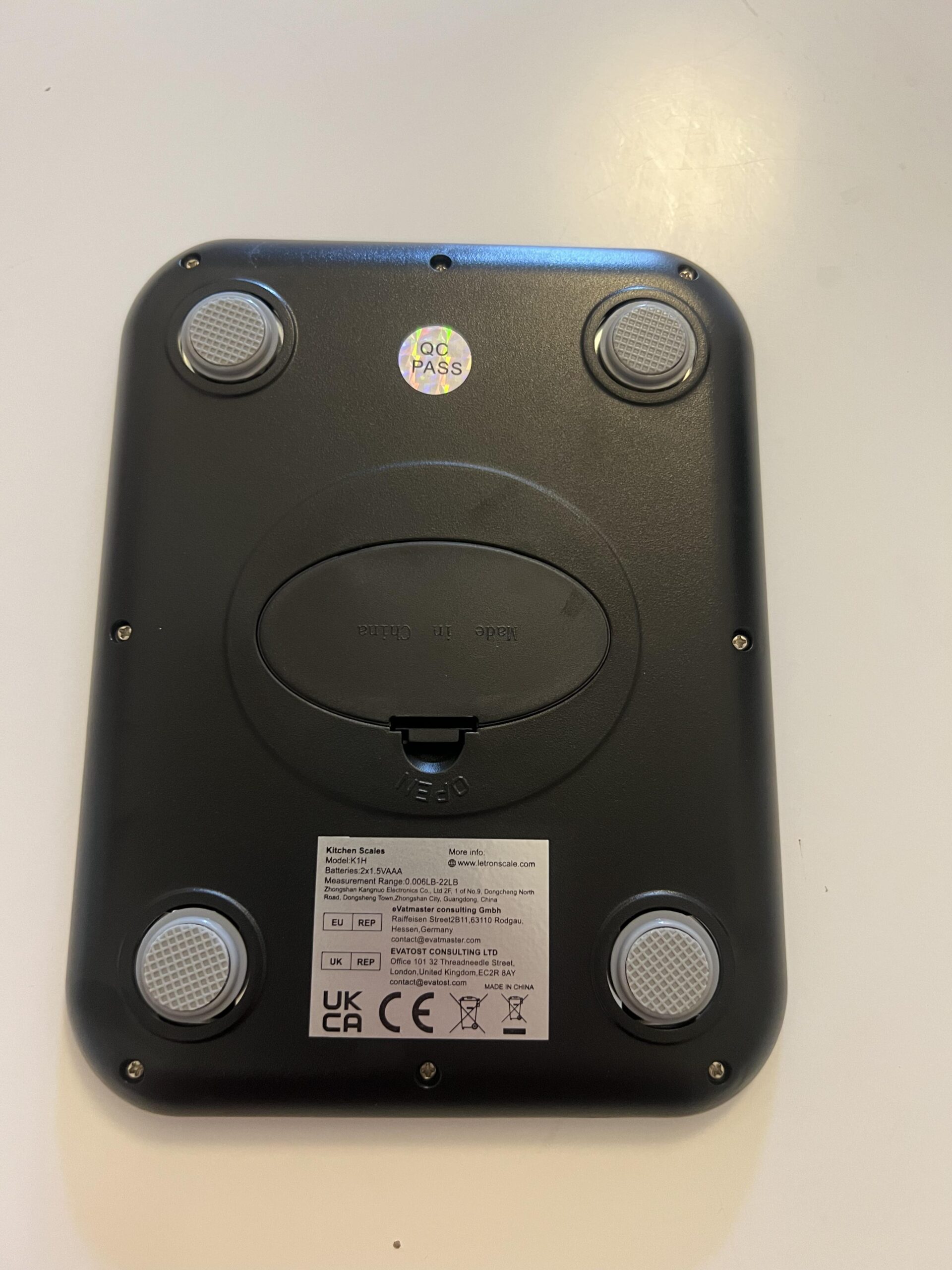
The underside of my own unit shows four feet, a battery compartment and a model marking for K1H. The underside label specifies two 1.5 V AAA batteries. These are visible, inspectable construction details, but my short ownership experience cannot prove long-term durability or resistance to spills.
10 kg Letron versus my 15 kg Vitafit: the buying decision
This is where I am least convinced by the Letron. I paid €11.99 for the Letron K1H, but €10.99 for the Vitafit VT707 with an advertised 15 kg capacity. The Vitafit is the one I chose to keep after comparing scales. It has a good-looking, readable display even on camera, and I used it regularly for everyday cooking and baking.
| Scale I actually bought | What I paid | Advertised capacity | Same-cashew reading | My relevant takeaway |
|---|---|---|---|---|
| Letron K1H (this review) | €11.99 | 10 kg | 2 g repeatedly | Good basic use and low-item detection; display awkward to photograph |
| Vitafit VT707 | €10.99 | 15 kg | 0 g repeatedly | My preferred scale; more capacity for €1 less, brighter camera-friendly screen |
| HomeFashion GROSS | €9.99 | 20 kg | 0 g | Extra capacity cheaply, but my cashew did not register |
| HomeFashion 5 kg | €6.79 | 5 kg | 2 g | Lower capacity but cheaper and strong early small-object result |
The Letron therefore has a defensible niche: the 2 g result suggests better detection of that particular light object than my Vitafit showed. But if you usually weigh larger food portions rather than ingredients under 10 g, I do not see enough extra benefit to justify picking this €11.99 model over the €10.99 Vitafit. These are my historical purchase prices, not live offers, and none of the products underwent calibrated load testing.
Specifications I could verify — and what they don’t prove
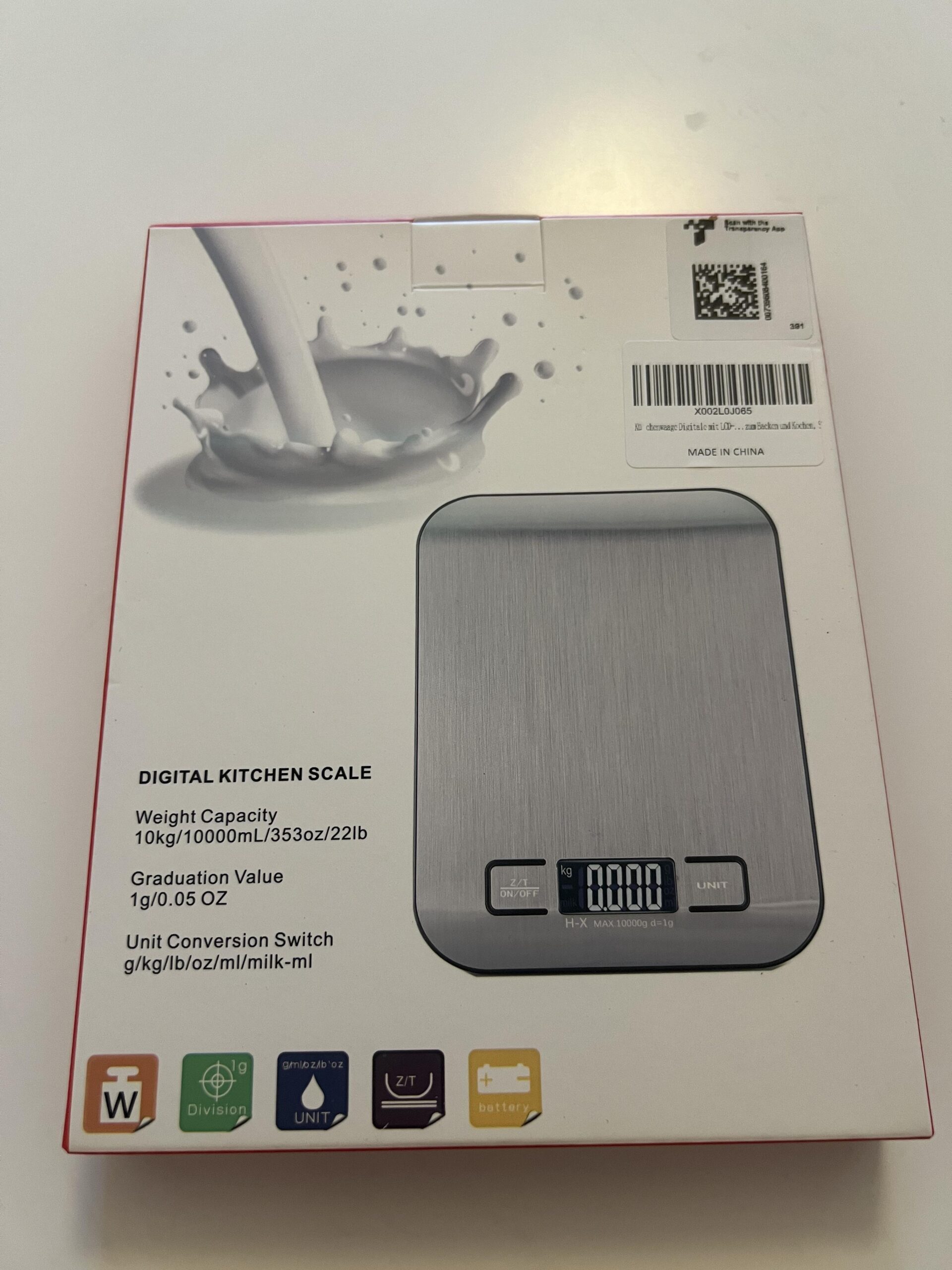
The product carton and underside identify it as a K1H digital kitchen scale. My packaging shows a 10 kg / 22 lb maximum and 1 g divisions, plus unit options for g/kg, lb/oz, millilitres and milk millilitres. A retailer listing associates Amazon ASIN B0FDKYK7C1 with the Letron K1H in silver. These are specified capabilities, not a demonstration that every unit is accurate through its entire range.
Display increments, small-load detection and actual accuracy are distinct concepts. Repeating the same 2 g result shows informal consistency for that one object, not that its mass is exactly 2.000 g. For prescription, chemistry or other precision tasks, use an appropriately calibrated specialist instrument instead of relying on a budget kitchen scale.
Why my editorial rating is 3.9/5
I use a transparent, weighted JonTests editorial rating, not the Amazon customer-star average. The weights reflect the strengths and weaknesses I actually observed. There is no long-term durability score, since I have not used this product long enough for one.
| Evidence-backed criterion | Weight | My score | Reason |
|---|---|---|---|
| Everyday weighing and short-test consistency | 35% | 4.2/5 | Fast-looking stable readings; same cashew repeatedly 2 g; no calibrated reference |
| Display, buttons and tare | 25% | 4.0/5 | Readable blue screen and responsive controls; broad bowls may hide it |
| Compact design, stability and cleaning | 20% | 4.1/5 | Stable, compact unit that was easy to wipe down |
| Value against the scales I bought | 20% | 3.1/5 | €11.99 for 10 kg versus my preferred €10.99 Vitafit with 15 kg |
Calculation: (4.2 × 35%) + (4.0 × 25%) + (4.1 × 20%) + (3.1 × 20%) = 3.91 → 3.9/5. This is a short-use editorial judgment, not a lab-calibrated performance score. The value score could change if current market prices differ materially.
Who should buy the Letron K1H?
- Consider it if you want a reasonably compact 10 kg kitchen scale with a backlit readout, easy tare controls, and encouraging informal detection of one very light object.
- Consider the Vitafit VT707 instead if you want the scale I kept for general use, prefer a more camera-friendly display, and value greater 15 kg advertised capacity.
- Consider a 5 kg scale instead if you know you never weigh heavier loads and want to save money; my HomeFashion 5 kg review describes an inexpensive alternative.
- Use a precision scale when you need independently verified accuracy for tiny doses, not merely 1 g display increments.
Frequently asked questions
Can the Letron K1H weigh less than 10 g?
In my brief test, the same cashew repeatedly displayed 2 g, which shows that my unit detected at least one very light object. It does not establish a guaranteed minimum for every object or calibrated accuracy below 10 g.
Does the Letron K1H have a 10 kg maximum and 1 g resolution?
Those are the specifications printed on my actual box and supported by the exact-model listing. I did not independently load the scale to the full 10 kg or prove ±1 g accuracy throughout the range.
Is its blue LCD easy to see?
Yes, I found the backlit display clear in normal use, but the bright numbers were difficult to capture properly in photographs. A very wide bowl can also block the screen from view.
Is this better than a 15 kg kitchen scale?
Not necessarily. My Vitafit VT707 cost €1 less, offers a stated 15 kg capacity, and is the one I kept. The Letron’s more useful distinguishing result was detecting the same small cashew at 2 g where that Vitafit read 0 g. Choose by how you actually weigh ingredients.
How long have I tested it?
Only briefly, mainly through photographed comparisons with other kitchen scales. I am not claiming months of kitchen use, durability testing, or a certified accuracy assessment.
Final verdict
Good, but not my first choice. The Letron K1H feels compact, stable and straightforward to use. It has a readable illuminated display, responsive tare and buttons, and it consistently recognized my small cashew at 2 g. Those are real advantages, but at the €11.99 I paid, I have trouble recommending it ahead of the €10.99 Vitafit VT707 15 kg that I kept, unless detecting very light additions is your priority.
Specification and research references: Exact Amazon.de product reference (ASIN B0FDKYK7C1); Letron K1H product identifier and specification listing; External Letron K1H overview. External summaries are separate from my personal observations.
Compare my other scales: My Best Kitchen Scales 2026 comparison covers 10 personally bought weighing tools, original photographs, small-item results, capacities, and the scale I ultimately chose to keep.