HomeFashion GROSS 20kg Kitchen Scale Review: My €9.99 Test
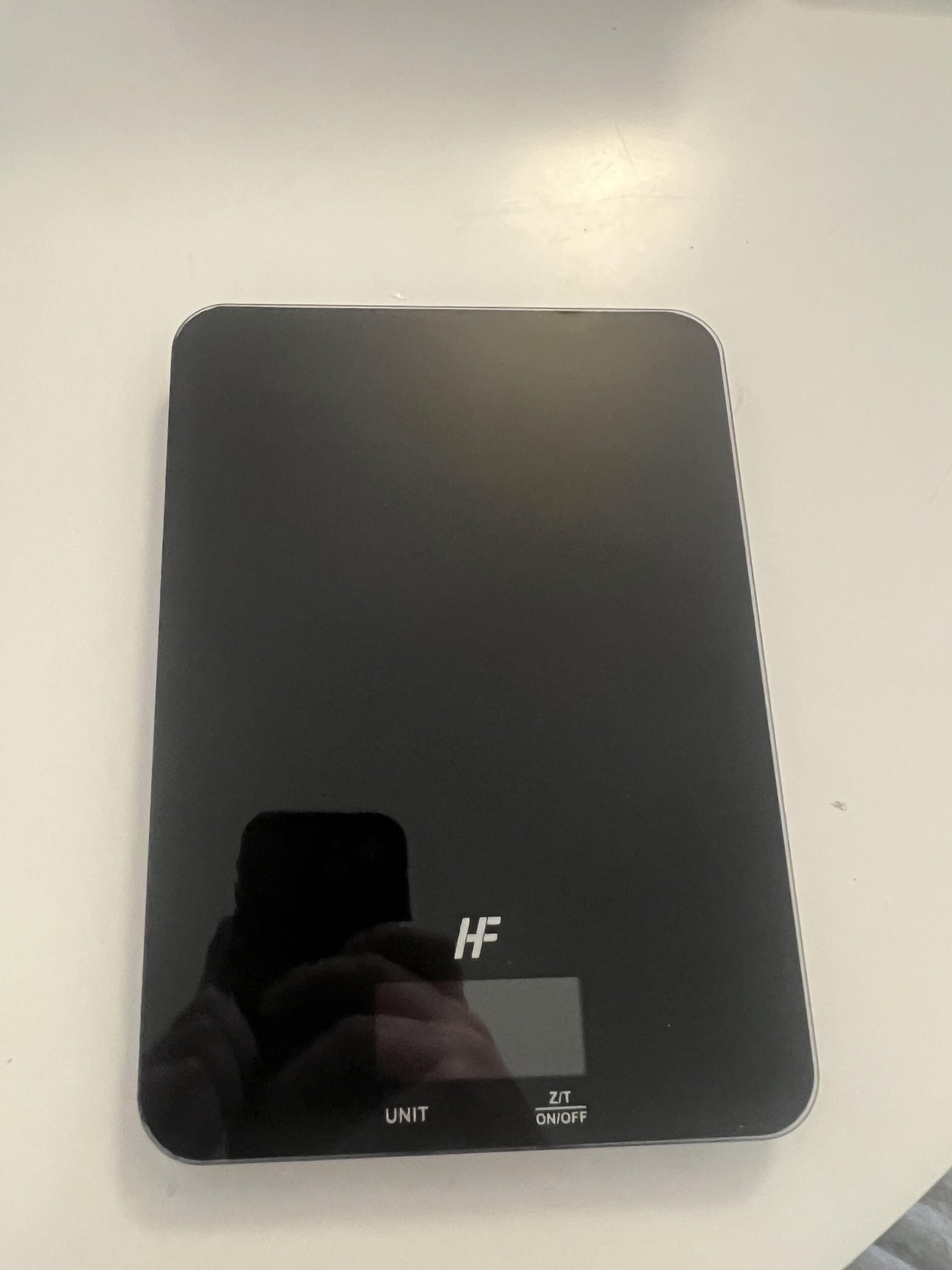
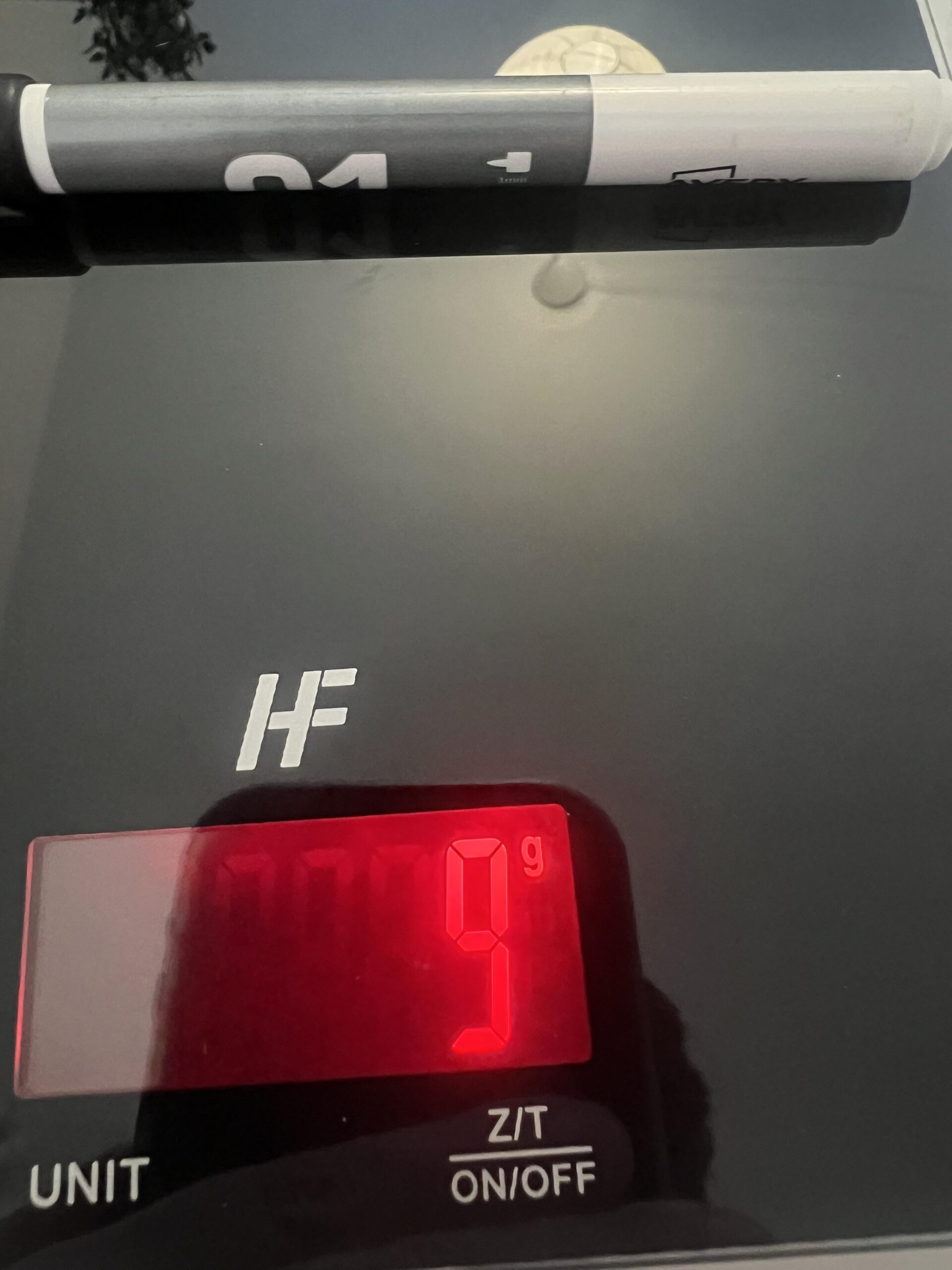
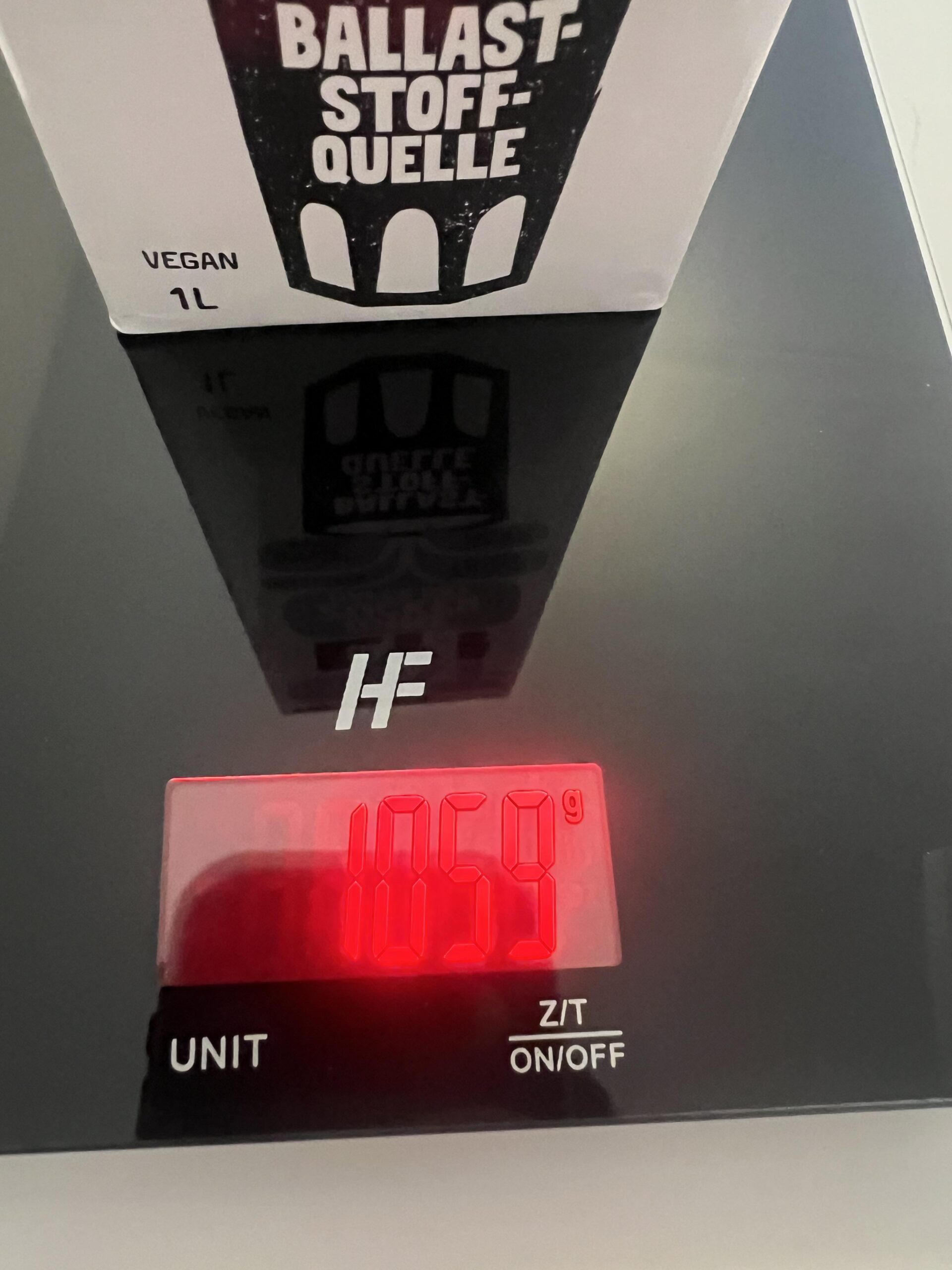
HomeFashion GROSS 20 kg kitchen scale review — my first-hand verdict: 4.0/5. I bought this black-glass scale on 12 October 2026 for €9.99 and mainly used it to compare kitchen scales and document practical weighing examples, rather than claiming weeks of regular baking. It has an advertised 20 kg capacity and 1 g display increments. In my own test, a single cashew stayed at 0 g when I tried weighing it; a marker showed 9 g, and a one-litre oat-drink carton showed 1,059 g. These are recorded display results, not independently calibrated accuracy measurements.
My conclusion is unusually specific: the 20 kg capacity makes this model attractive at the price I paid, but that same appeal does not make it a good choice for very light ingredients. I like its stability and easy-clean glass top, though fingerprints are noticeable. I also personally prefer the Vitafit VT707 15 kg scale, which I ultimately kept after comparing several models.
Affiliate disclosure: This review contains paid Amazon links. JonTests may earn a commission from qualifying purchases at no additional cost to the reader. I bought the reviewed scale myself and my opinion is independent of commissions. See the affiliate disclosure. I personally checked that the supplied Amazon shortlink opens the exact reviewed product; JonTests has not independently audited commission tracking. Confirm the model and current price at checkout.
How I evaluated it: I examined the actual unit, photographed its packaging, underside and batteries, and compared real readouts with other scales I own. My photographs are dated 16 October 2026. I have not tested a certified reference weight, proved reliable 20 kg loading, established minimum measurable weight, measured auto-off timing or performed a long-term durability test.
My comparison: single cashew 0 g · marker 9 g · 1 L carton 1,059 g
I paid: €9.99 on 12 October 2026 · historical purchase price
Paid link · owner-verified exact GROSS 20 kg glass model · confirm current price at checkout
HomeFashion GROSS 20 kg — my 4.0/5 verdict
Bottom line: An appealing €9.99 purchase if you specifically need the advertised 20 kg capacity. I found the large glass platform stable and straightforward to wipe clean. But the shiny surface picks up fingerprints, and a single cashew stayed at 0 g during my attempt to weigh it. I would not pick this as my precision scale for tiny ingredients.
Best for: cooks or home users who sometimes need significantly more capacity than a typical 5 kg kitchen scale, while accepting that its full 20 kg performance was not independently tested.
Skip if: you frequently need to measure 1–5 g additions, care strongly about a fingerprint-free finish, or rarely need capacity above 5–10 kg.
What I liked
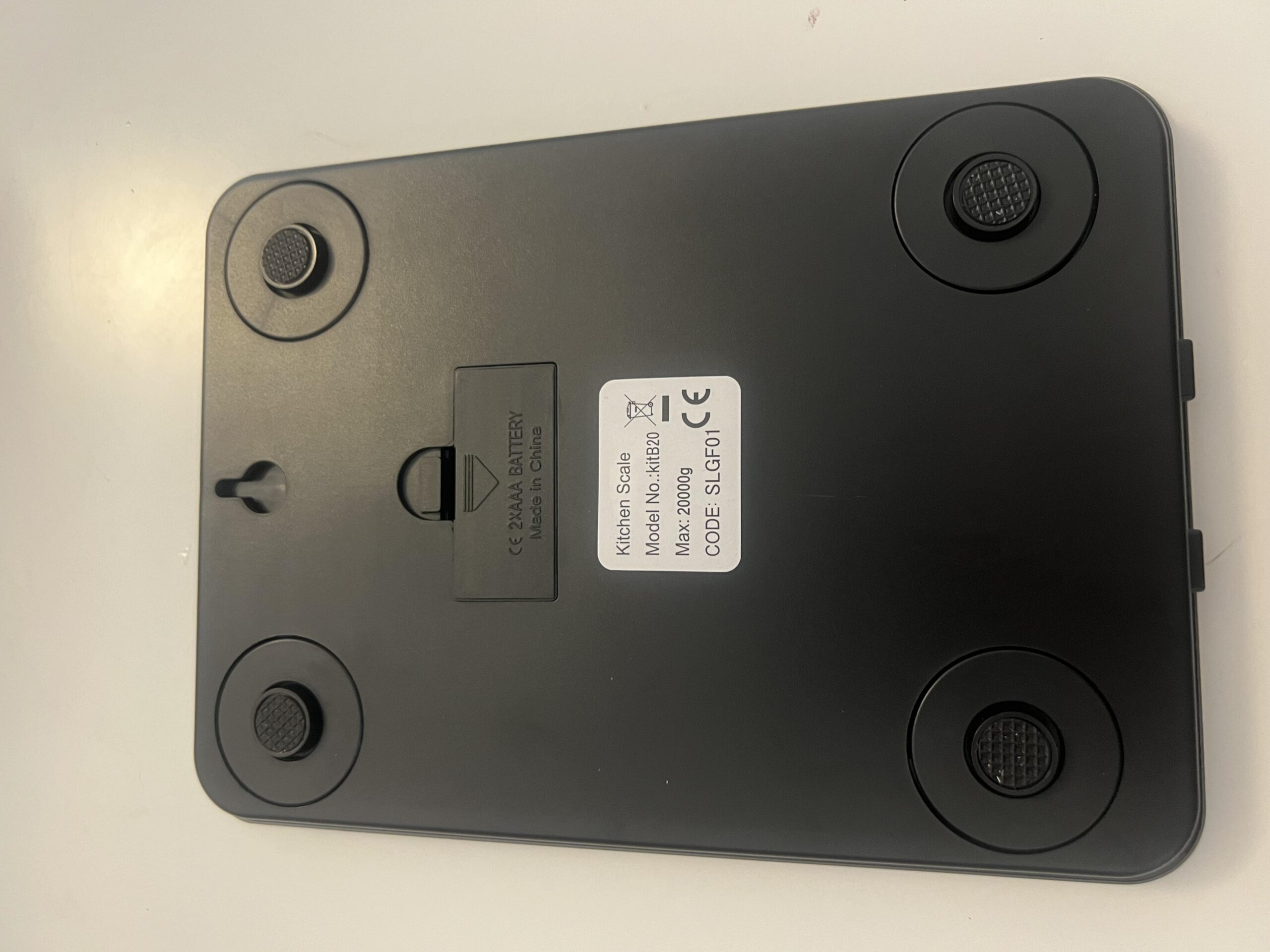
- 20 kg maximum listed on my actual box and underside label
- Stable glass platform in my hands-on use
- Smooth, easy-to-clean surface
- Very good value to me at €9.99 for this category
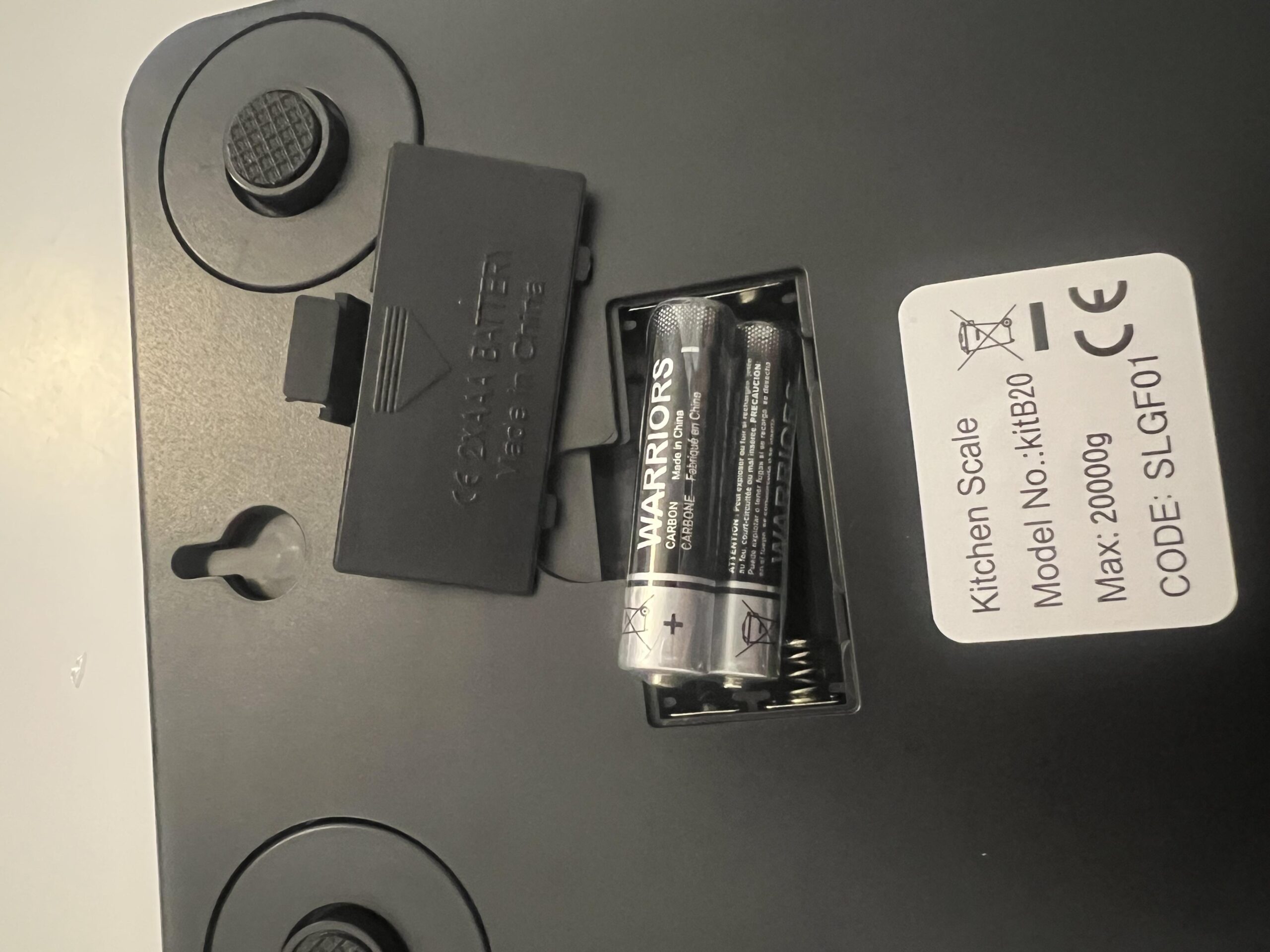
- Two AAA batteries visible in my original photo
What held it back
- My single cashew remained at 0 g
- Fingerprints show on the black glass
- The extra capacity will be unnecessary for many kitchens
- I personally prefer another 15 kg kitchen scale
- No calibrated accuracy or full-load test yet
Bottom line: 4.0/5. The advertised 20 kg capacity makes this a compelling €9.99 purchase for larger batches, but my small-cashew attempt showed 0 g. I would use a more sensitive scale for very small ingredient quantities, and I have not independently verified this model’s accuracy at the full 20 kg limit.
The most useful finding: one cashew stayed at 0 g
One of my original photographs captures the issue well: the cashew sits on the platform while the large red display reads 0 g. I confirmed that the reading remained at zero when I tried to weigh the nut. That is the limitation that matters most to me, because you can buy a scale advertising 1 g increments and still find it unsuitable for your smallest kitchen additions.
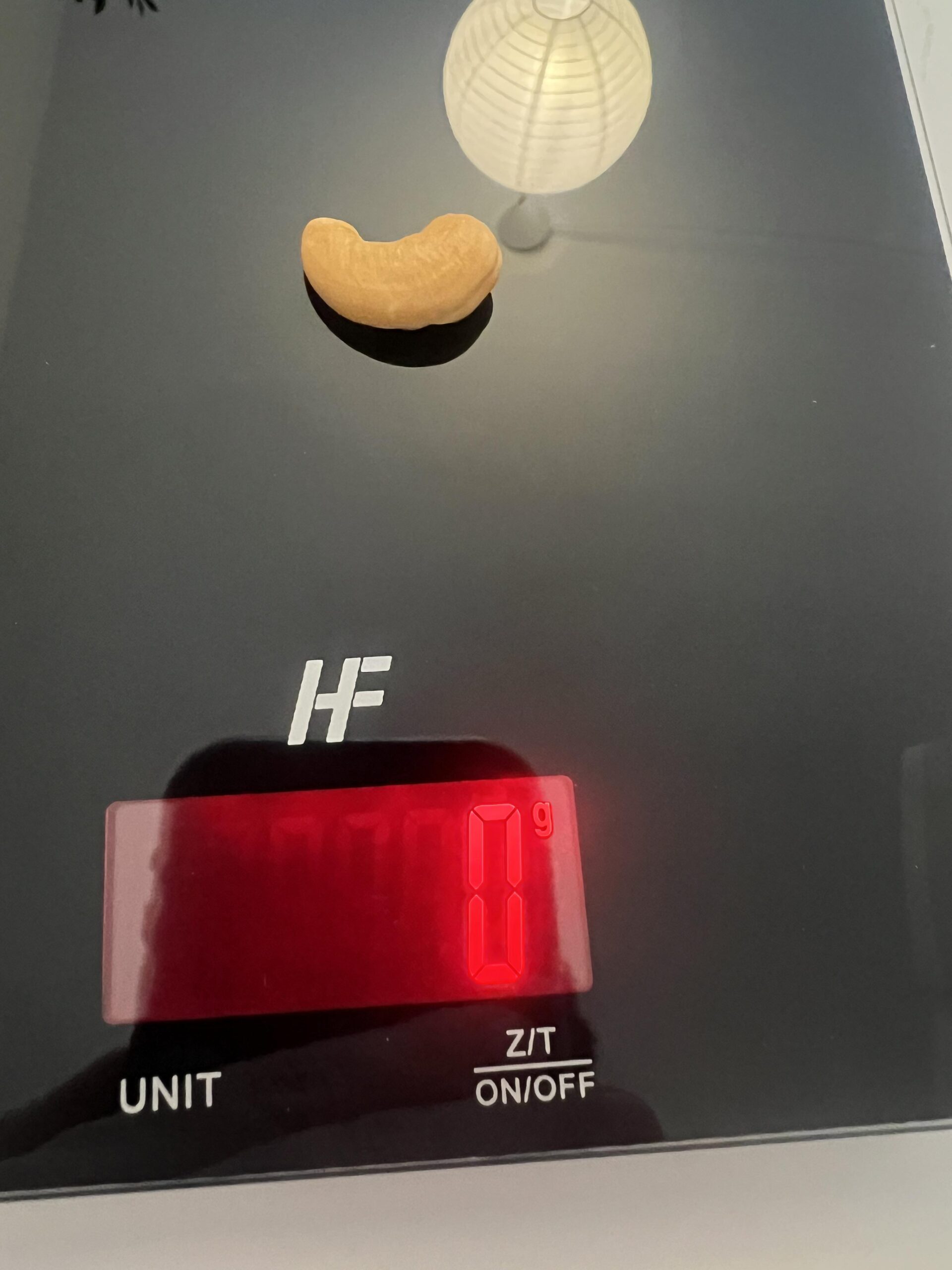
Importantly, I am not saying it fails with everything below 10 g. My separate photograph shows the scale displaying 9 g for a marker. That apparent contrast is a useful reminder that detecting a tiny addition from an empty platform is not the same thing as showing one-gram steps once a heavier object is registered. My test does not establish the exact activation threshold or a general error curve.
For a pinch of yeast, a small amount of salt, coffee additives or spices, I would choose a scale whose low-weight performance has been checked with known reference masses. The 1 g graduation on the HomeFashion box describes the display interval, not proof that a one-gram item will always register accurately. I cannot say this scale has laboratory-level precision based on my photos.
What happened with larger everyday items?
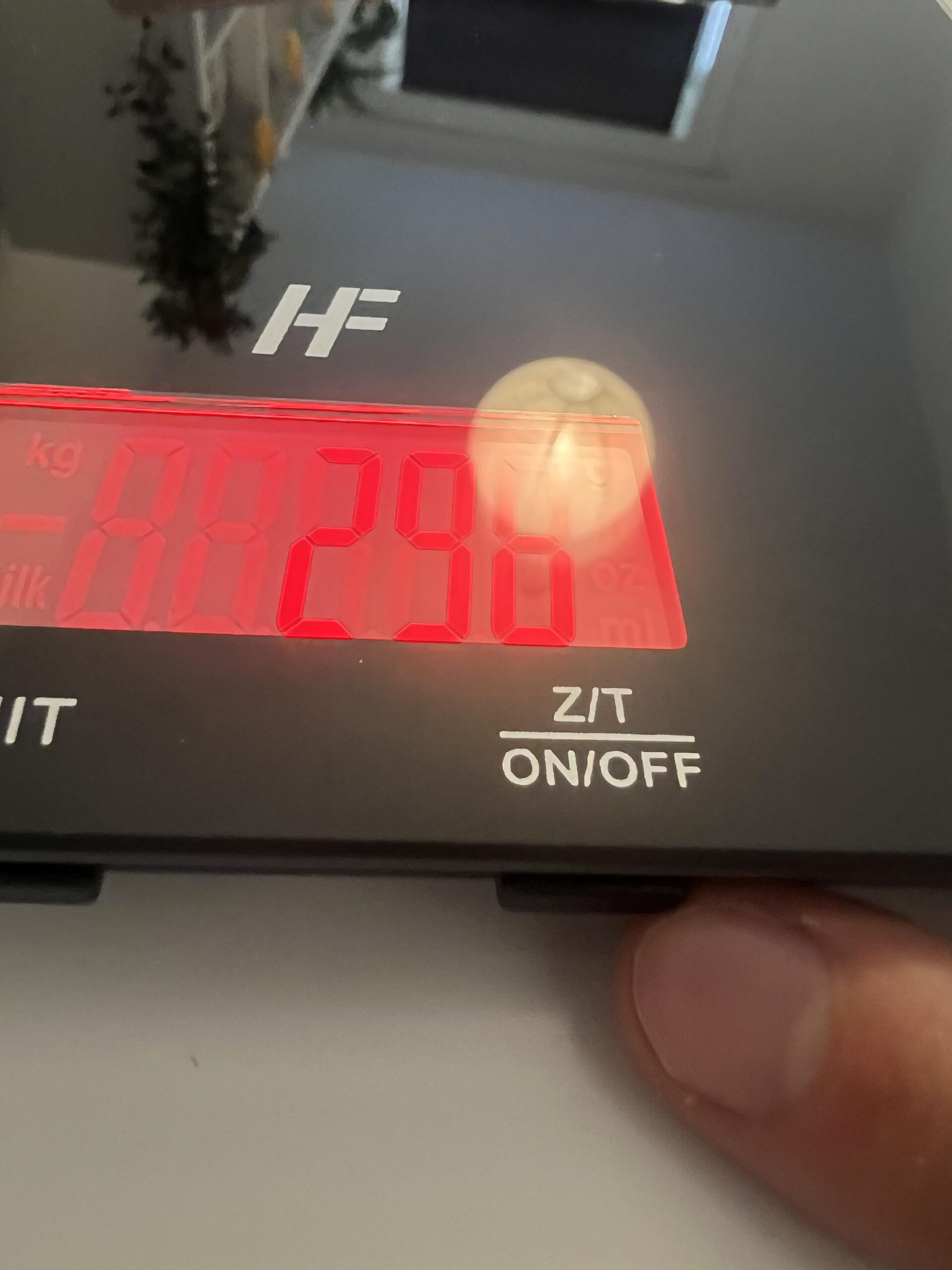
A one-litre oat-drink carton displayed 1,059 g, and another close-up photograph shows 290 g on the red display. They demonstrate that my unit produces ordinary larger readings; they do not prove the readings are exact. I did not establish a verified reference mass for these objects. The carton includes packaging weight, so it would be wrong to expect a precise 1,000 g reading merely because the liquid volume is one litre.
20 kg capacity: what it buys you — and what I did not test
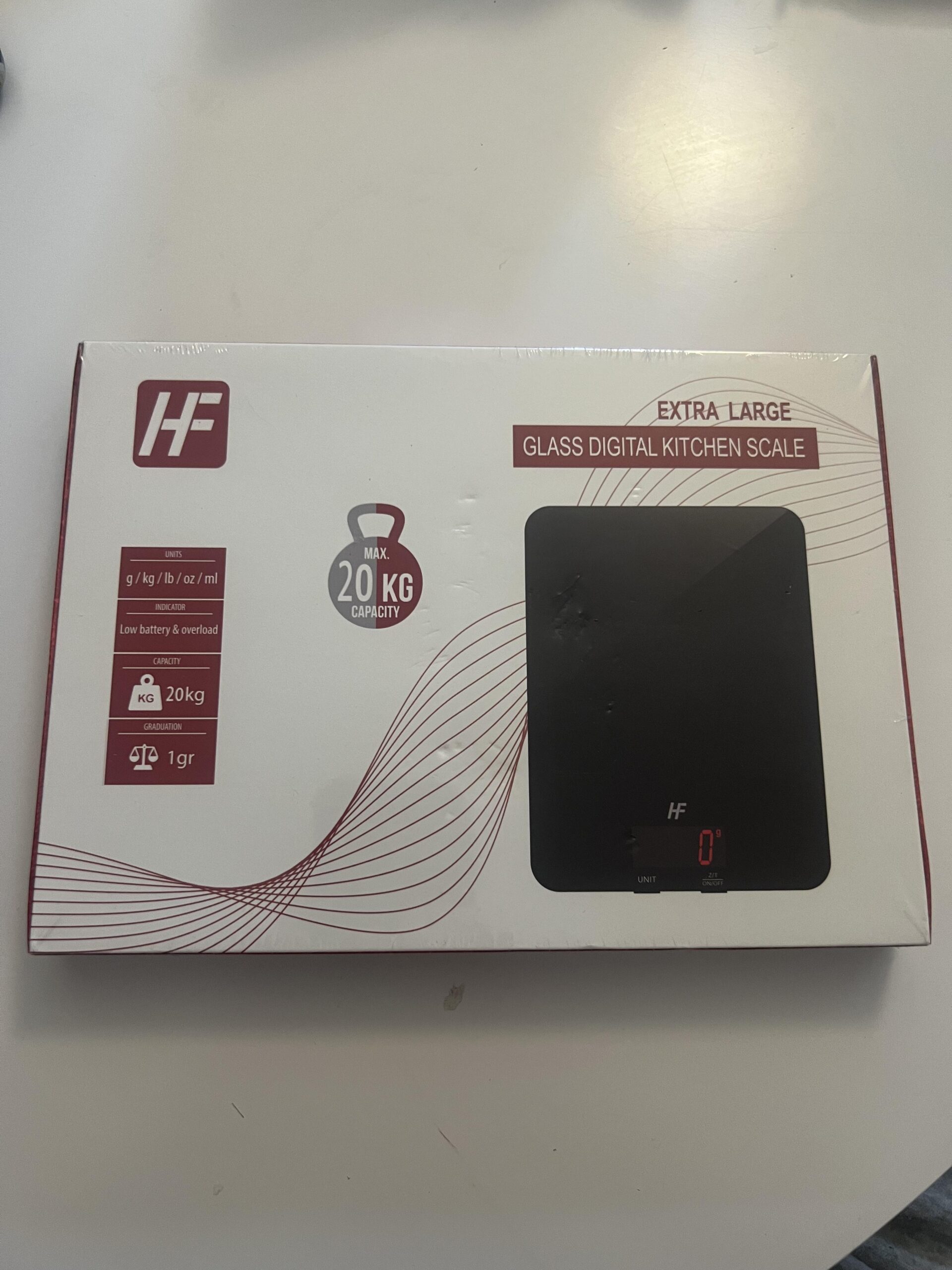
The box and underside label on my actual scale identify a maximum of 20 kg (20,000 g). Its advertised 22 × 16 cm footprint provides more room than many small 5 kg scales. The high limit could be useful for large mixing bowls, heavy batches of dough, preserving ingredients or other household items. But these are potential uses based on the specified design: I have not verified the scale can accurately handle a full 20 kg load.
The most relevant buying question is not whether 20 kg sounds impressive, but whether your own containers and batch sizes ever exceed your current scale’s limit. If you only weigh a few hundred grams at a time, buying 20 kg headroom can be unnecessary; sensitivity and usability may matter much more.
Design, cleaning, stability and batteries
The black glass platform stood stably during my use and is easy for me to wipe down. I see its simplicity as an advantage. The compromise is cosmetic: the glossy finish attracts fingerprints, so it does not stay showroom-clean after handling. In a kitchen, that may matter less than being able to clean it quickly, but it’s worth knowing before buying.
My photos show the scale’s underside with four feet and a compartment holding two AAA batteries. The retail box lists several units including grams, kilograms, pounds, ounces and millilitres, plus overload and low-battery indicators. I did not time the automatic shutdown, establish battery life or systematically test every mode, so I treat those as product features rather than measured performance claims.
Exact product facts vs. my observations
| Characteristic | What is documented | Why it matters |
|---|---|---|
| Product | HomeFashion GROSS black glass digital kitchen scale, Amazon reference ASIN B0FVM85PN3 | A distinct model from the separate HomeFashion 5 kg stainless-steel scale |
| Maximum load | 20 kg listed on packaging and underside; not maximum-load tested | Potentially helpful for much heavier containers and batches |
| Display steps | 1 g, according to box | Does not guarantee detection of every 1 g addition |
| Platform dimensions | 22 × 16 cm per product listing | Relevant for bowls and footprint |
| Weighing modes | g / kg / lb / oz / ml advertised on box | Unit settings are not individually validated here |
| Surface | Black glass; visually and physically inspected | Stable and easy to wipe; shows fingerprints |
| Power | Two AAA batteries visible in owner photo | Battery life not evaluated |
| My real readouts | Cashew 0 g; marker 9 g; carton 1,059 g; photo close-up 290 g | First-hand display observations, not standardized accuracy tests |
| Price I paid | €9.99 on 12 October 2026 | Historical personal price, not a current retail quote |
HomeFashion GROSS 20 kg vs. my 5 kg HomeFashion and ADE 15 kg
These comparisons are among scales I have personally bought and reviewed, but the tests were informal and should not be read as calibrated head-to-head measurements. I am not claiming a definitive market ranking.
| Model | Advertised capacity | What I paid | Relevant first-hand takeaway |
|---|---|---|---|
| This HomeFashion GROSS | 20 kg | €9.99 | My cashew stayed at 0 g; marker showed 9 g. Stable, easy-clean glass; fingerprints visible. |
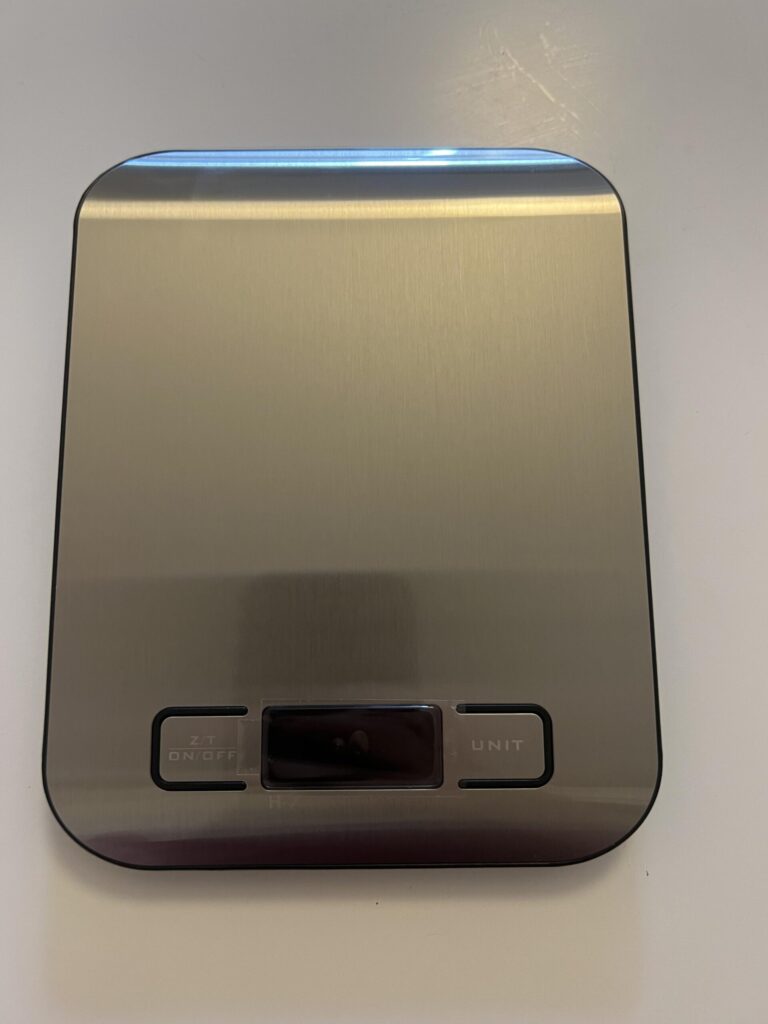
| HomeFashion stainless-steel 5 kg | 5 kg | €6.79 | My earlier review recorded a small cashew at 2 g. Smaller capacity but more convincing for this small-item example. |
| ADE KE2500-1 | 15 kg | €7.95 | My earlier ADE test also showed 0 g for one cashew. It offers a useful middle capacity and a display I praised in that separate review. |
At my historical purchase prices, the GROSS cost €3.20 more than the HomeFashion 5 kg while advertising four times the maximum capacity, and €2.04 more than the ADE 15 kg for 5 kg more stated headroom. Those are buying trade-offs, not performance scores. The models have different surfaces, controls and weighing behavior, and live retail prices may differ.
Personally I still prefer another 15 kg kitchen scale I have photographed, even though this 20 kg model looks like good value for someone who specifically needs its extra headroom. My 5 kg HomeFashion also remains more convincing for the one-cashew example. You should choose for your typical task rather than assuming the biggest kilogram number means the best precision.
Why my rating is 4.0/5 — transparent scoring
I use an editorial, category-specific weighted assessment rather than copying Amazon customer stars. This rating reflects my documented short, hands-on comparison and stated priorities. The high-load criterion evaluates the advertised use-case proposition, not verified accuracy at 20 kg. I do not include long-term durability because I have not tested it.
| Criterion | Weight | Score | Evidence and reason |
|---|---|---|---|
| Advertised capacity / buyer fit | 30% | 4.6/5 | A 20 kg limit and relatively large platform for buyers who need it; full-load measurement unverified. |
| Very-light-object detection | 20% | 2.0/5 | One cashew stayed at 0 g; a 9 g marker registered, so this is not a verified universal threshold. |
| Stability / ease of cleaning / finish | 25% | 4.1/5 | Owner found platform stable and easy to wipe; glossy black glass collects fingerprints. |
| Value at my purchase price | 25% | 4.7/5 | Owner regards €9.99 as very good value for a scale advertised to 20 kg. |
Calculation: (4.6 × 30%) + (2.0 × 20%) + (4.1 × 25%) + (4.7 × 25%) = 3.98 → 4.0/5. The rating is my transparent editorial judgment from limited evidence, not a calibrated score for measurement accuracy. Learn more on How I Test.
Who should buy this HomeFashion GROSS 20 kg scale?
- Consider it: You need more headroom than a 5 kg or 10 kg model and the purchase price is similarly low to my €9.99.
- Consider it: A stable glass top and easy wiping matter more to you than keeping the finish free of fingerprints.
- Think twice: You frequently weigh one cashew, tiny amounts of yeast or spices, or other few-gram additions.
- Think twice: You rarely need to exceed 5–10 kg; a smaller scale may be more practical and less expensive.
- Do not treat this as proof of: accurate 20 kg loads, certified 1 g accuracy, long-term durability or reliable detection of all sub-10 g objects.
Frequently asked questions
Can this HomeFashion GROSS scale weigh under 10 grams?
Sometimes a sub-10 g item registered in my photos: the marker showed 9 g. But a single light cashew remained at 0 g when I tried weighing it. I would not rely on this model for tiny quantities without further verified tests.
Does the 1 g graduation mean it is accurate to 1 gram?
No. A one-gram display step is the number increment shown on the screen. It is not proof of one-gram measurement accuracy, repeatability or a one-gram minimum detectable load.
Is the advertised 20 kg capacity real?
The 20 kg limit appears on my scale’s own packaging and underside label. I have not loaded it with a verified 20 kg mass or checked accuracy near maximum load.
Why not buy the 15 kg ADE instead?
The ADE KE2500-1 is a legitimate alternative with a listed 15 kg limit, and my own review praised its display and controls. It also returned 0 g for a cashew in my separate hands-on test, so neither should be called proven accurate for tiny quantities. If you don’t need 20 kg, you may prefer the ADE’s combination of layout and capacity, as I often do.
Original photographs, sources and limitations
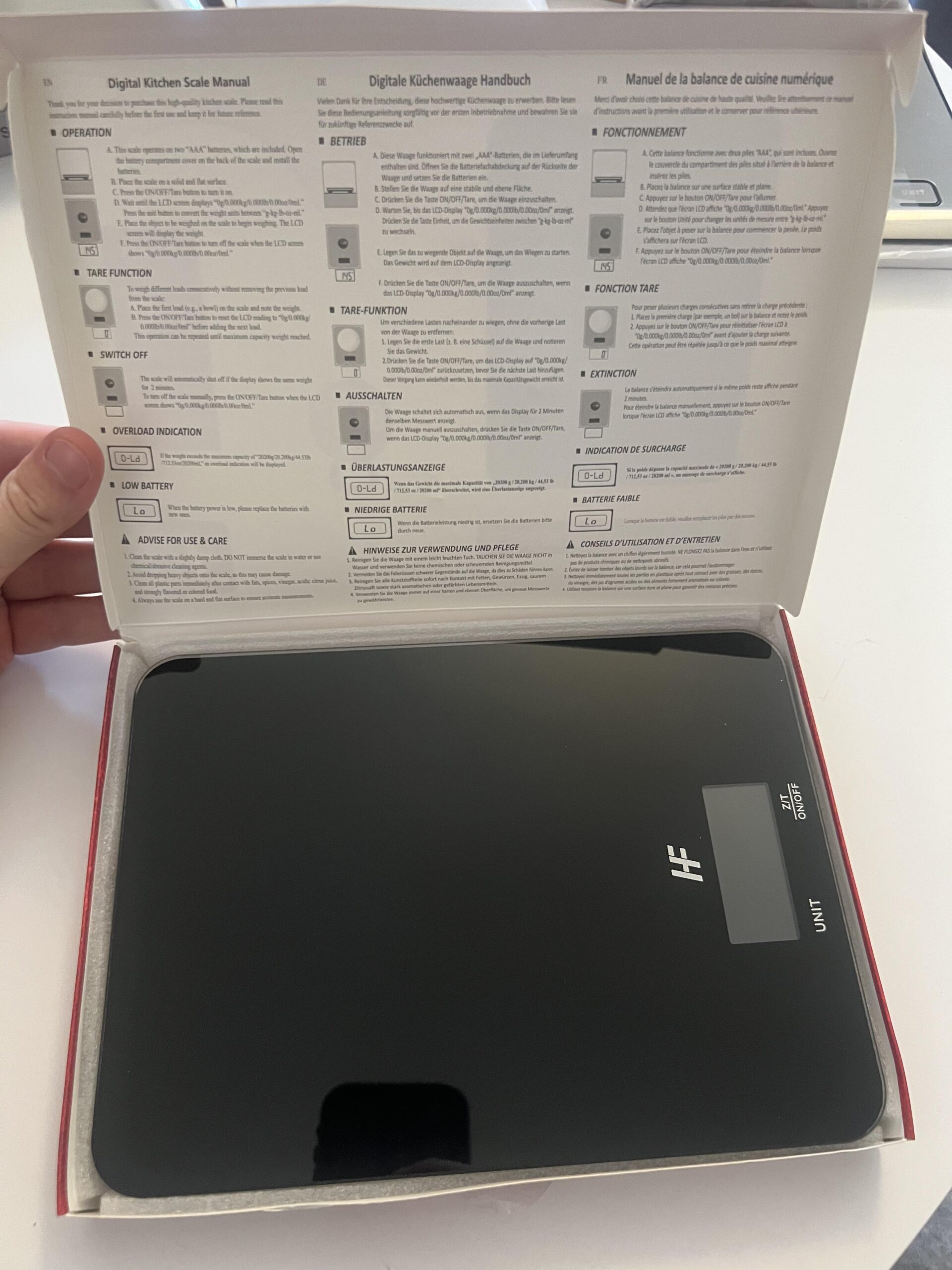
Evidence for this review comes first from my own purchase, my original dated photos and my direct answers about actual use, including the confirmed 0 g cashew result, stability, cleaning and fingerprinting. Physical packaging and underside labels support advertised capacity and 1 g display graduation. The Amazon.de ASIN B0FVM85PN3 listing is a product identification reference only, not a verified current price or affiliate destination. My separate HomeFashion 5 kg and ADE 15 kg articles provide the comparison context.
My photographs show specific screen readings, not calibrated masses. I have not repeated every load systematically, verified the exact minimum supported mass, tested the full 20 kg capacity or evaluated multiple production units. This is a short first-hand product comparison, not a laboratory test or multi-month durability review. I’ll update it when materially stronger experience becomes available.
Compare the other scales I bought: See my Best Kitchen Scales 2026 guide for an original-photo comparison of 10 weighing tools, the actual small-item readouts, capacity trade-offs and the model I ultimately kept. This individual review remains the full source for this product’s first-hand evidence.