Best Kitchen Scales 2026: 10 I Bought, Tested & Compared
Best kitchen scales I bought and compared in 2026: My pick for everyday cooking is the Vitafit VT707 15 kg, the one I kept and continued using after comparing several alternatives. My budget pick is the HomeFashion 5 kg, which cost me just €6.79. But my tests also revealed an important trade-off: some scales with a 1 g display showed 0 g for a very light cashew, while others showed 1–2 g. Those displays are useful observations, not calibrated proof of accuracy.
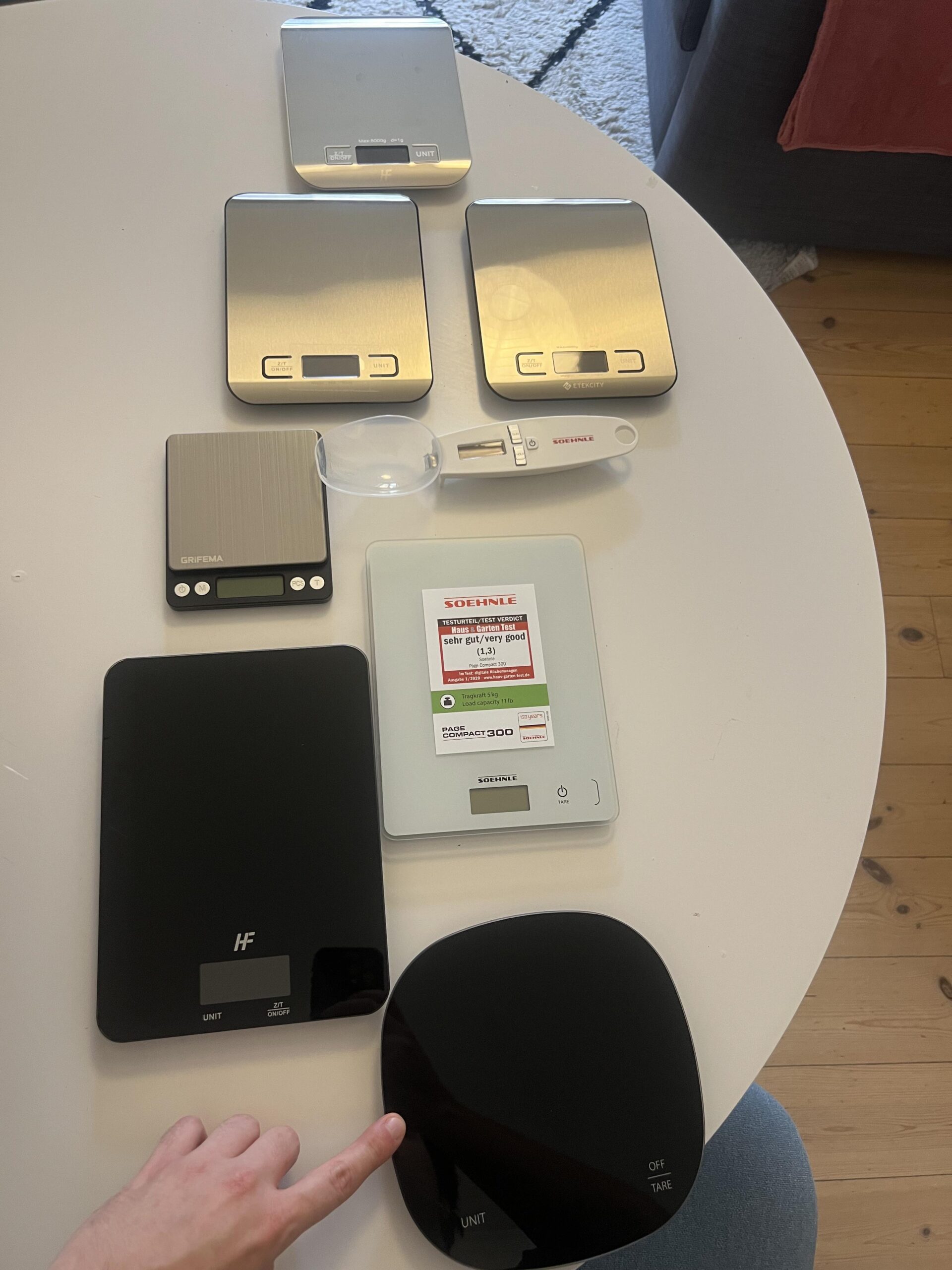
I personally purchased and handled 10 different weighing tools: eight conventional countertop kitchen scales and two specialist devices (a small precision pocket scale and a weighing spoon). I used original photographs and specific displayed readings, and I link all ten published standalone first-hand reviews below. Most models received only short initial comparisons; the Vitafit has more regular cooking use. I have not conducted laboratory calibration, a full-capacity loading test, or multi-month durability trials on every device.
Affiliate disclosure: This guide contains paid Amazon links. As an Amazon Associate, JonTests may earn from qualifying purchases at no extra cost to you. I bought the scales independently; commissions did not determine the recommendations. Please see my full affiliate disclosure. Historical amounts are what I personally paid, not live store prices.
How I chose the best kitchen scales
I compared products I genuinely bought, rather than filling a list with popular Amazon listings I have never touched. My criteria were useful capacity, ability to register light additions, repeatability during the limited checks performed, display readability, controls and tare convenience, cleaning, value at my own purchase price, and how much genuine time I had spent using each model. The scale I use regularly deserves more weight in an overall recommendation than a pretty product photo or advertised precision number.
This is a category ranking, not a mechanical sort by star ratings. Individual star scores come from the separate editorial methods described on each original review and are reproduced without changing them. The GeekerChip now has its own published 4.4/5 first-hand review, and I display that exact score in the specialist card. Its rating reflects pocket-scale usability and small-item weighing, not suitability for heavy kitchen bowls. Because ratings assess different uses, they do not automatically determine the category ranking. Because a 1 kg pocket scale or 500 g spoon solves a different problem from a 15 kg countertop scale, I present the first eight in an everyday ranking and the other two as specialist picks.
At-a-glance comparison: my ten purchased scales
| Scale | Listed maximum | Display step | Small cashew shown | What I paid | Published owner score |
|---|---|---|---|---|---|
| Vitafit VT707 — 15 kg | 15 kg | 1 g | 0 g | €10.99 | 4.6/5 |
| HomeFashion stainless-steel digital scale — 5 kg | 5 kg | 1 g | 2 g | €6.79 | 4.5/5 |
| ADE KE2500-1 black glass scale — 15 kg | 15 kg | 1 g | 0 g | €7.95 | 4.1/5 |
| HomeFashion GROSS glass scale — 20 kg | 20 kg | 1 g | 0 g | €9.99 | 4.0/5 |
| Letron K1H stainless digital scale — 10 kg | 10 kg | 1 g | 2 g | €11.99 | 3.9/5 |
| NUTRI FIT EK8840H stainless scale — 5 kg | 5 kg | 1 g | 1 g | €7.99 | 4.0/5 |
| Soehnle Page Compact 300 (61501) — 5 kg | 5 kg | 1 g | 2 g | €14.39 | 3.8/5 |
| Etekcity EK6015 stainless scale — 5 kg | 5 kg | 1 g | 2 g | €11.04 | 3.7/5 |
| GeekerChip 0.01 g pocket precision scale — 1 kg | 1 kg | 0.01 g | 1.23 g | €5.99 | 4.4/5 |
| Soehnle Cooking Star 66220 measuring spoon — 500 g | 500 g | 0.1 g | 1.6 g | €14.99 | 4.1/5 |
Read the columns carefully: Prices are historical, capacity and resolution are listed specifications, and cashew values are photographed readouts rather than calibrated masses. The 500 g spoon and 1 kg pocket scale are not interchangeable with full kitchen scales.
Eight everyday kitchen scales, ranked for my own cooking
The order below reflects what I would actually buy for common kitchen uses, balancing usable capacity, display and ease of use, the limited test evidence, price and personal preference. It is not a claim that all eight are the best of the entire global market. Each card uses an original product photograph, the same JonTests green/peach pros-and-cons style, and the published first-hand review score.
Advertised capacity: 15 kg · 1 g display graduations
Small-item reading: 0 g in an informal photographed test
My historical purchase price: €10.99
Paid link · verify exact model and current availability at checkout
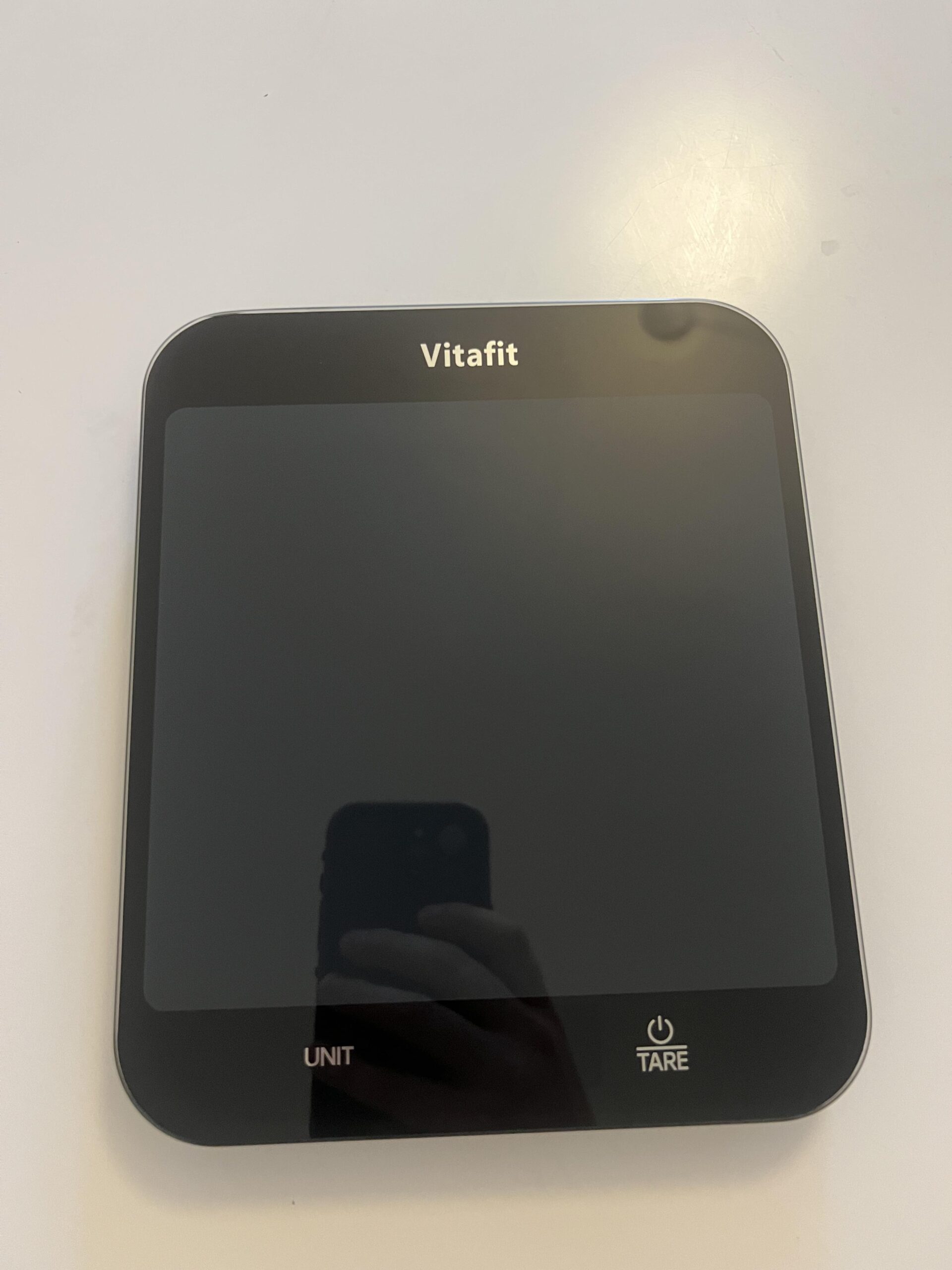
Vitafit VT707 — 15 kg
I bought several models and chose to keep this one for actual cooking and baking. The large, readable display, straightforward controls and 15 kg advertised headroom mattered more to me than shaving a euro off the price.
My photographed tests recorded an 11 g marker, a 1,079 g drink carton and 0 g for a very small cashew. The last result is a real weakness for tiny additions, not a failure of ordinary weighing. My owner review describes several weeks of regular use, longer than most of the initial comparison samples.
What I liked
- My personal keeper after comparing the group
- 15 kg stated capacity without a bulky footprint
- Screen remains legible even when photographed
- Responsive, simple everyday operation
What holds it back
- My very light cashew stayed at 0 g
- Glossy black glass visibly collects fingerprints
- 15 kg maximum was not loaded and calibrated
My verdict: My strongest everyday recommendation if you mainly weigh normal cooking quantities, want a clear display and occasionally need more headroom than 5 kg. Buy a separate precision tool for tiny ingredients.
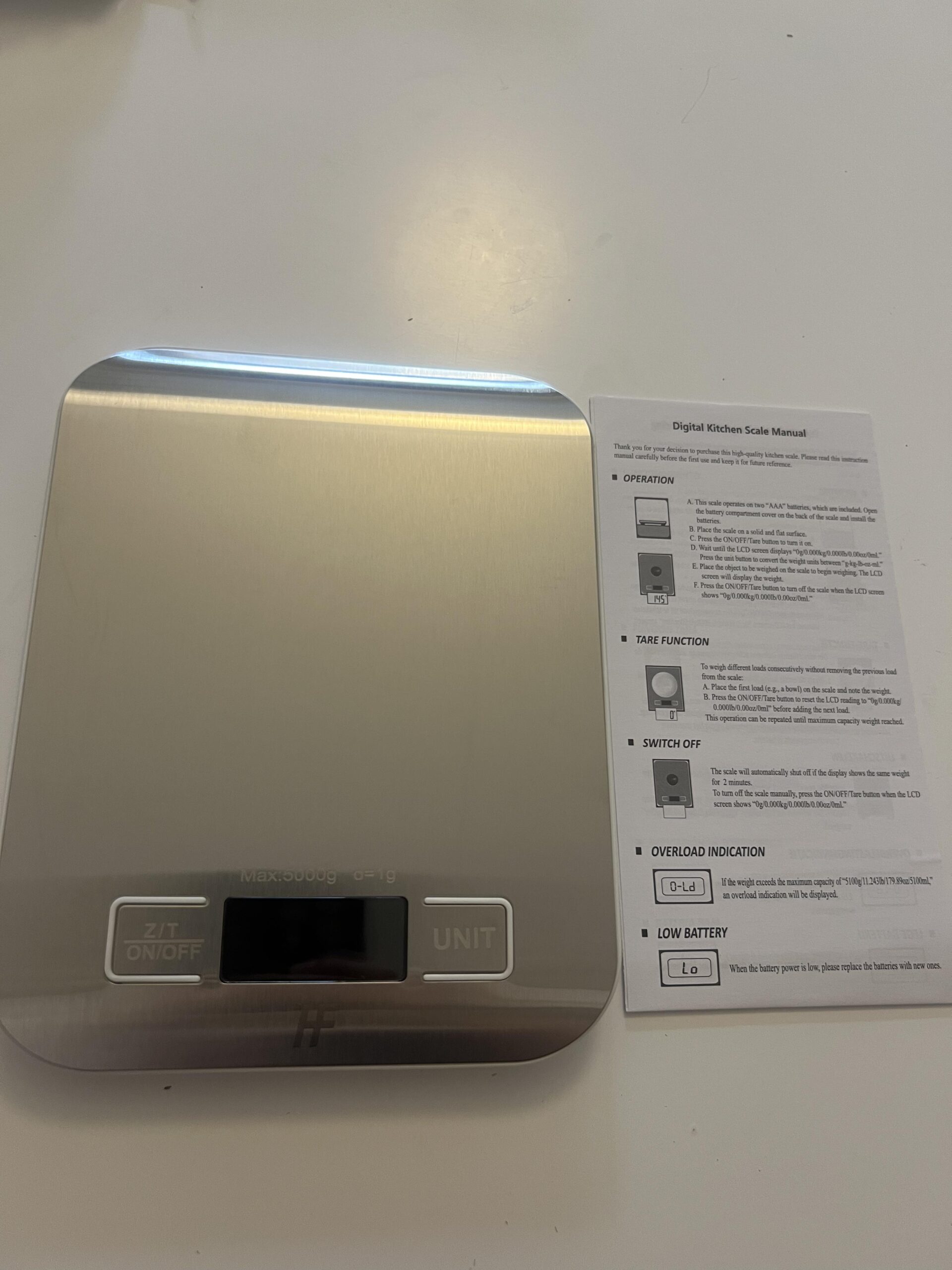
Advertised capacity: 5 kg · 1 g display graduations
Small-item reading: 2 g in an informal photographed test
My historical purchase price: €6.79
Paid link · verify exact model and current availability at checkout
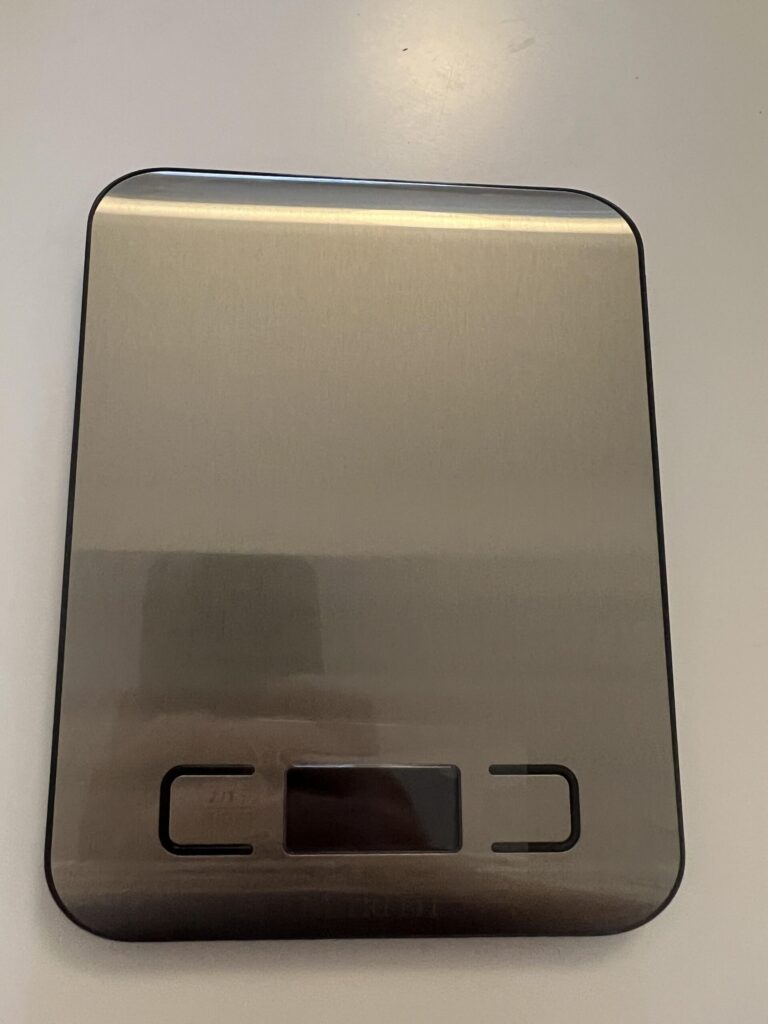
HomeFashion stainless-steel digital scale — 5 kg
This was my cheapest purchased normal countertop scale and one of the most convincing values. For €6.79, it registered a small cashew at 2 g during my own brief repeated checks.
My recorded test also showed an 11 g marker and a 1,064 g one-litre drink carton. These are displayed readings, not reference-weight calibrations. The blue-lit display and tare controls were practical, while the 5 kg ceiling and small platform explain why it is not my overall keeper.
What I liked
- Lowest recorded purchase price among these standard models
- 2 g small-item reading in my checks
- Stainless platform is easy to wipe clean
- Comfortable basic controls
What holds it back
- Only 5 kg maximum, which is not my preferred capacity
- Compact platform can feel limiting
- Long-term durability untested
My verdict: For ordinary portions on a tight budget, it is very difficult to justify paying substantially more without a specific feature requirement.
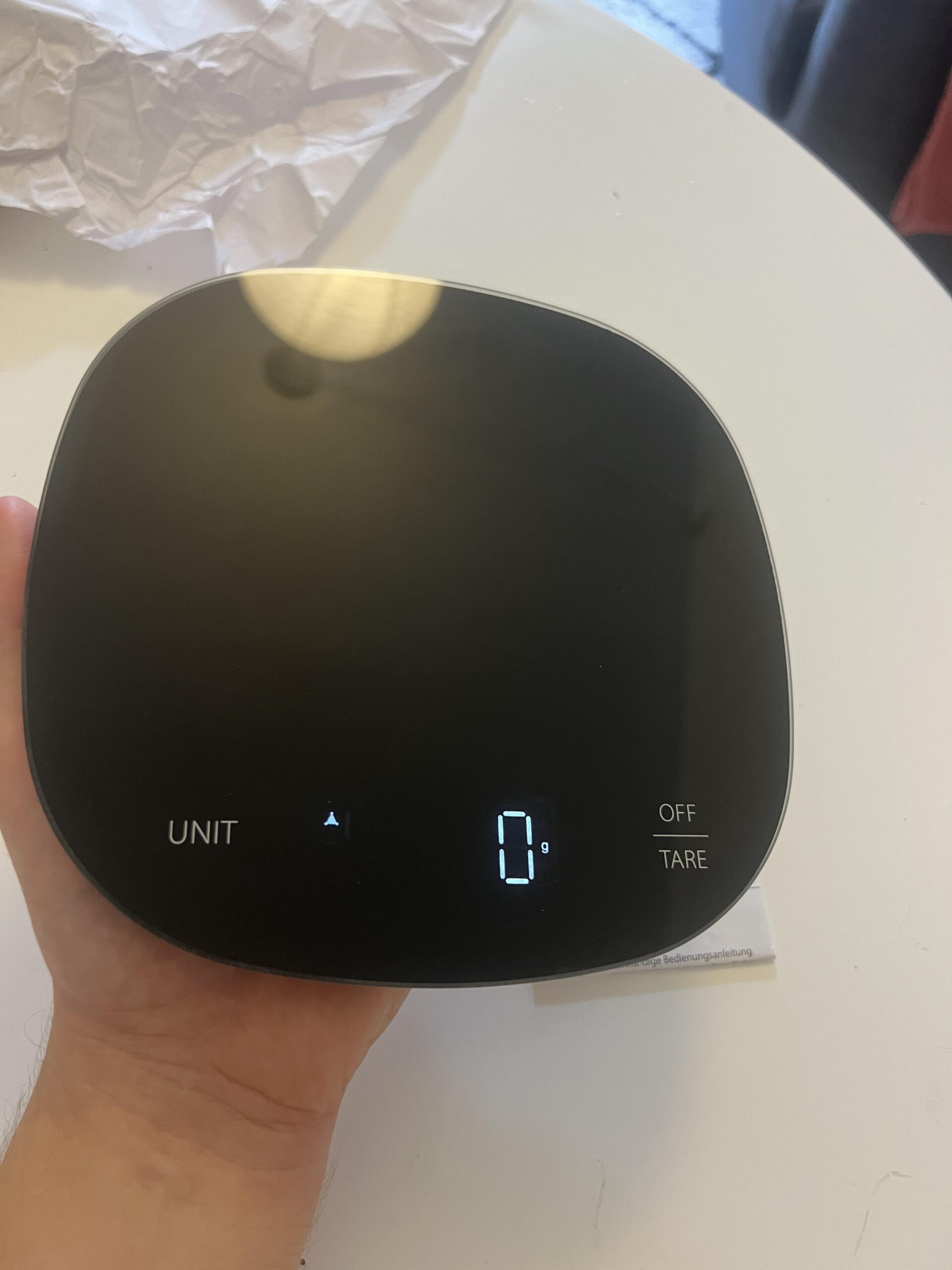
Advertised capacity: 15 kg · 1 g display graduations
Small-item reading: 0 g in an informal photographed test
My historical purchase price: €7.95
Paid link · verify exact model and current availability at checkout
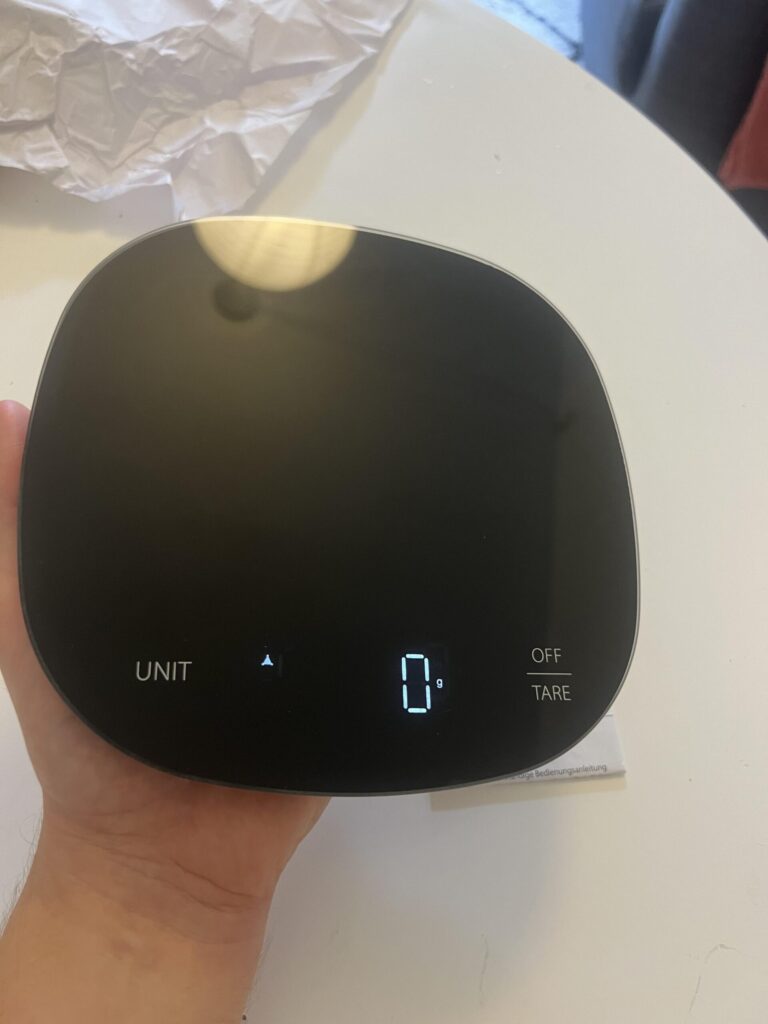
ADE KE2500-1 black glass scale — 15 kg
At the €7.95 I paid, the ADE gave unusually inexpensive access to a stated 15 kg limit. I especially liked how readable its illuminated display was, and the glass top felt stable and easy to clean.
A small cashew did not register after zeroing: the screen stayed at 0 g. That made me hesitant for yeast or tiny spice amounts. This was a first-day test, not a certified accuracy assessment or a full-load challenge.
What I liked
- 15 kg capacity on the box for a modest price
- Excellent, clearly readable illuminated digits
- Quick controls and convenient cleaning
What holds it back
- 0 g on the cashew test
- Less appealing as my all-purpose choice than the Vitafit
- No proof of 15 kg full-load accuracy
My verdict: An attractive low-cost 15 kg option for larger bowls, but I would personally spend a little more on the Vitafit for its everyday experience.
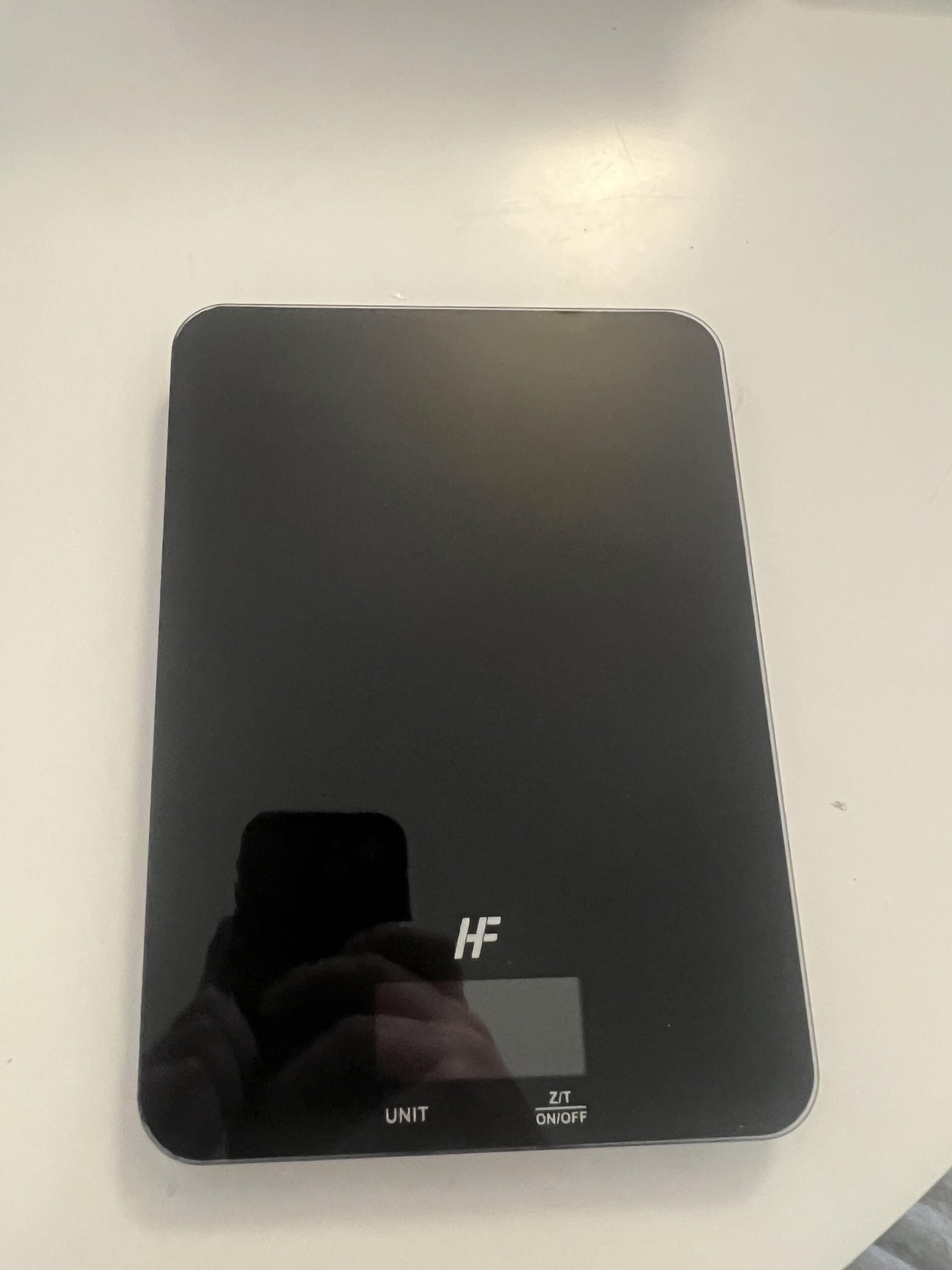
Advertised capacity: 20 kg · 1 g display graduations
Small-item reading: 0 g in an informal photographed test
My historical purchase price: €9.99
Paid link · verify exact model and current availability at checkout
HomeFashion GROSS glass scale — 20 kg
The reason to consider this model is straightforward: its original box and label specify a 20 kg limit, four times the common 5 kg ceiling. I paid €9.99, so it was a notable capacity-for-money proposition.
My photographs record 0 g for a cashew, 9 g for a marker and 1,059 g for a drink carton. The platform was stable and easy to wipe; fingerprints on the shiny glass were more noticeable. I did not place a calibrated 20 kg load on it.
What I liked
- Highest stated limit in this comparison
- Low historical purchase price for 20 kg headroom
- Stable platform and wipe-clean glass
What holds it back
- Single cashew remained at 0 g
- Shiny surface shows fingerprints
- 20 kg performance was not independently verified
My verdict: Choose it for possible very heavy-batch headroom, not for measuring pinches of yeast or spices.
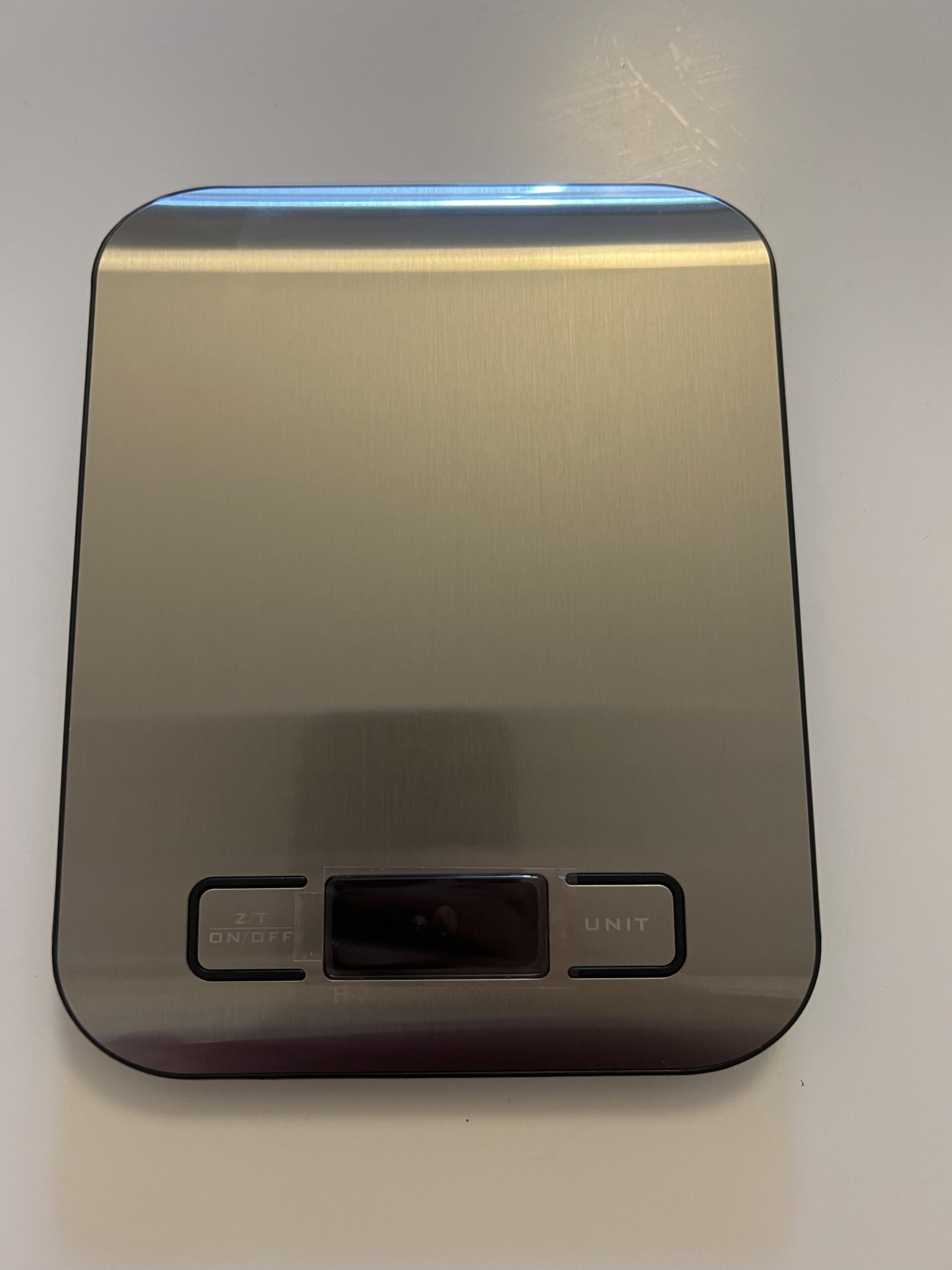
Advertised capacity: 10 kg · 1 g display graduations
Small-item reading: 2 g in an informal photographed test
My historical purchase price: €11.99
Paid link · verify exact model and current availability at checkout
Letron K1H stainless digital scale — 10 kg
This silver 10 kg model offers more stated headroom than a normal 5 kg scale. I also liked its display in person and found the controls straightforward during my short comparison.
The same small cashew consistently displayed 2 g in my checks; other photographed objects showed 11 g for a marker and 1,071 g for a drink carton. The backlit digits could be harder to capture clearly with a camera than to read in person.
What I liked
- 10 kg stated capacity
- Small cashew registered at 2 g repeatedly
- Clear screen to my eye and responsive controls
What holds it back
- Cost me €1 more than the Vitafit 15 kg
- Some glare or camera readability issues
- Long-term consistency not established
My verdict: Worth considering if a 5 kg limit feels tight but you care about whether a light item registers. In my own kitchen, the Vitafit offered the better overall fit.

Advertised capacity: 5 kg · 1 g display graduations
Small-item reading: 1 g in an informal photographed test
My historical purchase price: €7.99
Paid link · verify exact model and current availability at checkout
NUTRI FIT EK8840H stainless scale — 5 kg
I paid €7.99 for this compact stainless-steel model. It displayed 1 g for the small cashew that other scales displayed as 0, 1 or 2 g; that shows detection, not which unit was closest to the unverified real mass.
My other photographed readings were about 10 g for a marker and 1,063 g for a carton. I liked the surface but found the blue LCD relatively hard to read and the controls less pleasant than the HomeFashion 5 kg.
What I liked
- Detected a tiny cashew on its 1 g display
- Small, easy-clean stainless platform
- Reasonably inexpensive
What holds it back
- Display was less comfortable for me
- Buttons felt less polished
- 5 kg maximum is restrictive for my preferences
My verdict: A functional affordable scale, but the less-expensive HomeFashion 5 kg was more convincing for my own use.
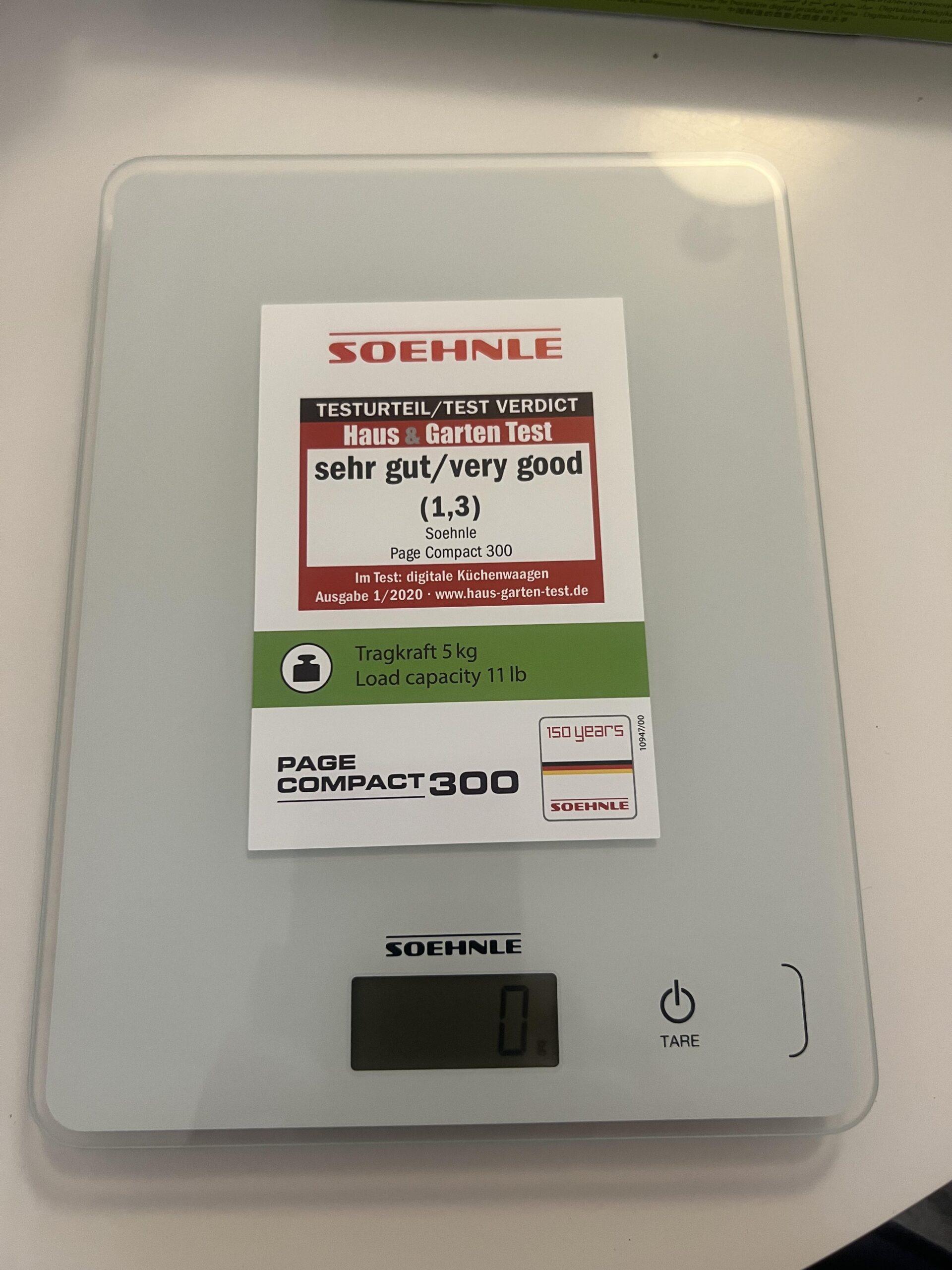
Advertised capacity: 5 kg · 1 g display graduations
Small-item reading: 2 g in an informal photographed test
My historical purchase price: €14.39
Paid link · verify exact model and current availability at checkout
Soehnle Page Compact 300 (61501) — 5 kg
The Page Compact 300 looks clean and discreet in white. Its slim form and touch controls made a good first impression, and my photographs captured a 2 g cashew reading.
I paid €14.39 and recorded 11 g for a marker and 1,059 g for a one-litre carton. It is only a 5 kg model; at that price I did not see enough extra day-to-day benefit over cheaper alternatives. The packaging award badge is not a substitute for my own test.
What I liked
- Slim, minimalist white design
- Readable screen and responsive touch controls
- Registered small cashew at 2 g
What holds it back
- Highest price among my standard 5 kg models
- No extra capacity beyond 5 kg
- Only short-term hands-on comparisons
My verdict: A design-first option rather than my best value or everyday-capacity pick.
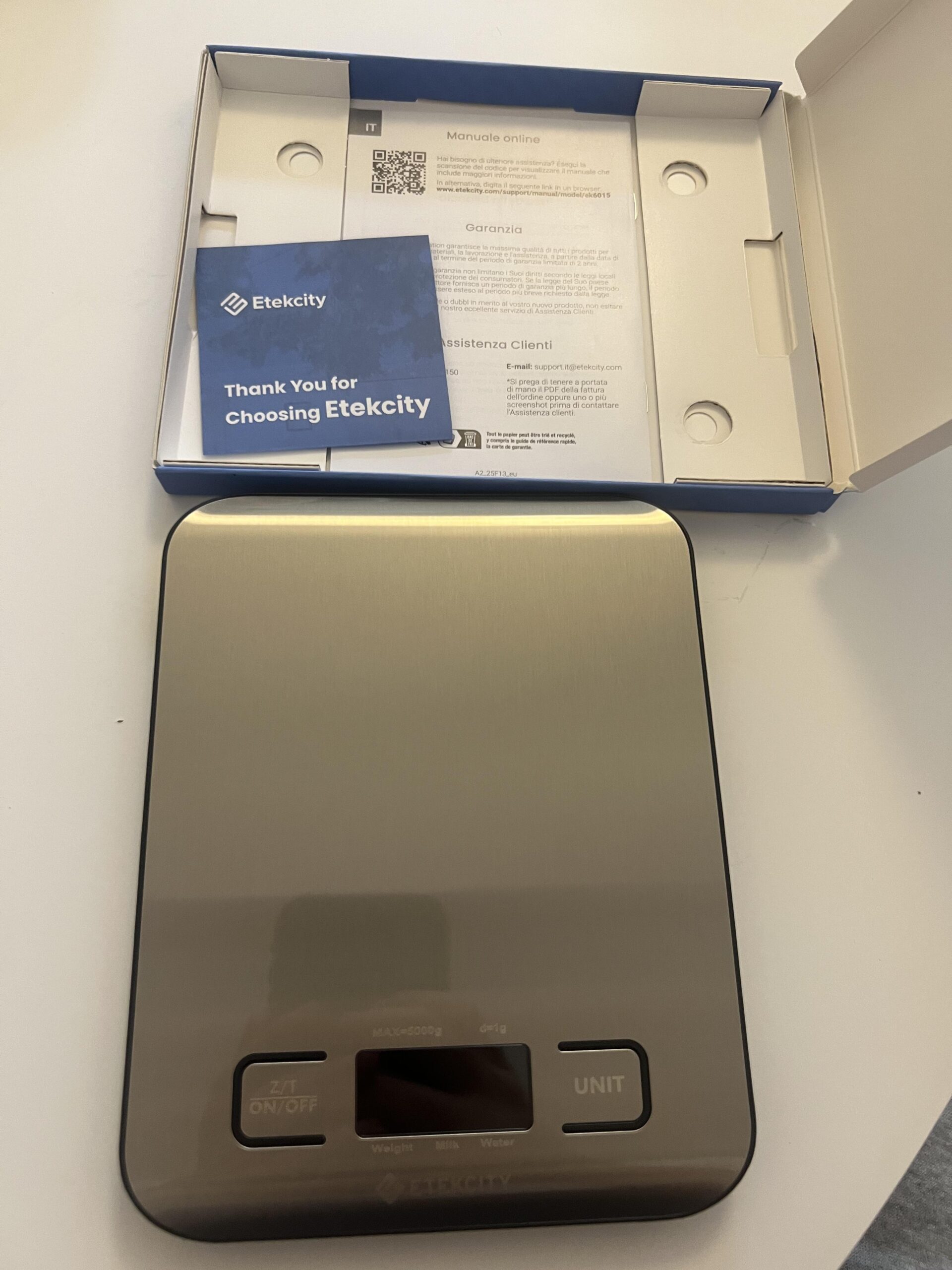
Advertised capacity: 5 kg · 1 g display graduations
Small-item reading: 2 g in an informal photographed test
My historical purchase price: €11.04
Paid link · verify exact model and current availability at checkout
Etekcity EK6015 stainless scale — 5 kg
I bought the EK6015 for €11.04 and observed a 2 g reading for a cashew, a 10 g marker reading and 1,063 g for a carton. It performed the basic weighing tasks during my first-day use.
My main reasons for placing it lower are usability and value: the blue-lit display was harder for me to read, especially through a camera, and the buttons were less pleasant than I wanted. It did not provide a clear advantage over the cheaper HomeFashion 5 kg.
What I liked
- Small-item reading appeared at 2 g
- Basic everyday readings were plausible
- Metal platform wipes clean
What holds it back
- My least favourite screen/button experience in the main group
- 5 kg limit
- Weaker value at my purchase price
My verdict: Not a bad scale based on this brief experience, but I would not pay the premium I did over the HomeFashion model without a specific reason.
Two specialist scales for very small quantities
There is no honest single ranking that makes a 0.01 g pocket scale a direct rival to a 20 kg countertop scale. These two are worthwhile secondary tools, but I would not count either as my only kitchen scale. They are the ninth and tenth products I bought and evaluated in this guide.
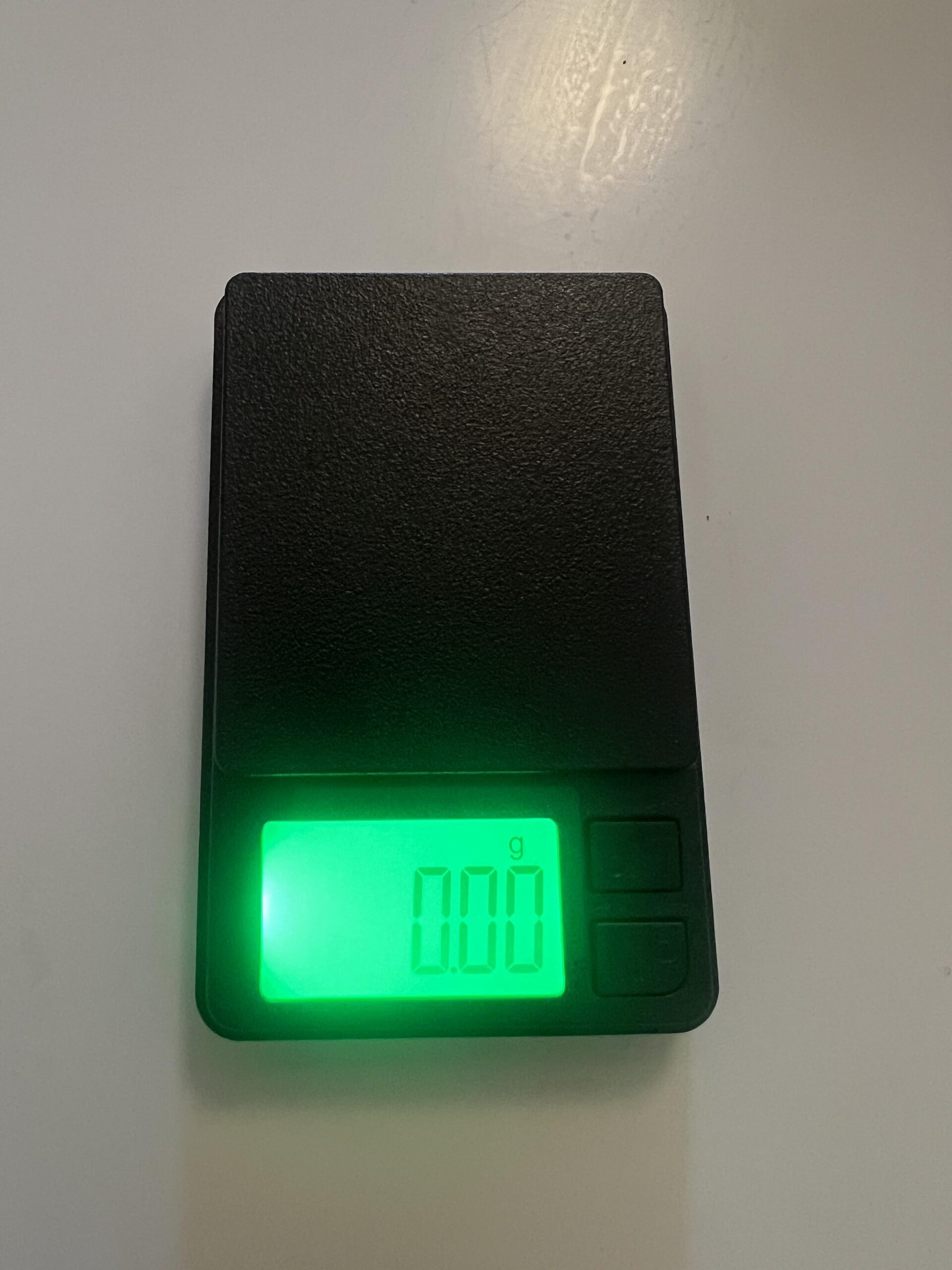
Advertised capacity: 1 kg · 0.01 g display graduations
Small-item reading: 1.23 g in an informal photographed test
My historical purchase price: €5.99
Paid link · verify exact model and current availability at checkout
GeekerChip 0.01 g pocket precision scale — 1 kg
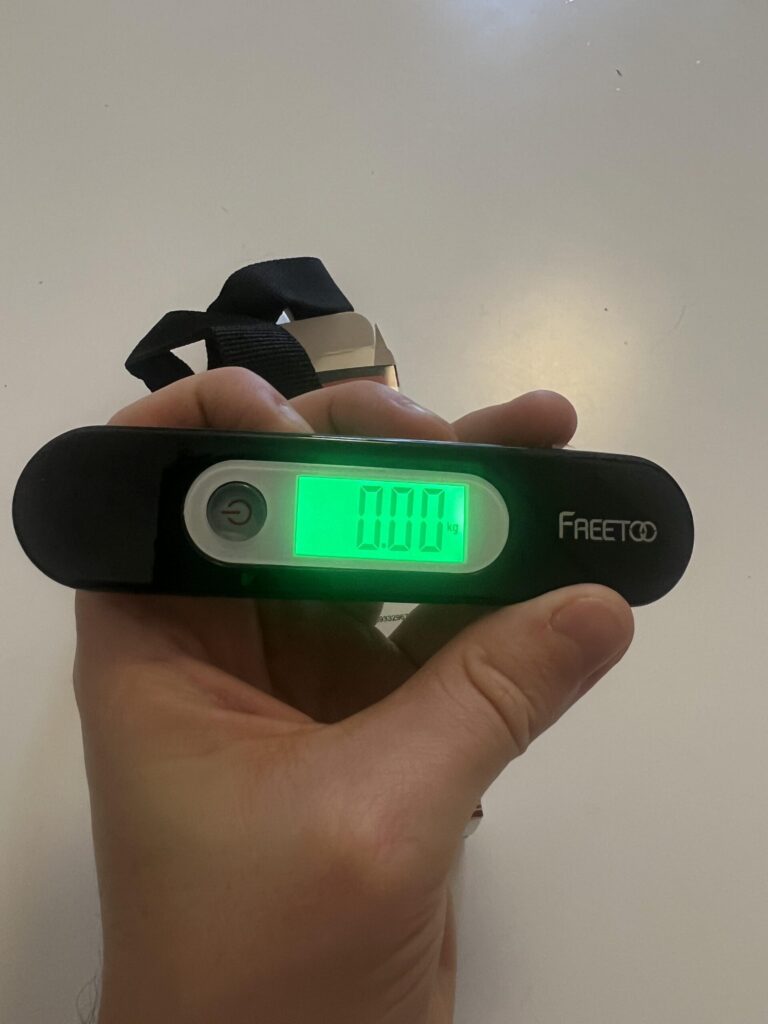
I bought this tiny scale on 12 October 2026 for €5.99. In my brief first-hand trial I liked its genuinely pocketable size, clear green-backlit display, responsive buttons and convenient tare function. It is the small-quantity specialist I would keep alongside a full-size kitchen scale.
My own photographs show a 1.23 g cashew reading, a 10.50 g marker reading and an apparent overload with a one-litre drink carton. Short repeat checks seemed stable, but I did not measure absolute error with certified calibration weights. Its 1,000 g maximum and tiny platform make it unsuitable for large containers, while 0.01 g display steps should not be confused with independently verified ±0.01 g accuracy.
For more original photographs, the 4.4/5 editorial scoring breakdown and the limits of my one-day trial, read my full GeekerChip 1000 g / 0.01 g pocket-scale review.
What I liked
- Truly pocketable and easy to carry
- Prompt and repeatable small-object readings in my brief checks
- Readable green LCD, responsive buttons and easy tare
- 0.01 g display increments; original 1.23 g and 10.50 g photographs
- Excellent value for its specialist role at the €5.99 I paid
What holds it back
- Only 1,000 g rated maximum and a very small platform
- Apparent overload with my one-litre drink carton
- No certified fine-accuracy testing despite 0.01 g graduations
- Long-term durability, battery life and drift remain untested
My verdict: 4.4/5 for its intended pocket-scale role. I would keep this €5.99 GeekerChip for small items and measuring on the go, but its 1 kg limit prevents it replacing the Vitafit or any suitable full-size countertop scale for normal cooking.
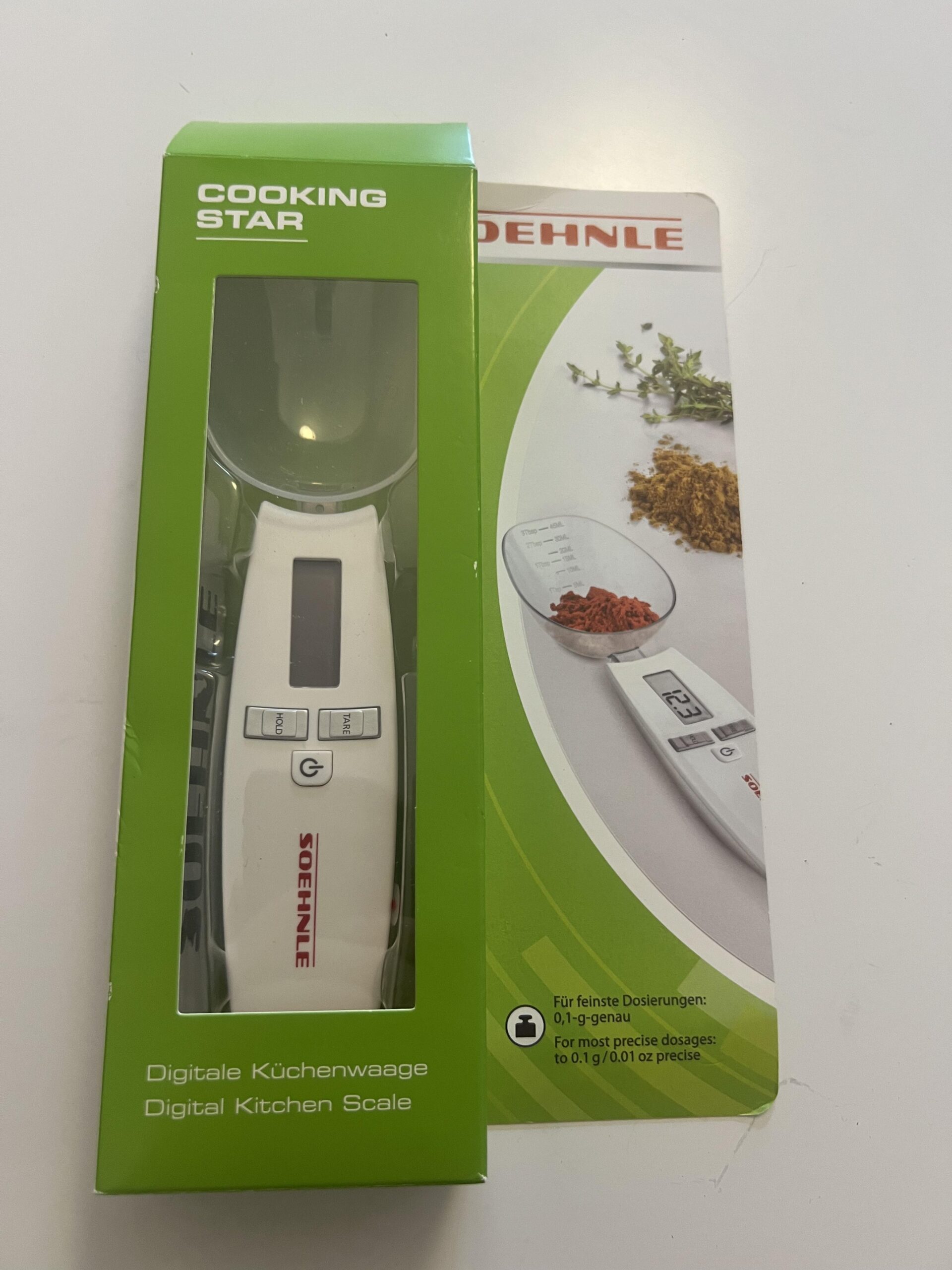
Advertised capacity: 500 g · 0.1 g display graduations
Small-item reading: 1.6 g in an informal photographed test
My historical purchase price: €14.99
Paid link · verify exact model and current availability at checkout
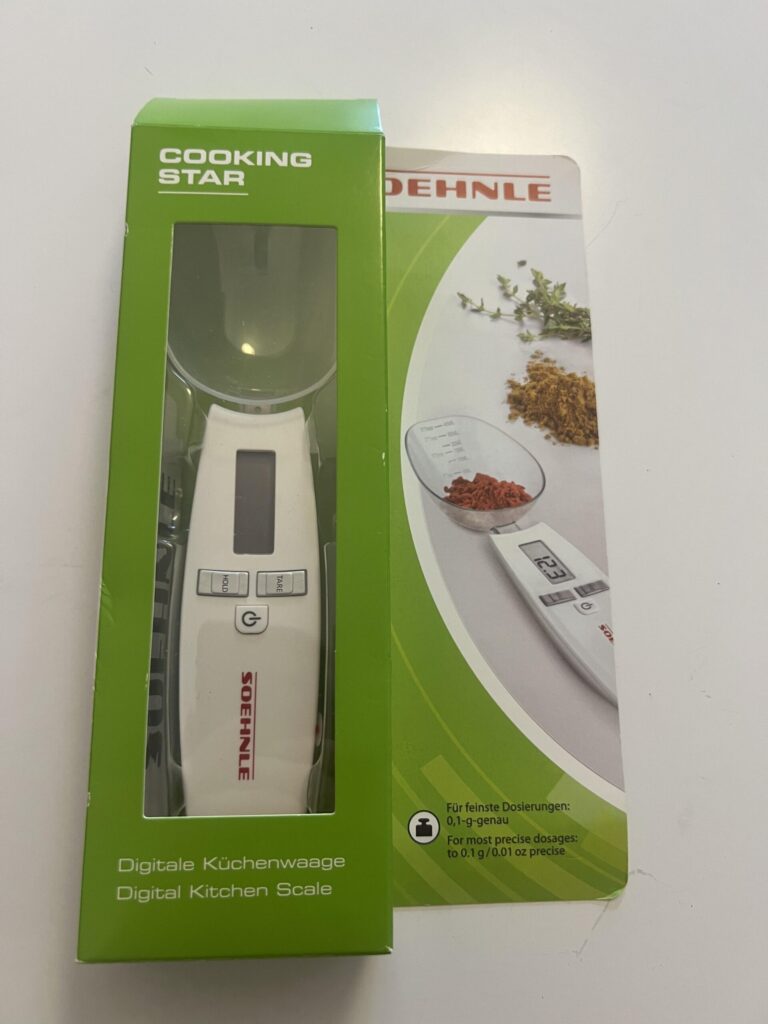
Soehnle Cooking Star 66220 measuring spoon — 500 g
This isn’t a countertop kitchen scale at all: it is a weighing spoon. My first-day test displayed 1.6 g for a cashew and around 10.7 g for a marker. Its HOLD feature and detachable scoop were useful.
However, the 500 g limit and lightweight plastic construction make it a niche accessory. I personally would not buy it again for my cooking because other scales already cover most of the small-ingredient jobs I need.
What I liked
- 0.1 g display graduations
- HOLD and detachable scoop
- Useful with small loose ingredients
What holds it back
- Only 500 g maximum and specialized shape
- Plastic felt inexpensive
- Poor replacement for a full-sized scale
My verdict: For people who really want the spoon format; otherwise a normal scale plus a small precision scale is more flexible.
My original evidence: what the small-cashew tests really tell us
A very light cashew is a useful informal challenge precisely because not all 1 g-graduated countertop scales responded alike. The Vitafit VT707, ADE KE2500-1 and HomeFashion GROSS showed 0 g in my documented attempts. The HomeFashion 5 kg, Etekcity EK6015, Soehnle Page Compact 300 and Letron K1H displayed 2 g; NUTRI FIT showed 1 g. The Soehnle spoon displayed 1.6 g, and the GeekerChip pocket scale displayed 1.23 g. These results describe the individual tests; they do not establish which instrument measured the true nut mass correctly.
A useful buyer takeaway is that a scale may have a 1 g display graduation yet fail to react to a very small item. If you regularly measure 1–3 g of yeast, salt or a coffee additive, I would not treat a 5, 10, 15 or 20 kg headline capacity as evidence of reliable tiny-load detection. Equally, a 0 g result on one cashew does not establish that the same scale is wrong when measuring 500 g of flour.
The one-litre carton photographs were another practical demonstration: some showed approximately 1,059 g, 1,063 g, 1,064 g, 1,071 g or 1,079 g. Do not use those differences as a direct accuracy ranking. Carton contents and conditions were not certified identical, and a nominal one-litre drink is not a 1,000 g calibration weight. A real cross-scale accuracy test requires certified reference masses and repeated controlled measurements.
The buyer’s decision tool: which capacity do you actually need?
| Your usual task | Capacity class to consider | Practical example from my set | Critical caveat |
|---|---|---|---|
| Ordinary recipes, most bowls and small batches | 5 kg | HomeFashion 5 kg or NUTRI FIT | A full bowl consumes part of the maximum load. |
| Mixed everyday cooking and heavier bowls | 10–15 kg | Vitafit VT707 or Letron K1H | My full-load accuracy is not verified. |
| Unusually heavy batch or container | 20 kg listed maximum | HomeFashion GROSS | 20 kg is a manufacturer-stated limit, not a completed 20 kg owner stress test. |
| Tiny measured amounts away from the kitchen | 1 kg pocket precision scale | GeekerChip | Small platform and overload above 1 kg. |
| Weighing directly in a spoon-shaped scoop | 500 g weighing spoon | Soehnle Cooking Star | Specialized, not a replacement for a normal platform. |
One simple calculation is more useful than chasing bigger marketing numbers. If your heaviest mixing bowl weighs 1.5 kg and you want to add 3 kg of ingredients, the scale needs to accommodate at least 4.5 kg total before tare; a 5 kg model has very little spare headroom. If your bowl weighs 2 kg and you add 4 kg of ingredients, that is 6 kg total, beyond the stated capacity of a typical 5 kg scale. Taring the bowl changes the displayed net weight; it does not magically increase the load cell’s total capacity.
What I’d improve before calling this a laboratory comparison
- Certified reference masses: test 1 g, 2 g, 10 g, 100 g, 500 g and 1 kg in a repeatable order, with documented calibration and several cycles.
- Repeated tare and drift checks: add and remove known masses after taring a typical bowl; record settle time and any changes.
- Maximum-load checks: test each model near—but not beyond—its stated limit with suitable known masses, without improvising a risky pile of objects.
- Usability under a real bowl: assess display obstruction, cleaning, button placement and power-off timing consistently.
- Longer use: record any battery or durability issues over months, rather than extrapolating from a one-day test.
For perspective, established independent testing programs such as Which? and BBC Good Food use calibrated reference weights and broader kitchen tasks. I haven’t reproduced that laboratory standard. What I can contribute uniquely is the actual products I paid for, my own photographs, my exact observed readouts, consistent disclosure of limits, and the everyday model I chose to keep. This guide will be updated when I obtain stronger results.
Which kitchen scale would I actually buy again?
If I had to keep just one for my normal food preparation, I would keep the Vitafit VT707 again. For a friend who only weighs standard ingredients and wants the lowest reasonable cost, my first suggestion would be the HomeFashion 5 kg. For a genuinely heavy bowl I would look at 15–20 kg models but test the intended load first. If my main concern became 1–2 g amounts, I would add a specialist tool instead of expecting a high-capacity kitchen scale to be a high-precision balance.
Frequently asked questions
Are 1 g kitchen scales accurate to within 1 g?
No such accuracy guarantee follows from the 1 g display step alone. Resolution, minimum detected change, repeatability and true accuracy are distinct properties. My cashew trials make that distinction unusually visible.
Is a 15 kg scale better than a 5 kg scale?
Only when the extra headroom solves a real task. For a person measuring 200 g of sugar or 500 g of flour, a good 5 kg unit may be cheaper and easier to store. I personally favour 15 kg because I use larger containers and like the spare capacity.
Why is a 0.01 g pocket scale not your best overall?
The GeekerChip has a 1 kg maximum and a much smaller platform; my carton test overloaded it. Its 0.01 g resolution is useful for tiny amounts, but it cannot do the bowl and batch jobs I expect from my primary kitchen scale.
Do the prices in the comparison reflect Amazon today?
No. They are amounts I personally paid on the original purchase dates and are shown for context only. Use the linked exact-model listings to check current prices and availability; paid links are disclosed before the first product card.
Which scale was best for measuring the cashew?
Several registered it and others did not, but I cannot honestly name the most accurate without knowing the nut’s true mass from a reference. The pocket scale showed more decimal places, which is not the same as proof that its answer was closer to reality.
Sources, authorship and update policy
Written for JonTests by the person who bought and evaluated the scales. The first-hand facts, purchase amounts, pros/cons and all ten individual editorial scores are from my published original product reviews and owner photographs linked in the cards. Additional methodological context: Which? kitchen-scale testing, BBC Good Food kitchen-scales review and my own How I Test policy. This guide was prepared in November 2026. It will be revised when I have controlled calibration data, materially more use time, or a relevant new model. Historical prices should never be treated as live offers.