PowerBar Protein+ Low Sugar Vanilla Review: I Ate 90 Bars
My verdict after 90 bars: 4.4/5. Between July 14 and October 13, 2026, I bought three 30-packs of PowerBar Protein+ Low in Sugars Vanilla and ate all 90 bars. I paid €89.44 in total—€0.99 per 35 g bar on average, using my own money with no sponsorship, review discount or compensation. The taste is surprisingly good for the price, and the soft bars are easy to eat between meals, at school or at work.
The trade-offs matter: I prefer the taste and texture of some Barebells protein bars, PowerBar has a slightly artificial aftertaste, and the soft texture means a bar can squash under pressure. Each Vanilla bar provides 10 g protein for 112 kcal, not 107 kcal: the 112 kcal figure is printed on my Vanilla wrapper and in PowerBar’s own nutrition table. I would buy these again, particularly on a student budget.
Editorial independence: I bought these bars three times with my own money, without any discount, sponsorship, free items or compensation. The opinions, observations and rating are my own. I have not conducted a blind taste test or laboratory nutrition tests. JonTests’ testing methodology explains how I evaluate personally owned products.
Affiliate disclosure: This review contains a paid Amazon link. As an Amazon Associate I earn from qualifying purchases. If you buy through the paid link, JonTests may receive a commission at no extra cost to you. I bought all 90 bars myself, without any discount, sponsorship or compensation, and the rating is my own independent judgment. Read my full affiliate disclosure.
Paid link · opens Amazon · verify Vanilla, 30 × 35 g
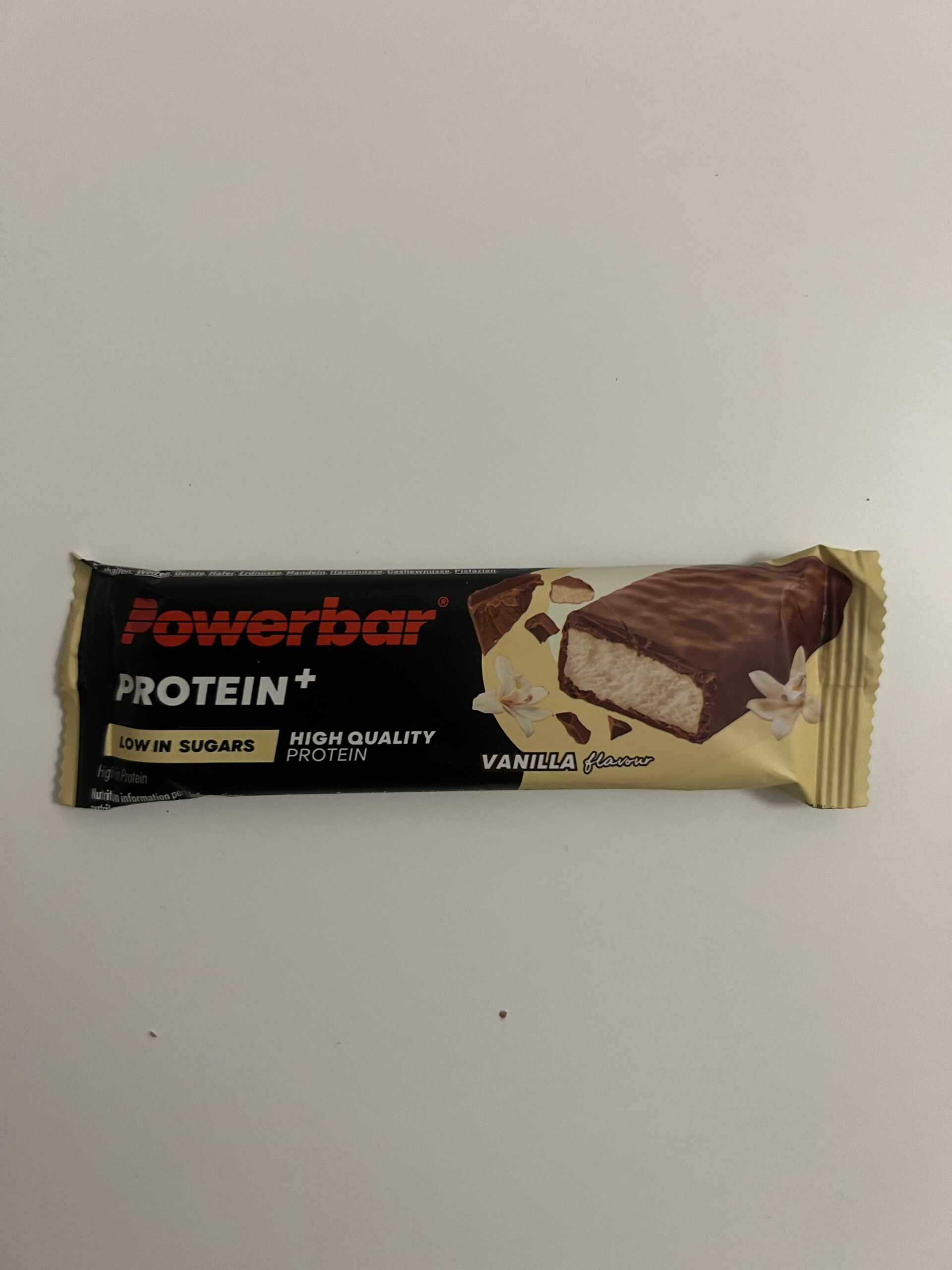
PowerBar Protein+ Low in Sugars Vanilla, 35 g
Quick verdict: One of my best-value protein bar purchases. Pleasant milk-chocolate coating, a soft easy-to-eat centre and a practical 10 g protein boost without mixing a shake. Taste and consistency are not quite as good as the Barebells bars I have tried.
Best for: students, budget-conscious gym-goers and people who eat protein bars frequently as a convenient supplement to meals.
Skip if: you prioritise top-tier taste, prefer a firmer bite, need 20 g protein in a single bar or are sensitive to sugar alcohols.
- Just under €1 per bar on average across 90 purchased
- Chocolate coating tastes good; sweetness is about right
- Soft and easy to chew as a quick snack
- 10 g protein for 112 kcal and 1.6 g sugars
- Portable; no shaker, water or mixing required
- A slight artificial aftertaste
- Very soft texture, easily squashed by pressure
- I prefer Barebells on taste and overall mouthfeel
- 10 g protein is modest if you want a full 20 g protein snack
- Sugar alcohols can be a digestive consideration
Bottom line
4.4/5: a repeat-buy budget favourite, not my favourite-tasting bar. I prefer Barebells when taste is the priority, but the PowerBar has been the better value for my own spending. The fact that I bought it three times and finished all 90 bars is more meaningful than a one-bite first impression.
What 90 PowerBar Vanilla bars cost me
My purchase history covers three 30-packs of the same 35 g Vanilla bar; the dates and amounts below are the prices I reported paying. The prices were ordinary amounts I personally paid, not sponsored, discounted review units or a claim about current retail prices.
| Purchase date | Bars | My pack cost | Cost per bar |
|---|---|---|---|
| July 14, 2026 | 30 | €31.99 | €1.07 |
| August 3, 2026 | 30 | €29.53 | €0.98 |
| August 13, 2026 | 30 | €27.92 | €0.93 |
| Total / average | 90 | €89.44 | €0.99 |
The useful calculation: €89.44 ÷ 90 = €0.994 per bar, or roughly €0.99 for 10 g protein. That works out to about €9.94 per 100 g of protein supplied through these bars, if you were to calculate only their protein contribution. This is not necessarily the lowest-cost protein source compared with ordinary foods or protein powder; it is a concrete price benchmark for a ready-to-eat bar. At 112 kcal each, the 90 bars represent 10,080 kcal and 900 g protein in total, across the products I purchased—not a statement about my daily intake.
My cost per bar fell from €1.07 to €0.98 and then €0.93. This reflects the price I paid on each date, not a verified store-wide price trend or a promise you can buy at those prices now. If you are buying a pack of 30, divide its current all-in price by 30 to compare it with my €0.99 average.
How does PowerBar Protein+ Vanilla actually taste?
Better than I expected for such an affordable protein bar. I think the chocolate coating tastes genuinely good and the overall sweetness is about right. The bar is marketed as Vanilla, although I would not claim the vanilla flavour is particularly distinct: it is harder to pick out than the chocolate and sweet notes.
There is a slight artificial aftertaste. It is noticeable enough to count as a drawback, but it never put me off finishing a pack or buying another. I do not find it excessively sweet. If you are very sensitive to the taste of sweeteners, however, you may feel differently.
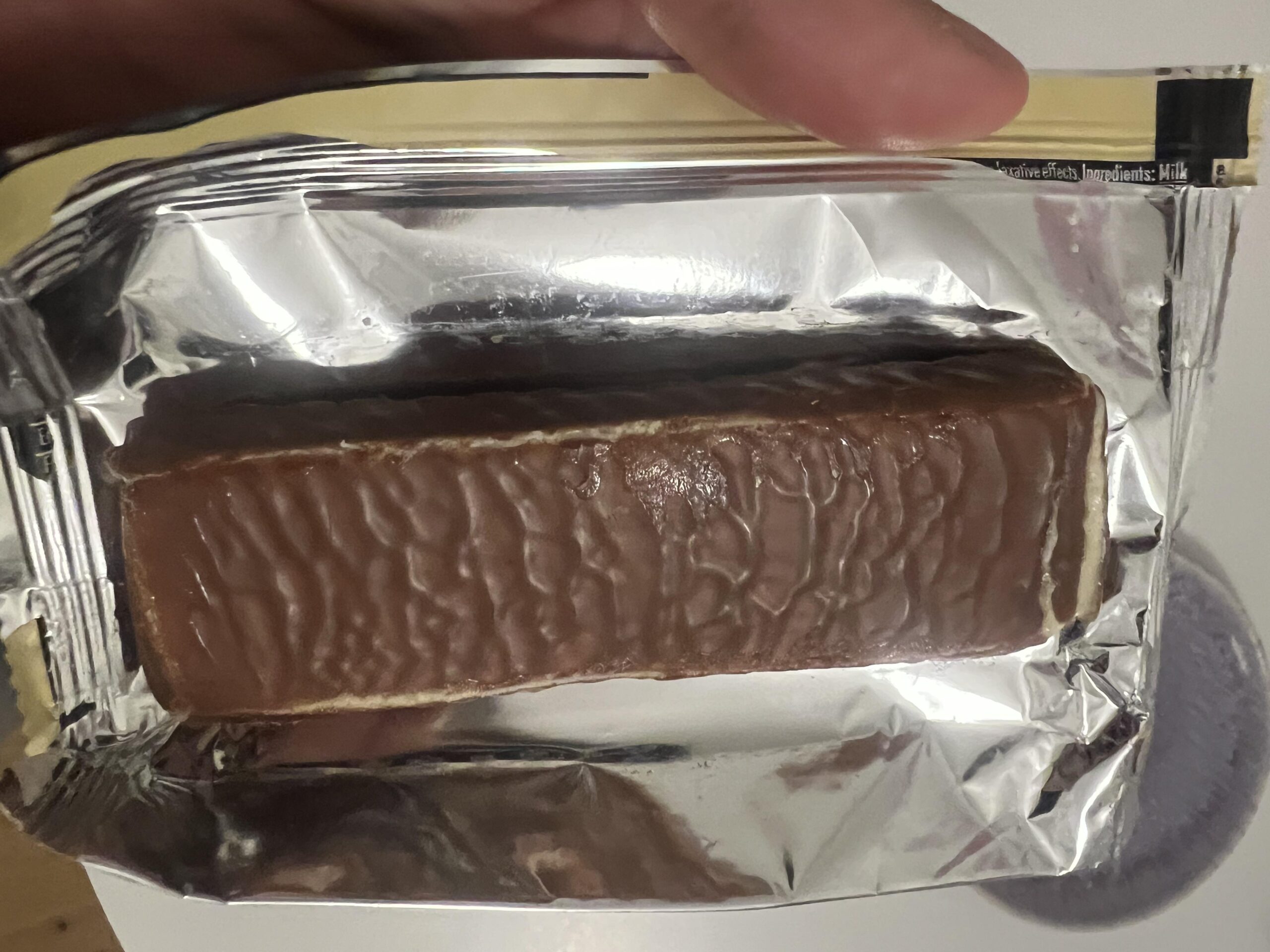
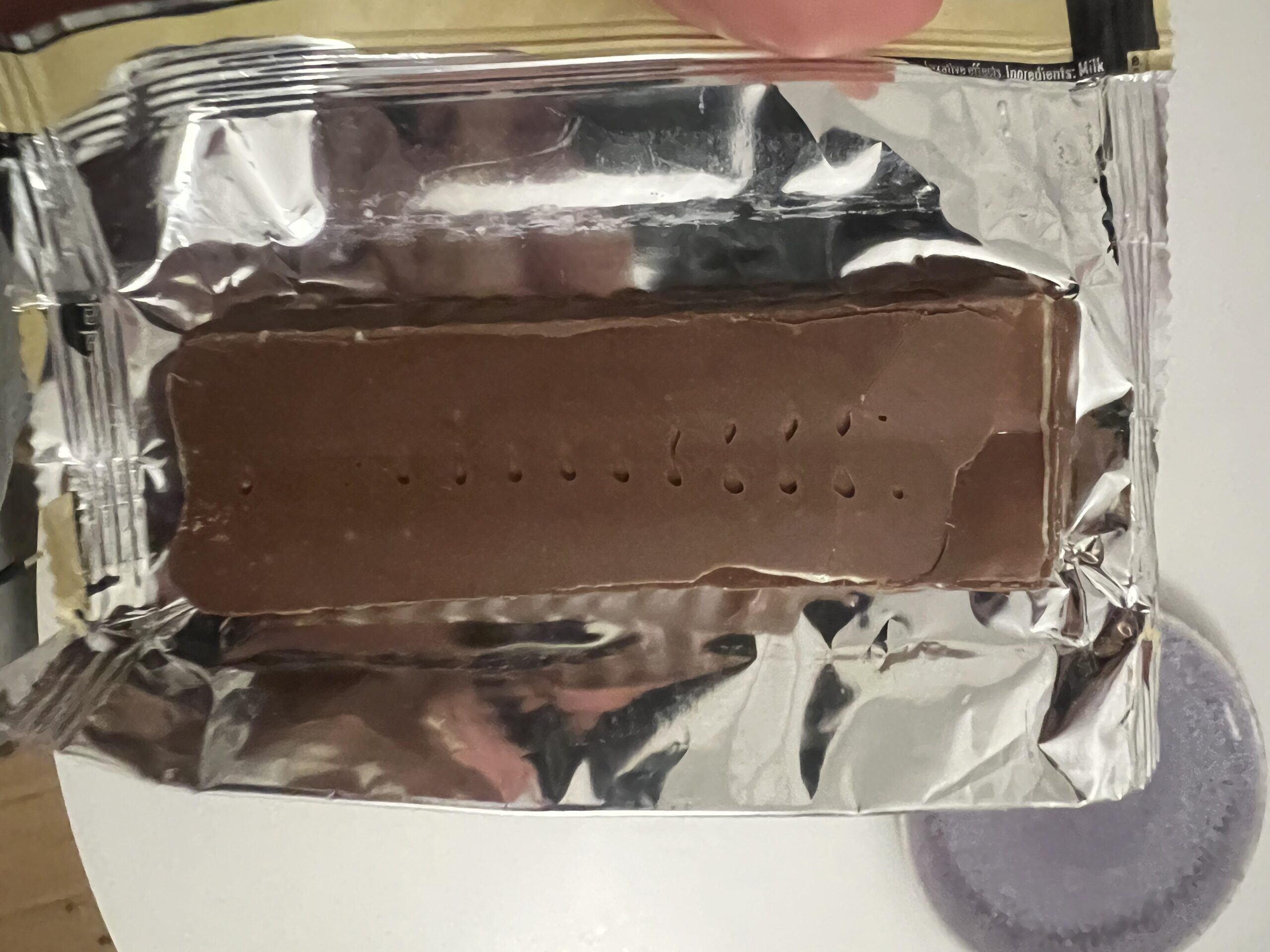
Texture: easy to chew, but a little too soft
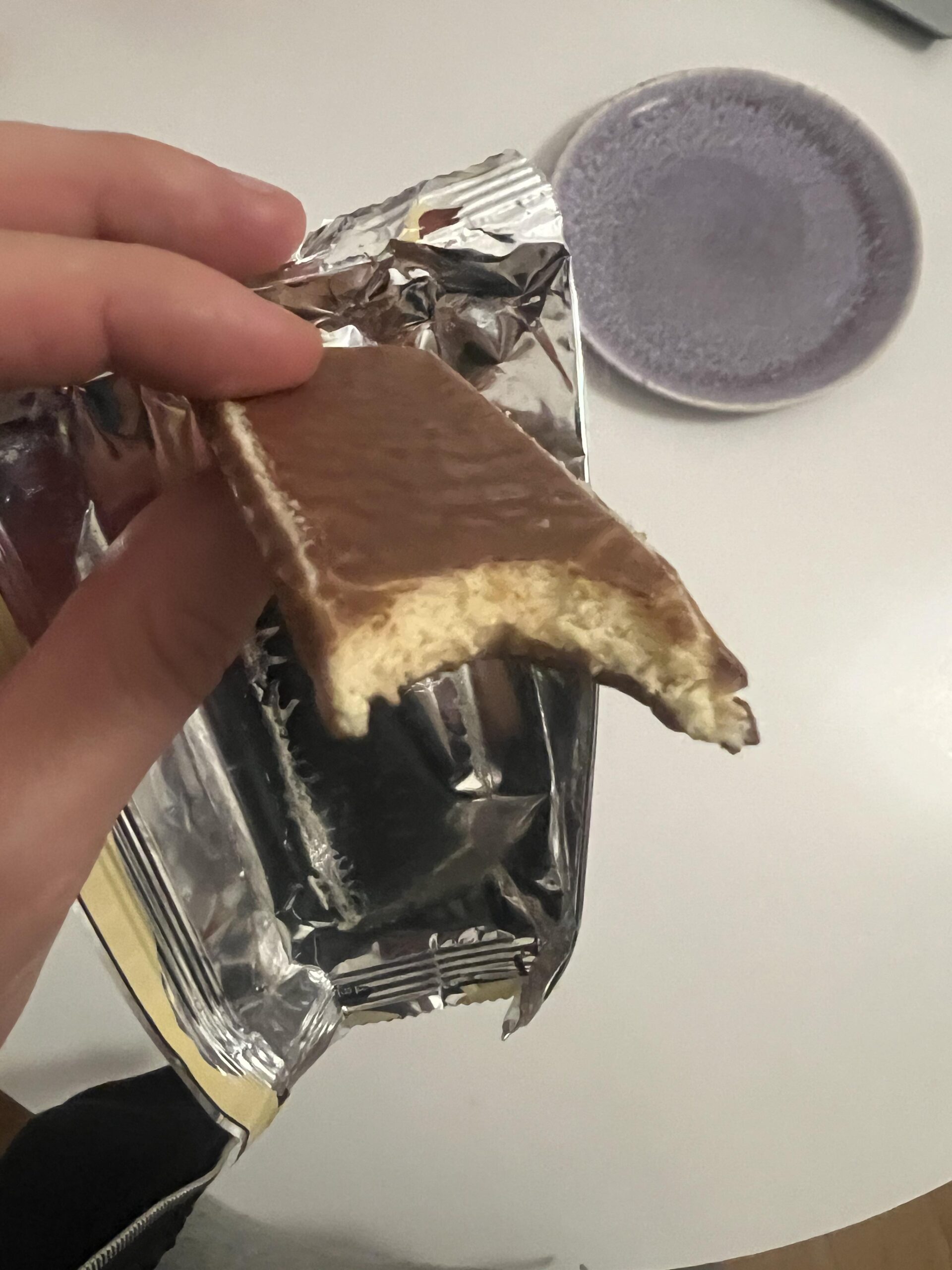
The centre is quite soft—softer than many protein bars I have eaten. It makes the bar easy and comfortable to chew, which I like when eating a quick snack. But it also has a downside: pressure can squash or deform the bar. I notice this if something presses against it in a bag or storage space.
This is one reason I prefer the overall texture of the Barebells bars I have tried. I did not measure compression resistance or perform a standardised temperature test; my observations come from ordinary handling of the bars I bought.
Nutrition: 112 kcal and 10 g protein—not a full meal
The numbers below are taken from the Vanilla 35 g label and PowerBar’s published product information. They are product-label values, not measurements I made myself.
| Nutrition per 35 g Vanilla bar | Label amount | Why I care |
|---|---|---|
| Energy | 112 kcal | A relatively small snack I can fit around meals. |
| Protein | 10 g | A useful top-up, but I might need more than one for a larger protein target. |
| Sugars | 1.6 g | Low declared sugar for a chocolate-coated bar. |
| Fibre | 4.9 g | Adds fibre to a small snack; individual tolerance differs. |
| Polyols / sugar alcohols | 9.1 g | Relevant if you have digestive sensitivity; the manufacturer warns excessive consumption may have a laxative effect. |
| Fat | 3.4 g | Part of the overall calorie content. |
| Carbohydrates | 11 g | Includes the sugars and polyols listed above. |
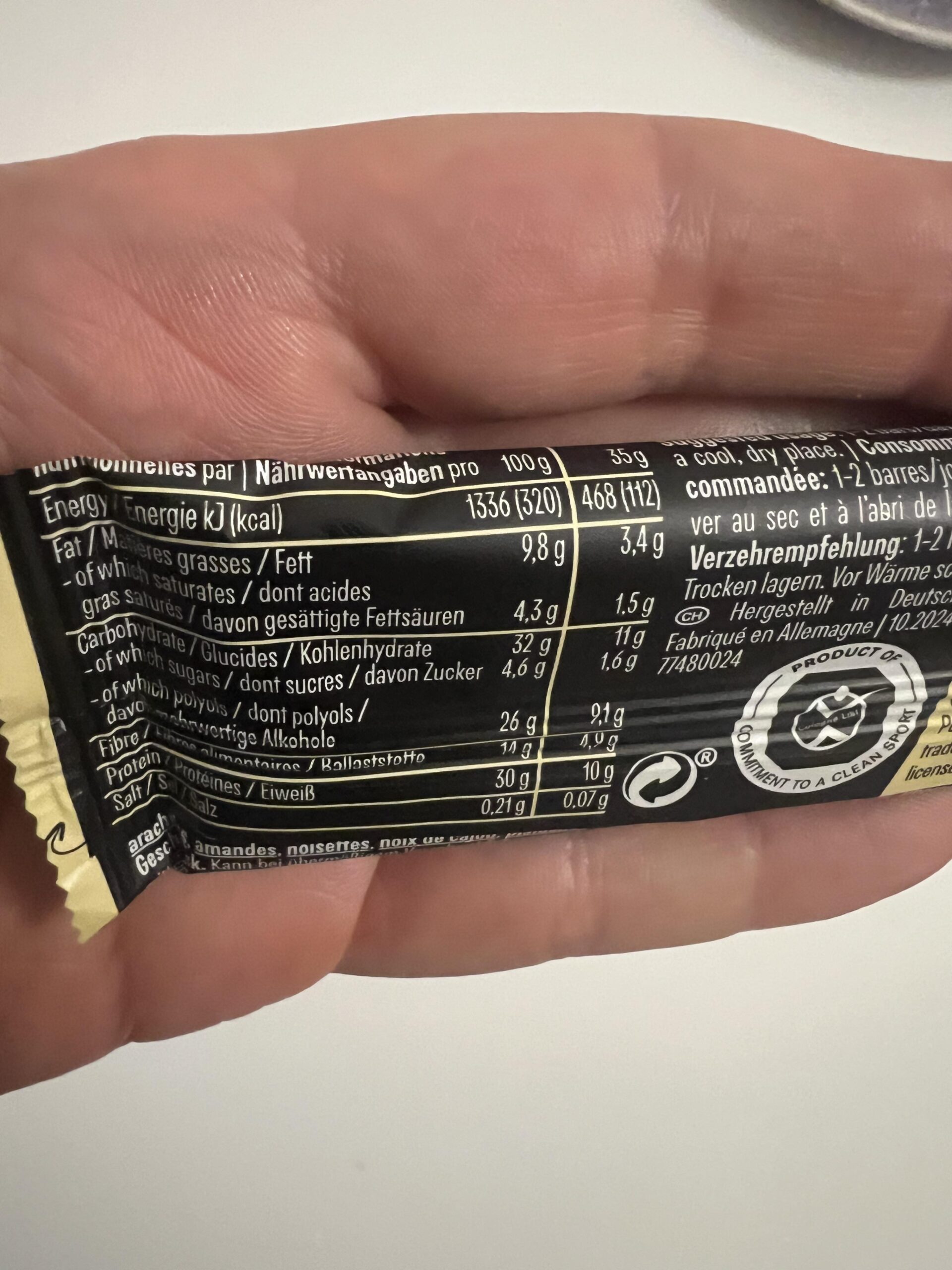
Some retailer titles advertise this product line as “only 107 kcal,” but do not apply that number to the Vanilla bar in this review. Flavours differ. The exact Vanilla bar in my photos is listed at 112 kcal. Read the pack you buy, especially if you use nutrition tracking.
The bar contains milk and soy ingredients, so it is not vegan. PowerBar identifies this range as vegetarian and collagen-free; check current packaging for allergens and potential traces if they matter to you.
Does it fill me up, and what about digestion?
For its size, I find it reasonably filling. I sometimes have it after a lunch that is low in protein so I can conveniently add another 10 g, and other times I take one for school or work. I usually eat one in a day and occasionally two. I am not using these bars to replace a balanced lunch or dinner.
In my experience, these bars have not caused noticeable bloating. I have sometimes noticed particularly smelly gas, which I also experience with other protein supplements. I cannot establish whether this specific PowerBar, the sugar alcohols, the rest of my diet or something else was responsible. The label does list 9.1 g polyols per 35 g bar, and PowerBar warns that excessive consumption may have a laxative effect. If sugar alcohols cause you digestive discomfort, this is worth checking before bulk buying.
PowerBar vs Barebells: which would I choose?
Better flavour and texture? Barebells, for me. Better value at my actual prices? PowerBar. I have eaten other bars from Barebells and find them tastier and generally more satisfying in texture. I have not documented a blind, side-by-side tasting of a precisely identified Barebells flavour against this PowerBar, so this is a practical personal preference rather than a controlled ranking of all variants.
| Buying priority | PowerBar Vanilla, tested here | Barebells bars I have tried |
|---|---|---|
| Taste | Good chocolate; slight artificial aftertaste | My preference for taste |
| Texture | Very soft; pressure easily deforms it | My preference for consistency |
| Protein content | 10 g per 35 g bar | Varies by size and specific flavour; check the exact label |
| Price/value | €0.99 each on average across my three 30-packs | Typically cost me more; no verified like-for-like receipt calculation included |
| Who I would choose it for | Frequent low-cost snacking and convenient protein top-ups | When my main priority is taste rather than price |
This is not a calorie-for-calorie comparison: different bars may weigh substantially more than PowerBar’s 35 g. If you need a full 20 g protein from these PowerBars, you would eat two bars—224 kcal and approximately €1.99 at my actual average price. That practical calculation is useful when comparing a single larger protein bar with two small ones; it is not a claim that every 20 g protein snack is nutritionally equivalent.
Who should buy a 30-pack?
Consider a bulk purchase if you already know you enjoy this flavour, have regular protein-light meals you want to supplement, and prefer grabbing a wrapped bar over mixing protein powder. I find bars simpler and tastier than powder for this everyday purpose. I particularly recommend them to students or others watching their snack budget—provided the current pack price is comparable with what I paid.
Try a single bar first if you are sensitive to sweetener aftertaste, dislike particularly soft protein bars or know that polyols upset your stomach. A 30-pack is poor value if you do not actually want to eat all 30. And if you primarily want the highest grams of protein per euro, compare the bar against your normal food and powder options rather than assuming ready-to-eat bars win on cost.
How I calculated my 4.4/5 rating
Because I bought and ate 90 bars, I have enough real-use experience to give a personal editorial score. I gave the highest weight to price/value because that is the product’s main advantage and the reason I repeatedly purchased it. These scores are my judgments, not manufacturer ratings or laboratory measurements. The five weights total 100%.
| Criterion | My score | Weight | Weighted contribution |
|---|---|---|---|
| Value for money | 4.9/5 | 35% | 1.715 |
| Taste | 4.3/5 | 25% | 1.075 |
| Texture | 3.7/5 | 15% | 0.555 |
| Protein, nutrition and satiety | 3.8/5 | 15% | 0.570 |
| Convenience | 4.7/5 | 10% | 0.470 |
| Total | — | 100% | 4.385 → 4.4/5 |
- Value for money (4.9/5): Three self-funded 30-packs averaged €0.99 per bar; I would buy them again.
- Taste (4.3/5): Good chocolate coating, pleasantly sweet and enjoyable, but a slightly artificial aftertaste; I prefer Barebells for taste.
- Texture (3.7/5): Easy to chew but unusually soft; it deforms when squeezed or packed under heavier items.
- Protein, nutrition and satiety (3.8/5): 10 g protein, 112 kcal and 1.6 g sugar make a handy top-up; I would like more protein per bar, and the polyol content warrants a digestive caveat.
- Convenience (4.7/5): Fits school/work snacks and protein-light meals; no shaker or mixing needed.
Formula: (4.9 × 35%) + (4.3 × 25%) + (3.7 × 15%) + (3.8 × 15%) + (4.7 × 10%) = 4.385/5, rounded to 4.4/5. I would revise this score if future use or pricing materially changed my experience.
Frequently asked questions
How many PowerBar Protein+ Vanilla bars did you actually eat?
All 90 bars from three 30-packs, purchased July 14, August 3 and August 13, 2026, and consumed by October 13, 2026. I generally ate one per day, sometimes two.
Is the Vanilla flavour 107 or 112 calories?
112 kcal for the 35 g Vanilla bar shown in my original photos. Some other flavours in the PowerBar range have different calorie values, so do not rely on a generic listing headline.
Is 10 g of protein enough for a snack?
It works as a convenient protein top-up for me, particularly alongside meals that are lighter in protein. Whether it meets your needs depends on your overall diet, portion size and goals; it is not a whole-meal replacement.
Are these bars chewy or hard?
Mine have been particularly soft and easy to chew, not hard. They can also deform under pressure. If you like a firm or crunchy texture, I would buy a single bar before a large pack.
Can they cause gas or digestive issues?
I have not noticed bloating but have sometimes experienced smelly gas, as I do with other protein supplements. That does not prove the bar caused it. The Vanilla bar contains 9.1 g polyols, and PowerBar warns that excessive consumption may have a laxative effect.
Would I buy another 30-pack?
Yes, at a similarly attractive price. I have already bought three packs; for me this is a good everyday purchase despite preferring Barebells on flavour.
Product identification, original evidence and sources
This review concerns the PowerBar Protein+ Low in Sugars Vanilla 35 g bar, not a generic 107 kcal product title, another flavour, a larger bar or a different PowerBar protein line. My own original photographs show the wrapper and nutrition panel.
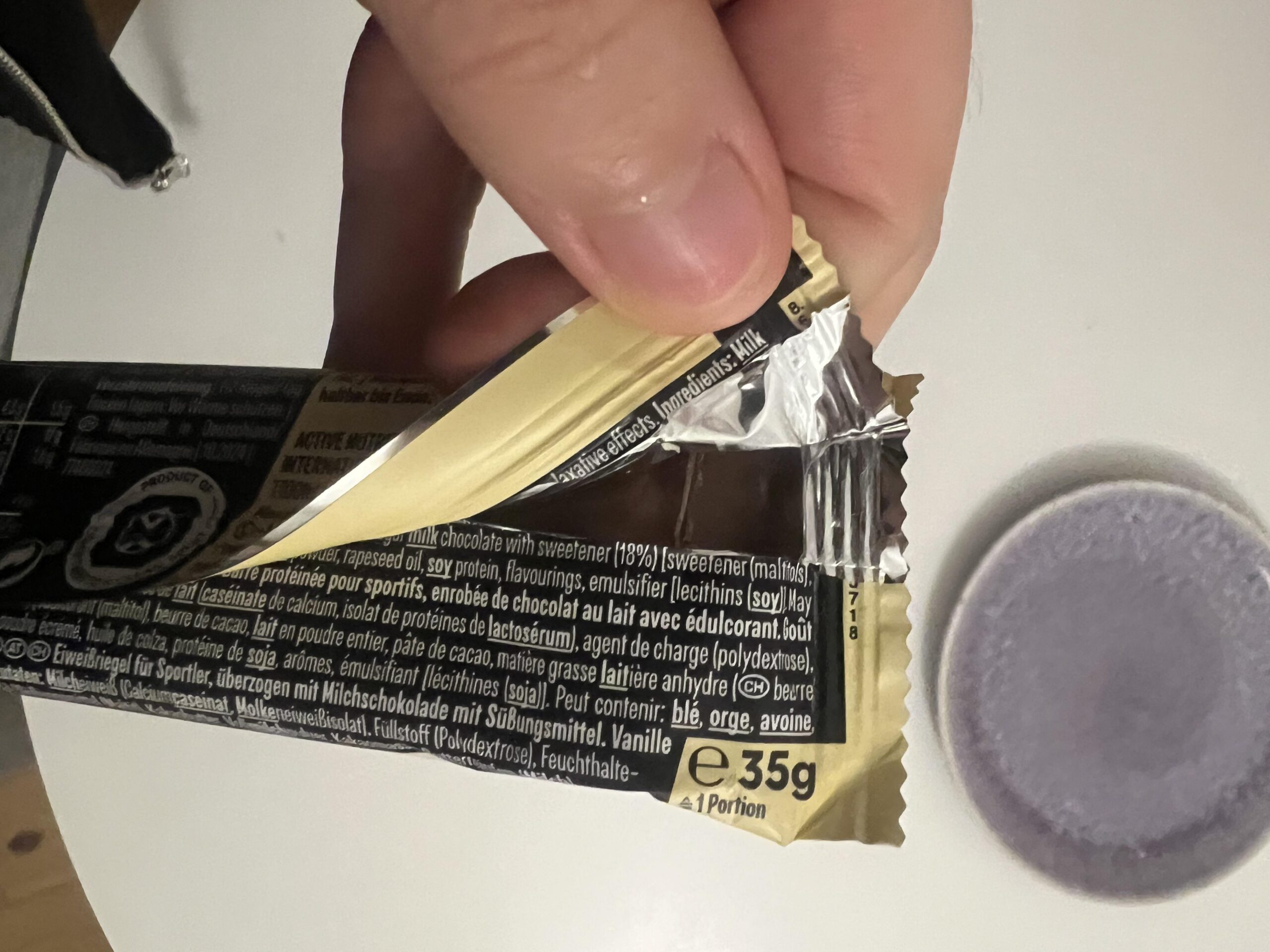
Exact 30-pack reference: PowerBar Protein+ Low in Sugars Vanilla 30 × 35 g on Amazon.de (ASIN B078KDXZJD, non-affiliate). I have linked the separately supplied Amazon affiliate short link in the product card, but could not independently resolve its final redirect; please double-check that the destination is still the Vanilla 30-pack before purchasing. This is not a live price quote.
For product-level claims and the 112 kcal nutrition table, see the manufacturer’s Protein+ Low in Sugar page. For site policy and how I separate personal experience from product claims, see How I Test and Affiliate Disclosure. All six product images in this review are my original photographs.