Catchmaster 288i Silverfish Traps Review: I Caught 8–9 Insects
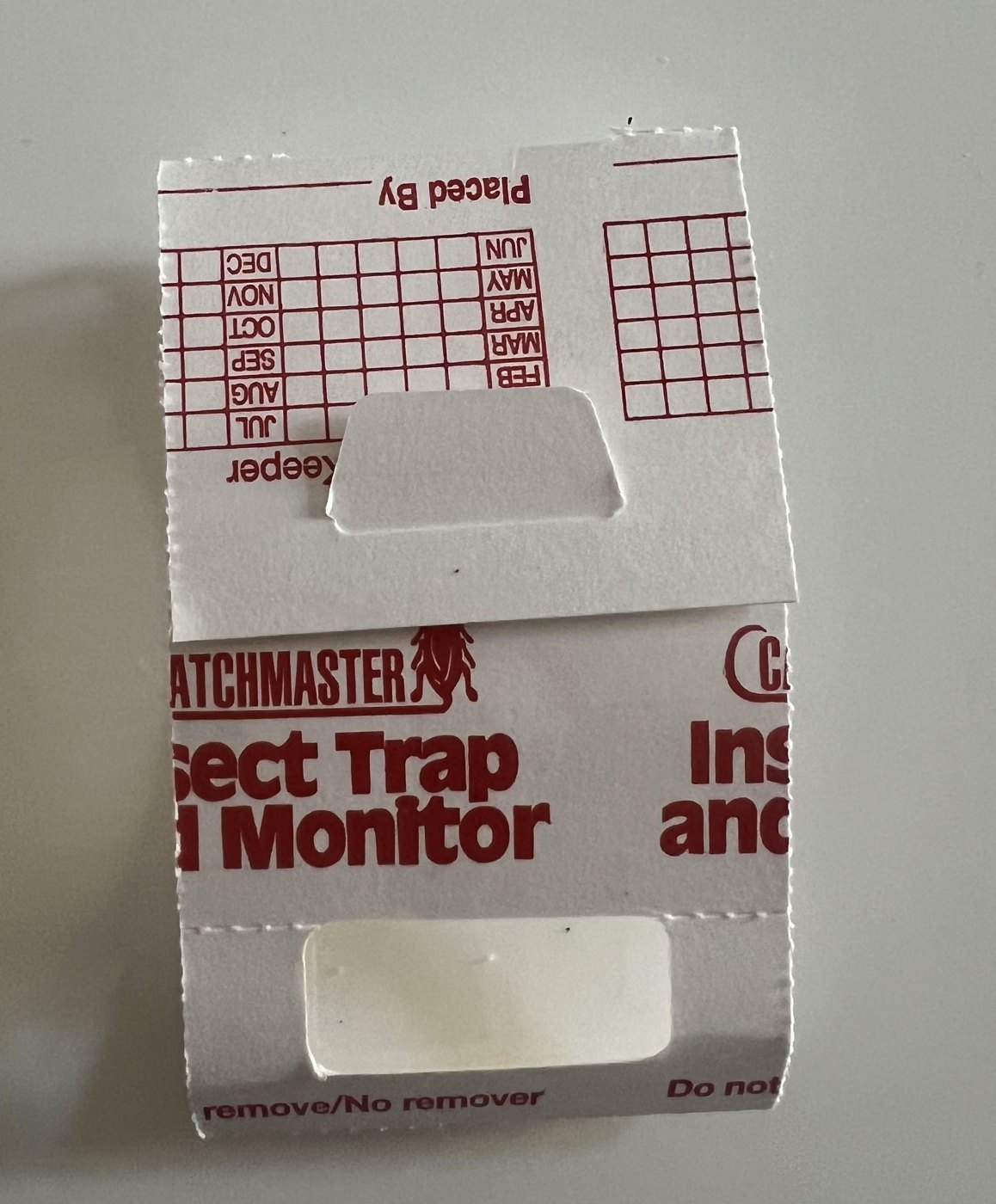
My Catchmaster 288i silverfish traps review after using 5–6 of the 12 traps I bought: 4.0/5. I purchased a 12-pack in 2026 for €11.99, paid entirely with my own money. Since putting the glue traps around my apartment, I have counted roughly 8–9 silverfish-like insects caught across my traps. I have also noticed fewer live insects than before. That is a useful result for something I chose specifically because I did not want to spray insecticides inside my home.
But I would buy these as monitoring and passive interception traps, not as a guaranteed way to eliminate an infestation. The catches depend heavily on placing them along the insects’ actual routes. They are not particularly attractive to look at, dust collects on them, setup takes a little fiddling, and €11.99 for 12 pieces is not as cheap as I would like. Even so, I think they were worth my money.
Affiliate disclosure: This hands-on review contains a paid Amazon link. As an Amazon Associate, I earn from qualifying purchases at no additional cost to you. I purchased my pack myself without discount, sponsorship, a gifted product or compensation. This is my personal review and score, not an Amazon customer rating. See the full affiliate disclosure.
My use: 5–6 placed · ~8–9 insects caught
I paid: €11.99 / 12 traps · about €1 per trap
Paid link · verify exact 288i model and 4 × 3 trap pack
Catchmaster 288i silverfish traps — 4.0/5
Quick verdict: Real catches, long-lasting stickiness in my home, and no insecticide spray required. I have seen fewer live insects since using them, but cannot tell how many remain or prove that the traps alone caused the change.
Best for: Someone who wants to track silverfish-like insects and catch those crossing known routes under furniture, along walls or inside cupboards, while avoiding indoor insecticide sprays.
Skip if: You need an attractive, dust-free solution, expect the traps to draw insects from across a room, or need a complete treatment for a persistent infestation.
Would I buy again? Yes, if I still needed non-spray monitoring. I would also compare prices because I find the cost per small cardboard trap rather high.
What I liked
- Approximately 8–9 insects actually trapped
- Fewer live insects noticed since deployment
- Uses adhesive capture rather than spraying insecticide in the apartment
- Can be hidden under beds, sofas and inside cupboards
- Glue is still sticky on the traps I have checked
What I would improve
- €11.99 for 12 feels somewhat expensive
- Cardboard traps are not attractive enough to leave in view
- They collect dust and can stick to fingers
- Folding and assembling them takes some patience
- I have not noticed strong attraction; location is critical
Bottom line — 4.0/5: Catchmaster 288i does exactly the part I can see: it catches small crawling insects when I put it in their path. Its main value to me is avoiding sprays, seeing evidence of activity and having a passive monitor in several rooms. I would not assume it has eradicated the insects just because I see fewer of them.
My real-world test: a 12-pack across four rooms
I bought this one 12-pack in 2026. It was my own purchase at €11.99, with no discount, sponsorship or compensation. I do not have a more precise purchase date recorded, so I cannot honestly put a specific number of days or months in the headline or claim a measured long-term capture rate.
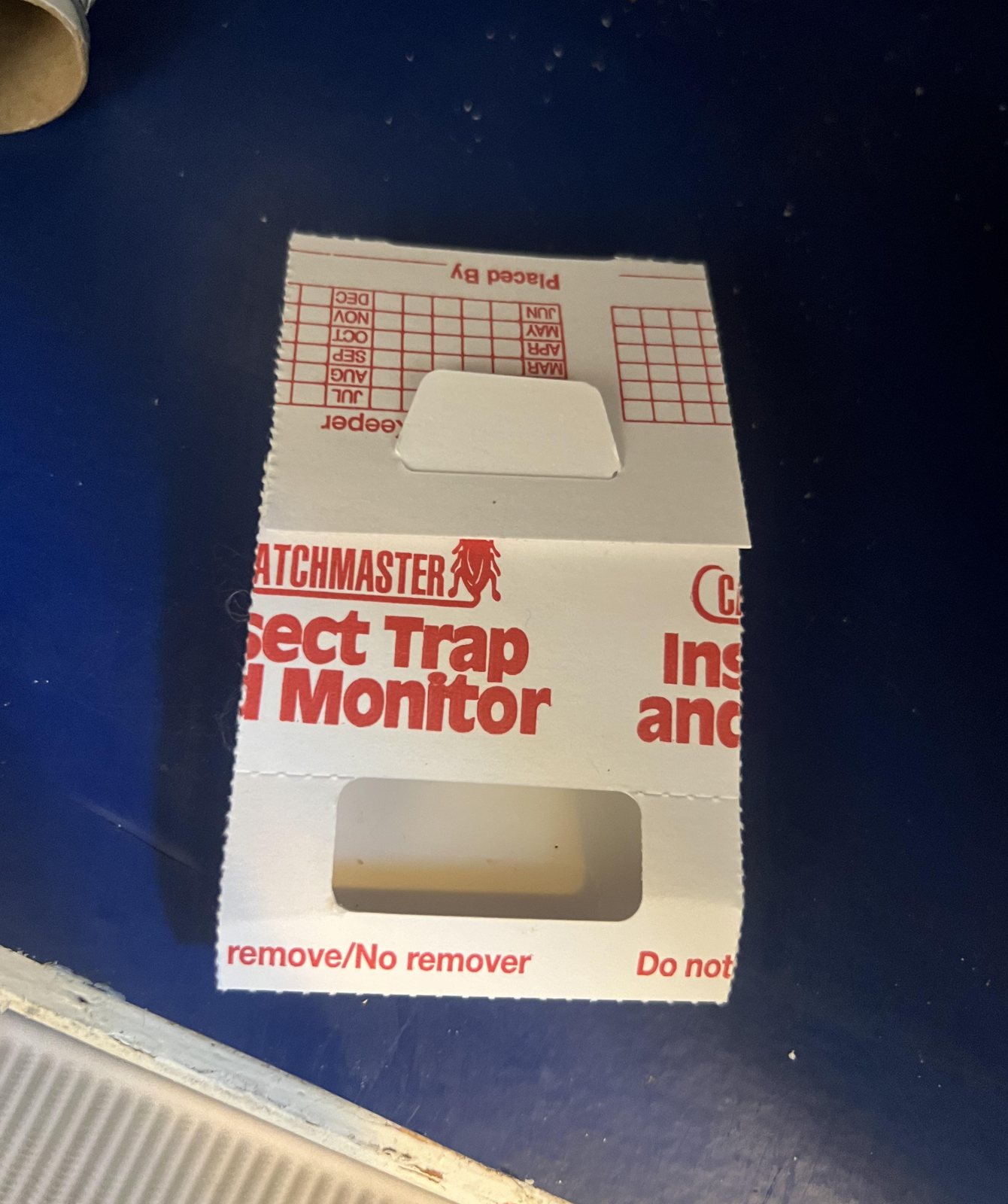
I have not used all 12 pieces. Instead, I put around five or six in the rooms where I thought the problem was occurring. The insects looked like silverfish or long-tailed silverfish (also known as paperfish), but I cannot reliably distinguish those species myself. My results apply to small silverfish-like crawling insects in my particular apartment, not to a laboratory-confirmed infestation of one species.
| Where I placed them | How I approached placement | What I can honestly report |
|---|---|---|
| Bathroom | One trap hidden in a likely insect path | Part of my overall home setup; no separate catch count recorded |
| Kitchen | One trap, including out-of-sight areas | No room-specific catch count recorded |
| Bedroom | One trap, often hidden under the bed or inside furniture | No room-specific catch count recorded |
| Living room | One trap, often hidden under the sofa or inside storage | No room-specific catch count recorded |
| Additional positions | One or two more traps in places I considered promising | Approximately 5–6 traps deployed overall |
I deliberately keep them out of sight because I do not like the look of the white printed cardboard. This is easy enough behind furniture or in a cupboard. I would not leave them in an exposed walkway, where people or pets might touch the adhesive.
Did the Catchmaster 288i traps actually catch silverfish?
Yes — about 8–9 across the traps I installed. After placing them, I started noticing captures after approximately a few days. That is my recollection, not an exact timestamp. At least one of my original photographs clearly shows three insect bodies caught on a single sticky surface. The wider total of eight or nine is my estimate across the deployed traps, not something I counted separately by room or by week.
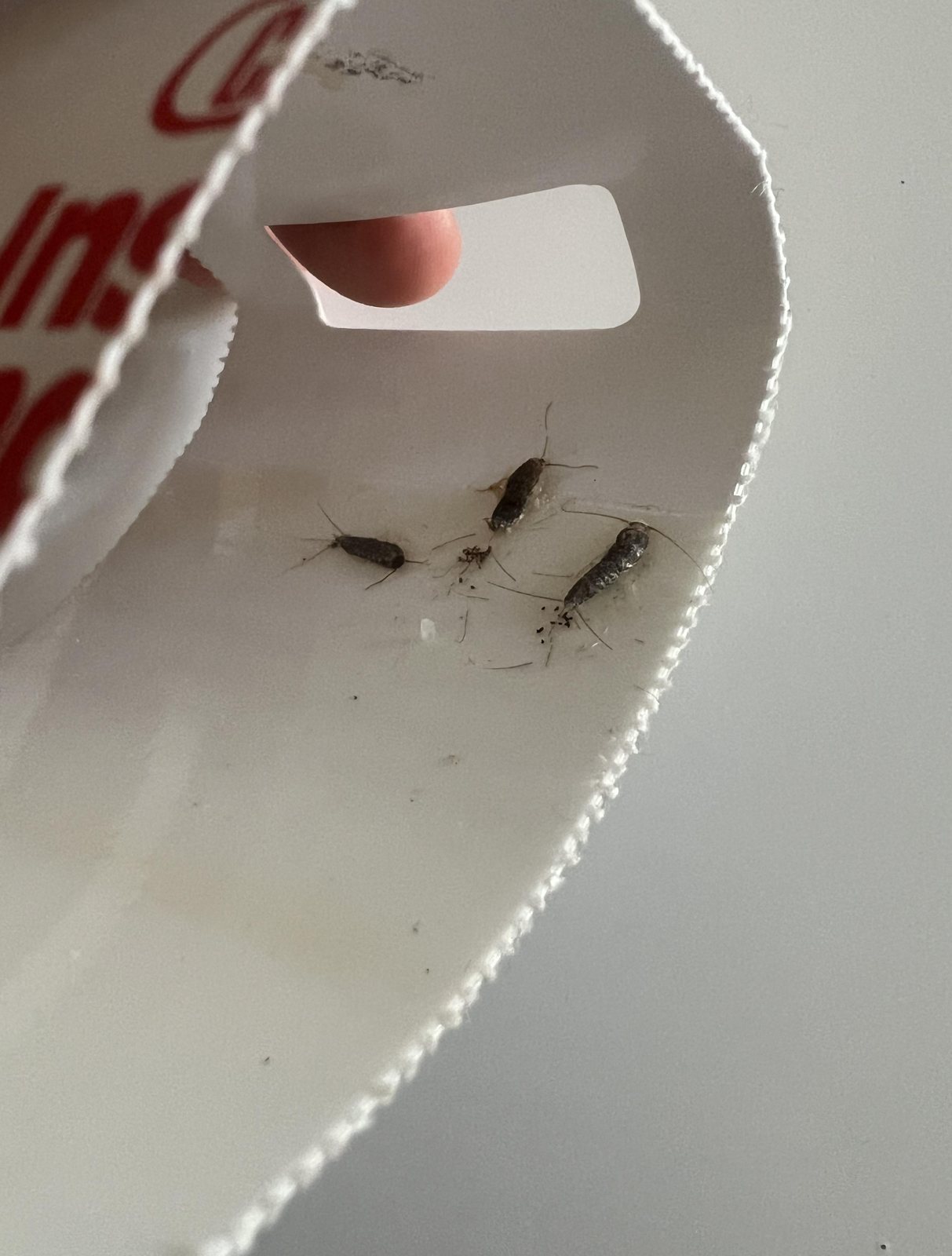
I definitely see fewer live insects now than I did before installing the traps. That is encouraging and is one of the reasons I think the product is worth buying. However, I do not know how many are still hiding in the apartment, and I did not record a baseline count or run a control area without traps. The decrease in sightings cannot be attributed to the traps alone with certainty.
For me, the most practical evidence of effectiveness is simple: these are not just empty pieces of cardboard. They have physically intercepted insects in places where I suspected activity. That is enough for me to keep using the remaining traps, but not enough to declare the home insect-free.
Do Catchmaster 288i traps attract silverfish or only catch passing insects?
My experience is that the traps work best by being placed directly in the insects’ normal paths. I have not seen convincing evidence in my apartment that a trap attracts insects from a long distance. When I see silverfish-like insects near a wall, behind furniture or in a particular cupboard, putting a trap there makes more sense to me than leaving it randomly in the middle of a room.
There is an important difference between this observation and saying the product has no attractant. Catchmaster’s professional documentation for the 288I family says the insect monitors are pre-baited with food-grade molasses and lists a vanilla/molasses scent. I did not measure or identify any lure in my own 12-pack and cannot establish whether that professional specification applies identically to the particular EU retail pack I purchased. Even if it does, my experience is that placement still matters more than any noticeable attraction. See the manufacturer’s 288I information.
This distinction helps explain why I am satisfied despite not seeing a huge number of insects per trap. A monitoring trap is useful when it shows where insects are active. It is not necessarily a magnet that empties a room of all silverfish.
University of California’s Integrated Pest Management guidance similarly recommends putting sticky traps in corners and along edges where these insects forage. That matches my practical takeaway: trap placement is more important than simply owning many traps.
Assembly and daily convenience: uncomplicated but slightly fiddly
The traps were straightforward to set up, but the cardboard still needed folding and positioning, which I found a bit irritating. There is no electronic device to configure or chemical spray to apply. You prepare the adhesive monitor and leave it where you expect insect traffic.
The paper and adhesive can touch your fingers while you handle it, so I prefer placing each trap carefully and leaving it undisturbed. Over time the exposed surfaces also collect household dust. This is a genuine downside: a trap tucked away for monitoring is convenient, but it is not particularly clean-looking once it has gathered debris.
How long does the adhesive last?
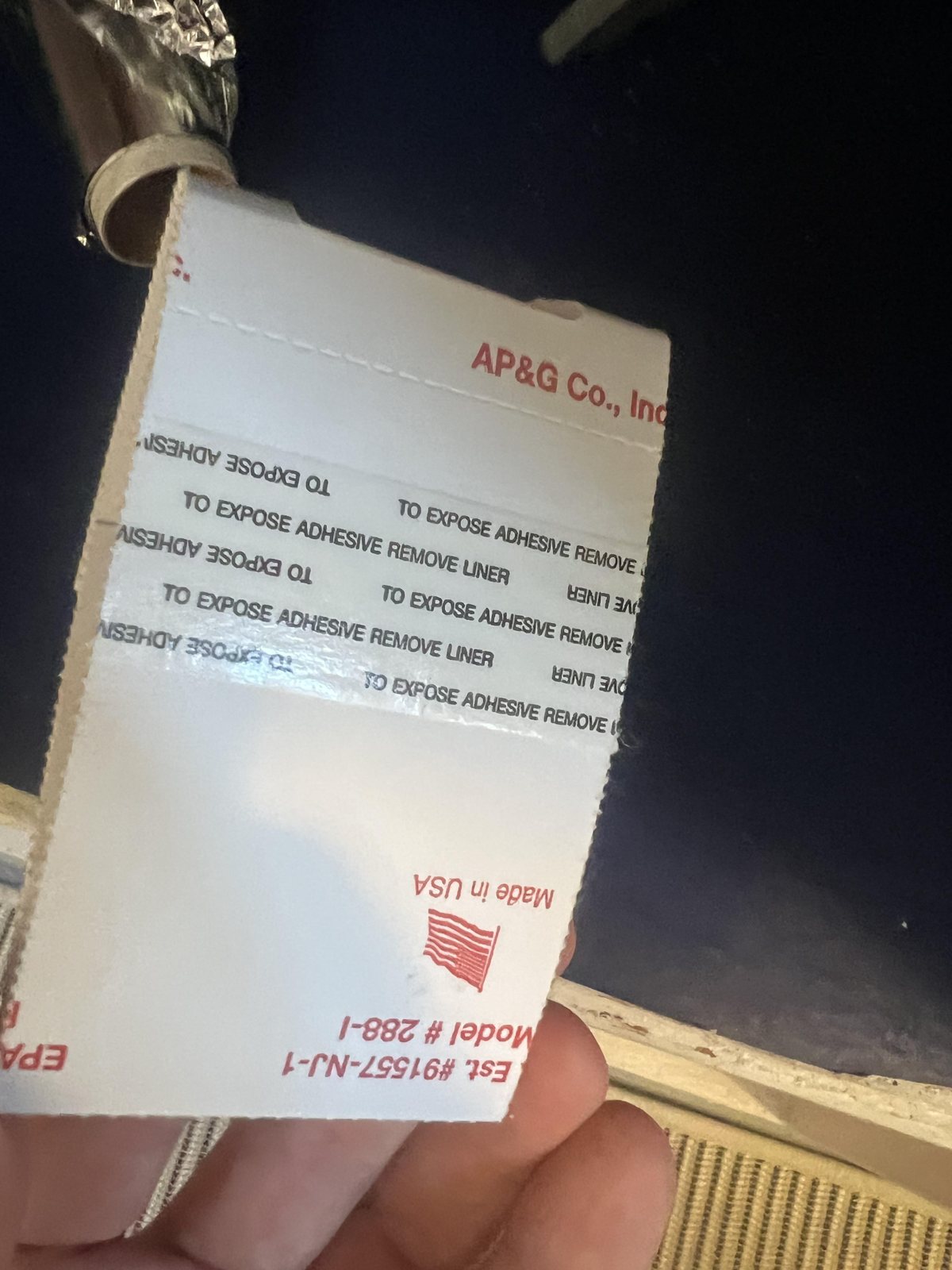
I have not replaced the five or six installed traps yet. Whenever I have checked, the glue has still felt sticky. That is a positive practical finding, but it does not prove a specific lifespan because I did not record exact installation dates, temperature, moisture or how heavily each surface was covered in dust.
Catchmaster distributors describe the 288i glue as long-lasting, with some claiming effectiveness for up to 12 months under suitable conditions. I have not personally tested it for 12 months and would not promise that result, especially in dusty areas. I would inspect traps regularly and follow the actual packaging instructions for replacement, rather than leaving every monitor untouched indefinitely.
Is €11.99 for 12 Catchmaster traps worth the price?
This is a mixed point for me. I chose Catchmaster after looking for a fairly affordable option that did not require spraying insecticides around my apartment. I did not personally test competing glue traps, so I cannot claim that it is objectively the cheapest or most effective product in the market. At the time of purchase, it was the most convincing reasonably priced non-spray option I found.
| My price and use | Calculation / observation |
|---|---|
| One pack bought in 2026 | €11.99 paid by me |
| Pack contents | 12 small monitors in four groups of three, according to the purchased listing |
| Price per monitor | €11.99 ÷ 12 = approximately €1.00 each |
| Deployed so far | 5–6 monitors |
| Not yet deployed | Approximately 6–7 monitors |
| Observed catches | ~8–9 insects across my placed traps |
One euro for a small piece of folded cardboard with glue is not a bargain in terms of materials. The value comes from capturing actual insects and letting me avoid an insecticide spray that I personally do not want to use at home. I think that trade-off is worthwhile, but I would happily buy a comparable proven non-spray option for less in the future.
Those are my historical purchase numbers, not current Amazon prices. Verify the specific 12-count listing because 288I is also sold in much larger professional quantities, which should not be compared with a retail 12-pack as though the pack sizes were identical.
Can adhesive traps eliminate a silverfish infestation by themselves?
My reason for choosing Catchmaster was to avoid insecticide spray inside a home where I spend a lot of time. The trap does not require me to aerosolise a pesticide, which I prefer. But “non-toxic” marketing should not be read as “impossible to cause harm”: exposed glue is messy if it comes into contact with pets, children or unintended animals, and it still physically traps and kills insects.
If the insects are recurring, traps should be paired with sensible prevention: identify the insect if possible, track where catches happen, reduce moisture where relevant, fix leaks, vacuum debris, and seal useful entry or hiding cracks. That approach is supported by NC State Extension and the Norwegian Institute of Public Health. In a persistent or widespread infestation, a pest-control professional can help distinguish species and assess a more complete strategy.
My transparent Catchmaster 288i rating: 4.0/5
This is a weighted editorial rating of my own results and ownership experience, not a laboratory efficiency score. The numbers are judgments based on actual catches and day-to-day annoyances, and I give trapping and usability most of the weight.
| Criterion | Weight | Score | My reason |
|---|---|---|---|
| Capture and monitoring usefulness | 40% | 4.3/5 | ~8–9 captured; real evidence of activity, but no proof of elimination |
| Placement and practicality | 20% | 4.2/5 | Useful in several rooms; results depend on finding actual insect paths |
| Assembly and handling | 10% | 3.4/5 | Easy enough but fiddly; adhesive can touch fingers |
| Adhesive staying power | 15% | 4.5/5 | Still sticky and no trap replacements yet; exact duration unmeasured |
| Appearance and cleanliness | 5% | 2.5/5 | Unattractive and collects dust, so I hide it |
| Value for money | 10% | 3.3/5 | €1 per little monitor seems high, though I consider the pack worth it |
Weighted calculation: (4.3 × 40%) + (4.2 × 20%) + (3.4 × 10%) + (4.5 × 15%) + (2.5 × 5%) + (3.3 × 10%) = 4.03/5, rounded to 4.0/5. The score is based on my use, not third-party customer ratings. Read How I Test to understand the JonTests review method.
Who should buy it? My final verdict
I would recommend giving Catchmaster 288i a try if you have silverfish-like insects in places where you regularly see them moving and want a passive, non-spray way to confirm activity and catch some. I think it works best for someone willing to pay attention to placement and keep an eye on what the traps collect.
I would skip it as a complete treatment if you are expecting the traps to attract every insect from across an entire room, or if you want something decorative or clean-looking. I also would not use it where pets or small children can access exposed adhesive. If you have a serious recurring infestation, traps alone are not an adequate evidence-based plan.
Would I personally buy them again? Yes, if I still needed adhesive monitors. They caught insects, have remained sticky, and helped me check activity without applying spray. My only hesitation is the price per little trap. I would compare current alternatives before reordering, but I do not regret the €11.99 I paid.
Questions I would ask before buying Catchmaster 288i
How many silverfish did you actually catch?
Approximately 8–9 across five or six traps. One of my original photos shows three insect bodies on a single glue surface. I did not maintain weekly counts or verify the exact species.
Does the 12-pack cover an entire apartment?
It allowed me to distribute five or six monitors across my bathroom, kitchen, bedroom, living room and additional hiding spots, while keeping several unused. Coverage depends on insect activity and the size and layout of your home, not just the number of rooms.
Does it contain an attractant?
Catchmaster’s professional 288I description refers to molasses-based pre-baiting and vanilla/molasses scent, but I did not verify whether my retail 12-pack has the identical formulation. In my own use, I have not noticed strong lure-like attraction, and placement along insect paths mattered most.
How often do the traps need replacing?
I have not replaced mine yet and the glue remains sticky, but I have not logged an exact number of days or months. Follow the pack instructions, inspect for dust or saturated adhesive, and replace when required rather than extrapolating my experience into a guaranteed one-year lifespan.
Do glue traps guarantee the insects are gone?
No. I now see fewer live insects, but I have no reliable baseline or full apartment count. Glue traps are much more convincing to me as monitoring tools than as proof of total eradication.
Sources, exact product and photo disclosure
This article reviews the Catchmaster 288i 12-monitor retail pack (4 sheets of 3) that I bought and used, not Catchmaster’s larger commercial 288I cartons. My own photographs show an assembled monitor, the actual caught insects, in-home placement, and the backing/liner. Photographs were rotated or cropped for readability; the traps and insects were not fabricated or added digitally.
Product-family and care information is cross-checked against Catchmaster PRO 288I, Catchmaster’s silverfish collection, the distributor’s 288i guide, UC IPM, and the Norwegian Institute of Public Health. Technical statements about commercial 288I packing or scent may not automatically apply to every small retail subpack.
For shopping, the provided Amazon affiliate link and the Amazon.de retail listing should be checked for the exact Catchmaster 288i, 12-piece variant. I have not independently verified the short link’s final destination or live stock and pricing. My review is based on first-hand observations, not sponsored testing.
See more JonTests Home reviews, our testing policy, and the affiliate disclosure.