Sidolin Streifenfrei Cristal Review: 6 Dirty Windows Tested
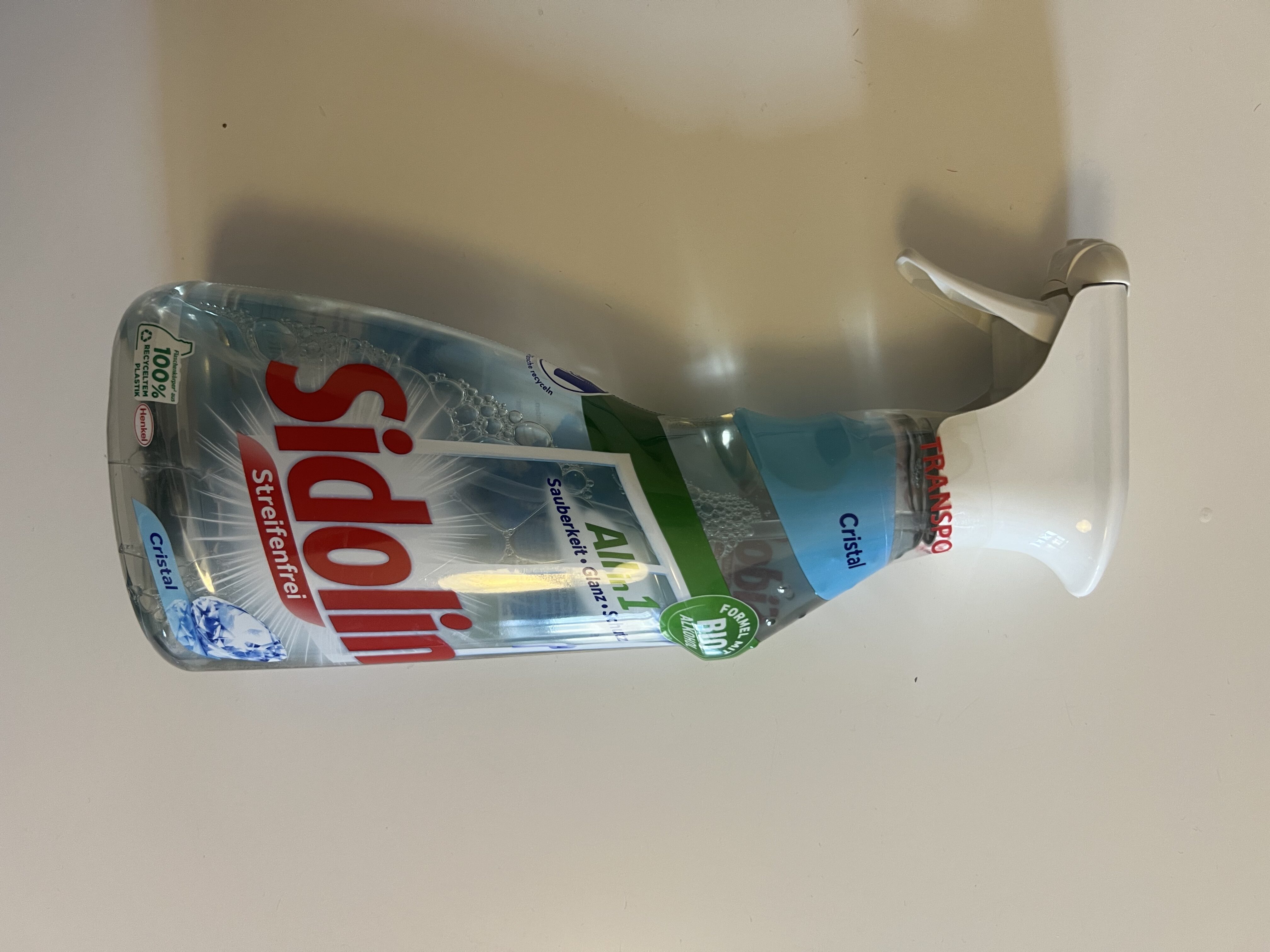
My verdict: 4.6/5. I bought a 500 ml bottle of Sidolin Streifenfrei Cristal on October 3, 2026 for €1.95, then used it on about six windows in one cleaning session. Those windows had not been cleaned for months. Sidolin handled the accumulated dirt very well, left almost no visible streaks and applied as a foam that I found easier to work with than Frosch Spirit Glass Cleaner.
Affiliate disclosure: This review includes a paid Amazon link. JonTests may earn a commission at no extra cost to you. I bought the bottle myself for €1.95 and received no discount, free product, sponsorship or compensation. As an Amazon Associate I earn from qualifying purchases. Full disclosure.
Sidolin Streifenfrei Cristal — 4.6/5: foam that makes window cleaning easier
Quick verdict: 4.6/5. After one session on around six windows that had gone months without cleaning, Sidolin removed ordinary dirt, greasy marks and fingerprints very effectively. I saw almost no streaks, and its foamy application was easier to manage than the more watery Frosch cleaner I used on comparable windows.
Best for: Someone who wants effective window cleaning with foam that clings to the glass rather than immediately running down it.
Skip if: You want the absolute lowest purchase price, need evidence about long-term performance, or prefer a thin liquid spray instead of foam.
- Removed months of accumulated ordinary window dirt in one cleaning session
- Almost no visible streaks or smears in my finished result
- Foam stayed on the glass better than my Frosch cleaner
- Less liquid to wipe up at the bottom of the window
- Quick drying and no second finishing pass needed
- Good trigger, comfortable bottle and pleasant clean scent
- €1.95 is reasonable, but I would still welcome a lower price
- It cost €0.10 more than the Frosch bottle I purchased, not less
- I have only tested it once on windows, not mirrors, car glass or long-term residue
- I did not deliberately compare both adjustable nozzle settings
How I tested Sidolin Cristal on six dirty windows
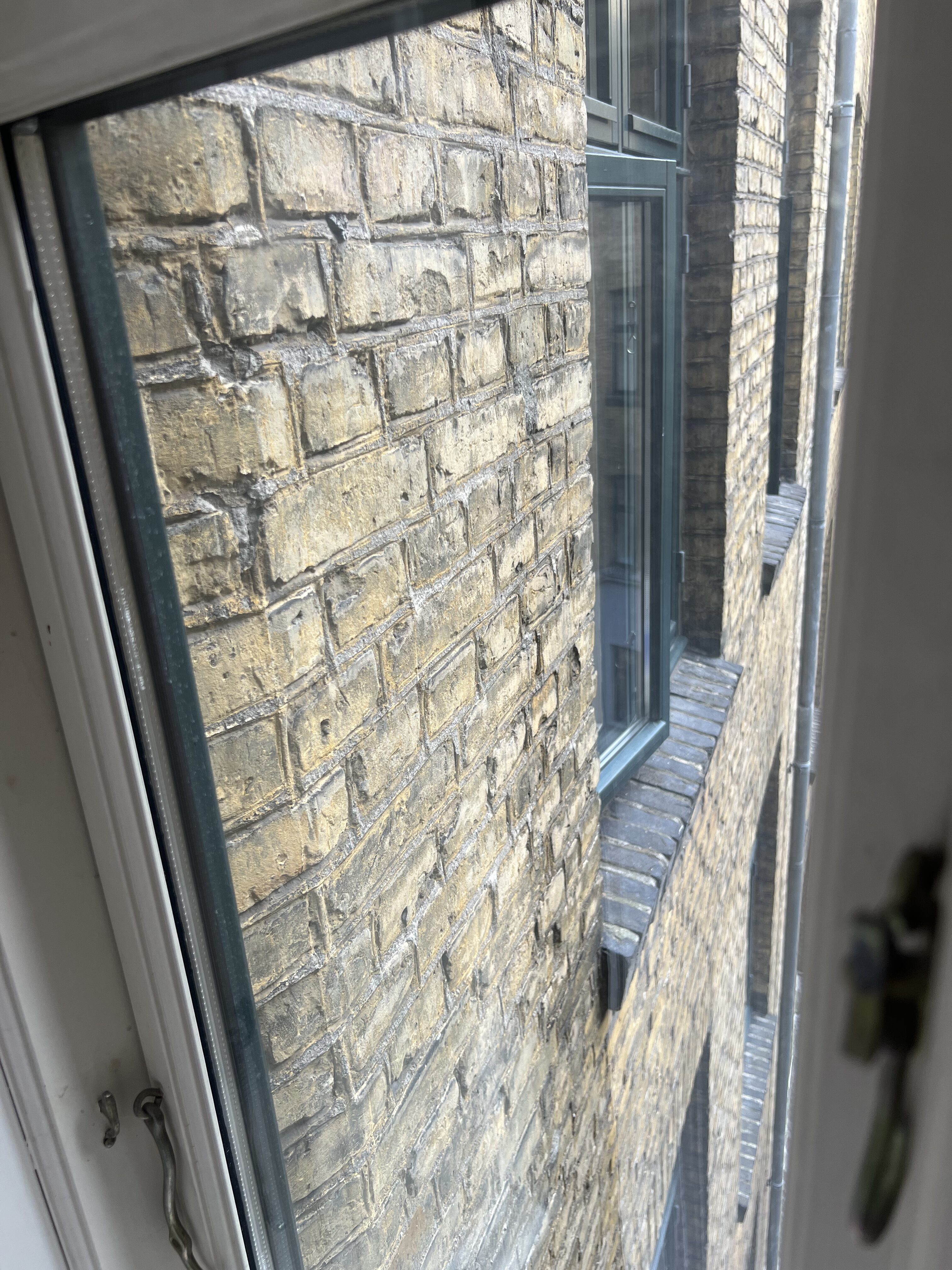
I cleaned approximately six household windows in one session. They had not been cleaned for several months and were genuinely dirty, even though that starting condition may not be obvious in every photo. This is an early hands-on evaluation of one bottle, not a claim about months of repeat use or the cleaner’s performance on other surfaces.
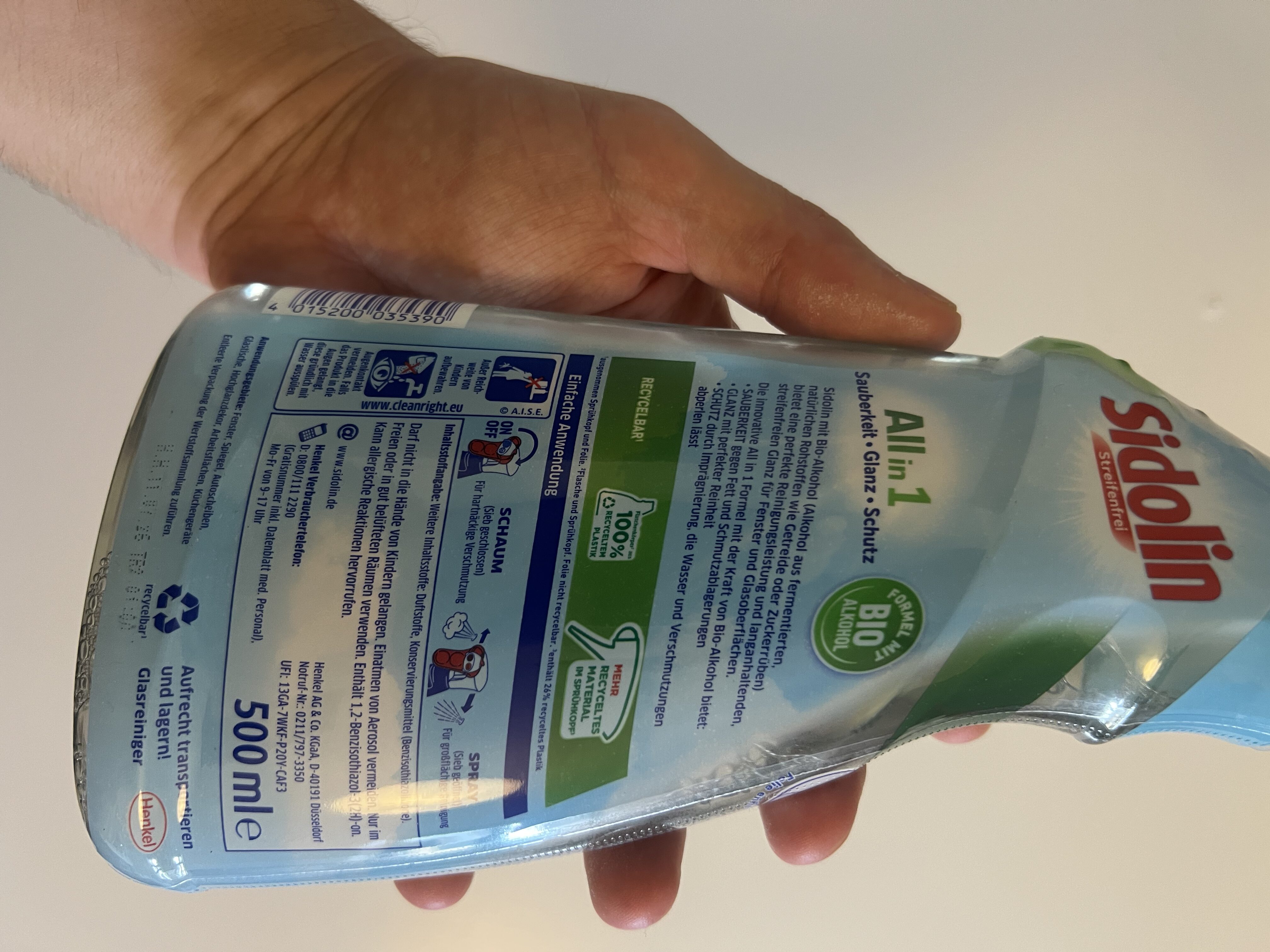
- Exact bottle: Sidolin Streifenfrei All in 1 Cristal, 500 ml; the label and adjustable nozzle are shown in my original photographs
- Purchase: October 3, 2026; €1.95; self-funded, no discount, free product, sponsorship or compensation
- Evidence depth: approximately six windows, all in one cleaning session; only one bottle used
- Starting condition: windows had not been cleaned for several months and were visibly dirty to me
- Application: I pressed the trigger and got foam; I did not intentionally switch between the manufacturer’s spray and foam settings
- Comparison: my Frosch Spirit Glass Cleaner review covers around six or seven windows using broadly comparable windows and the same cleaning tools; not a controlled split-window test
- Photos: six original photos, including bottle front/back, nozzle, foam during application and two window views
- Not tested: long-term bottle life, mirrors, other surfaces, rain repellency, anti-redeposition, measured drying times or precise streak counts
Cleaning performance: fingerprints, grease and months of grime
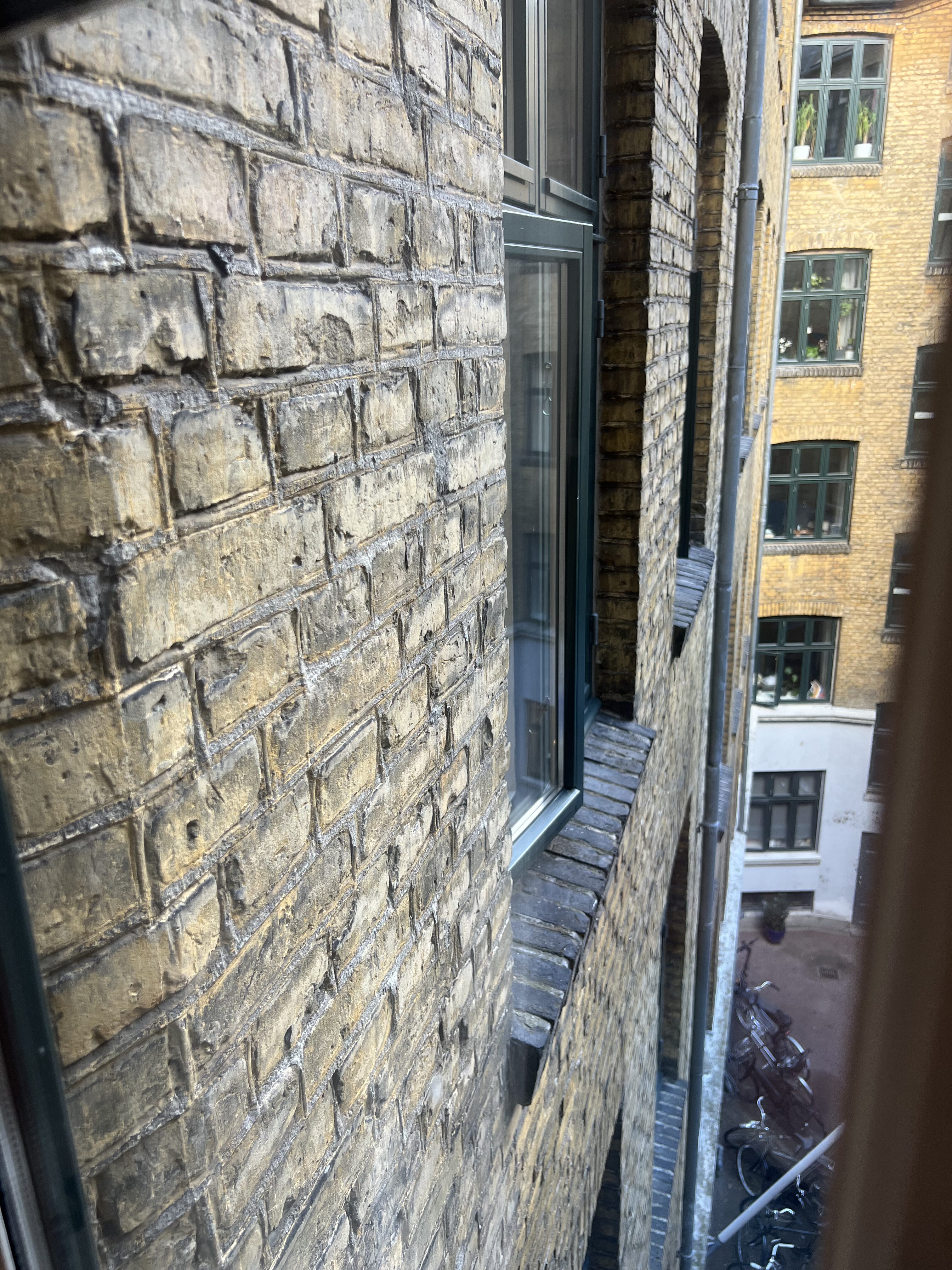
The cleaning result was excellent in my use. I found Sidolin very effective against fingerprints, greasy marks and ordinary dirt. The windows were particularly dirty after going several months without a proper clean, so the visible improvement was meaningful to me. I was satisfied with the result after the initial cleaning pass.
I did not measure the amount of dirt removed, record a fixed number of strokes or compare identical panes side by side. The result is based on what I actually saw while cleaning, rather than a laboratory percentage or an advertised performance claim.
Streaks and drying: almost no visible marks
I did not really notice streaks or smears on the finished windows. The glass looked clean, and I did not need to go back over it for an additional polishing pass. I also thought Sidolin dried faster than Frosch during my cleaning sessions, although I did not time either product.
Sunlight, viewing angle and the state of the cloth can all change how easy streaks are to spot. I therefore describe the finish as almost streak-free in my test, not as an unconditional promise that the product will never leave marks.
The foam made the biggest difference versus Frosch
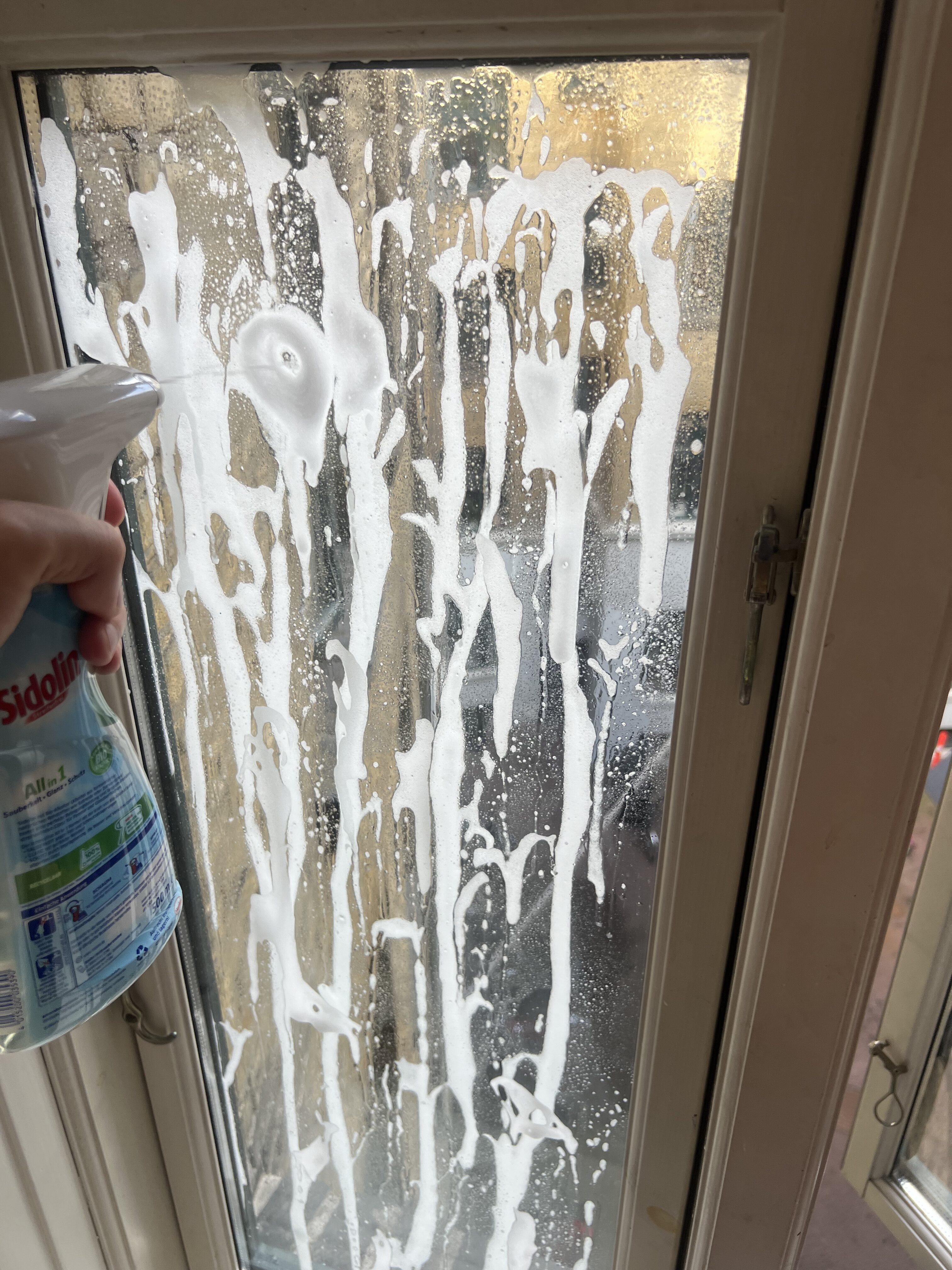
When I pressed the trigger, Sidolin came out as foam. I had not intentionally selected or compared two modes, so I can only report the setting I actually used. Henkel says the adjustable nozzle can switch between a spray and a foam setting, which explains why the same bottle can behave differently depending on nozzle position.
I liked the foam because it seemed to stay on the glass better than Frosch’s thinner, more watery liquid. Some foam visibly moved down the pane during application—as my original photo shows—but in practice I had less troublesome runoff collecting at the bottom and less cleanup to deal with than with Frosch. This made Sidolin a little easier to use, not dramatically different.
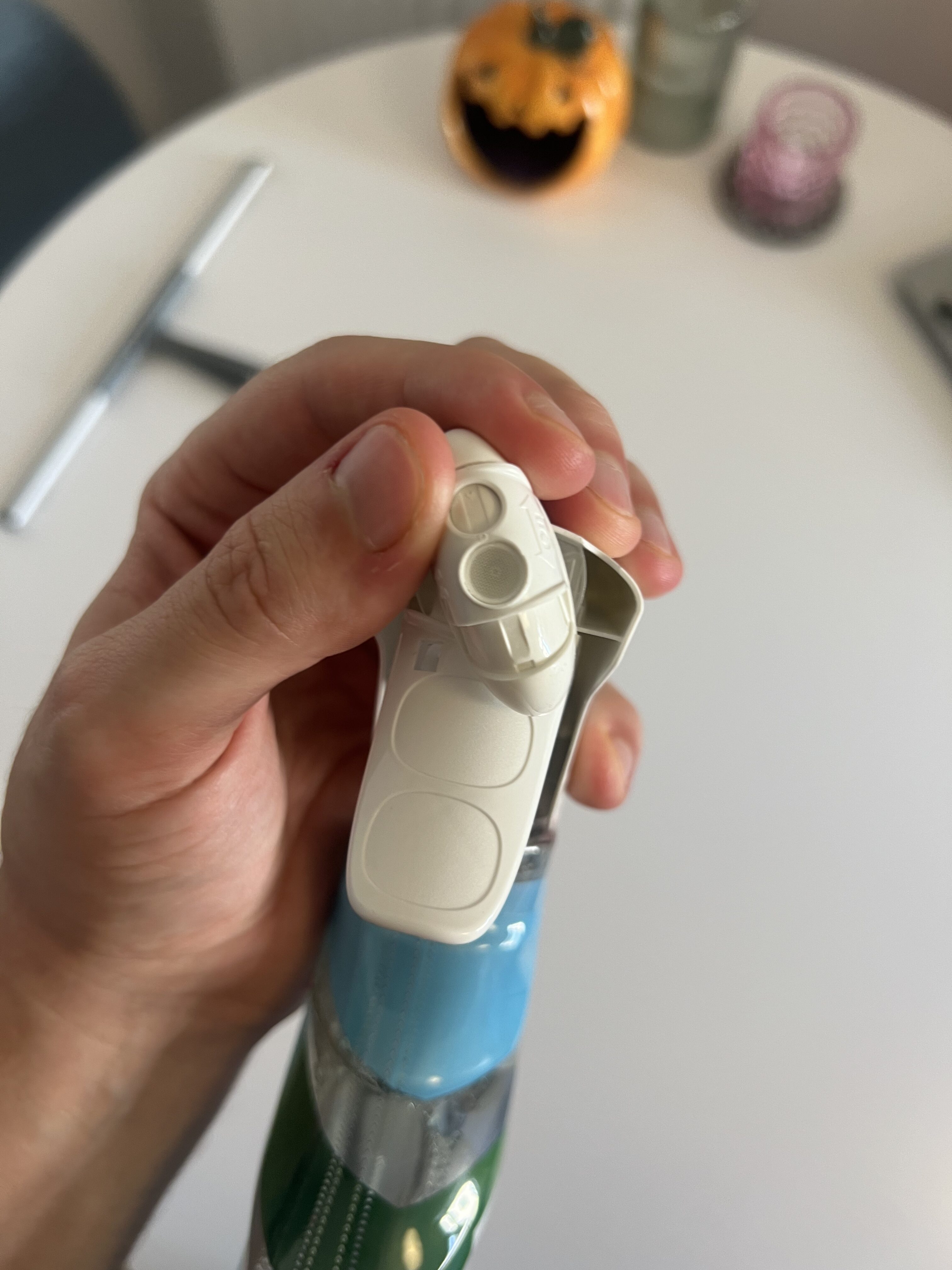
Bottle, trigger and scent
The 500 ml bottle was comfortable to hold, easy to dose and simple to use. The trigger worked without any problems during my single session. I also liked the scent: it smelled clean and pleasant, without being a notable distraction.
Those are short-term observations. One session cannot establish how the spray head will perform after many months or whether the bottle is durable enough for repeated refilling.
Sidolin vs Frosch Spirit: my actual comparison
I used both cleaners on broadly comparable windows and with the same cleaning tools. Both products left the windows looking very clean, and I would not describe Sidolin as a huge upgrade. The difference was small but noticeable: Sidolin foamed better, the application was a little more convenient, there was less liquid to catch at the bottom, and it seemed to dry faster.
My earlier Frosch Spirit Glass Cleaner review gave Frosch 4.1/5 after cleaning about six or seven windows. Frosch was effective against normal grime and produced a good finish, but its watery consistency was my main complaint. Sidolin gets 4.6/5 because the foam and finish worked better for my preferences.
| My observation | Sidolin Cristal | Frosch Spirit |
|---|---|---|
| What I paid | €1.95 / 500 ml (€3.90/L) | €1.85 / 500 ml (€3.70/L) |
| Cleaning | Very effective on dirty windows | Very effective on everyday window dirt |
| Finish | Almost no visible streaks | Few streaks; better than my older unnamed cleaner |
| Application | Foam clung better; less troublesome runoff | More watery; liquid collected at the bottom |
| Drying | Seemed faster to me | Fairly quick |
| My editorial score | 4.6/5 | 4.1/5 |
Price correction: Sidolin was not cheaper in my purchases. It cost €0.10 more for the same 500 ml volume—about 5.4% more than Frosch. I still prefer Sidolin, and if the two cost the same I would choose Sidolin again. This is a practical owner comparison, not a controlled test with identical dirt loads or measured cleaning time.
Is €1.95 for 500 ml good value?
At the price I paid, €1.95 for 500 ml equals €3.90 per litre. I consider that reasonable for the result. My main reservation is simply that cheaper glass cleaners exist and I would never object to a lower price. It is not a serious drawback that undermines my recommendation.
I bought my own bottle on October 3, 2026 without a discount or compensation. That figure is historical, not a current Amazon quote. I have not calculated cost per window because I did not measure how much cleaner I used, and I have only completed one session.
What does the manufacturer say—and what did I verify?
Henkel markets Sidolin Cristal as an all-in-one glass and surface cleaner with bio-alcohol, fast drying and a choice between spray and foam settings. It lists windows, mirrors, glass tables and several other smooth surfaces as intended uses. These are manufacturer descriptions, not all things I independently tested. I personally verified only how my bottle worked on household windows and how it dispensed foam in the setting I used.
Henkel also describes a protective water-beading effect and recycled bottle material. I did not test rain repellency, how long any protective effect lasts, or recycled-material content. The product instructions advise applying cleaner and wiping with a dry cloth. For sensitive or varnished surfaces and electrical equipment, the manufacturer advises spraying onto the cloth instead of directly onto the surface. Follow your local bottle label and avoid breathing in spray mist.
How I calculated my 4.6/5 rating
This is my own evidence-based editorial rating, not an Amazon customer average and not a laboratory grade. Cleaning and visible finish carry most weight, while application matters because it was the main practical difference between the two cleaners. I have not assigned an invented long-term durability score after one session.
| Criterion | Weight | Score | Reason from my use |
|---|---|---|---|
| Cleaning effectiveness | 40% | 4.7/5 | The windows had not been cleaned for months; fingerprints, greasy marks and everyday dirt came off very well in my one cleaning session. |
| Streak-free finish and drying | 20% | 4.8/5 | I saw virtually no streaks, did not need a second finishing pass and found it dried quickly—slightly faster than Frosch in my experience. |
| Foam application and runoff | 20% | 4.5/5 | The applied product formed foam that stayed on the pane better than Frosch’s more watery spray, leaving less liquid to catch below. I did not test the alternative spray setting. |
| Bottle, trigger and scent | 5% | 4.6/5 | The bottle was easy to hold and dose, the trigger worked without problems and the smell was pleasantly clean. |
| Value for money | 15% | 4.1/5 | I paid €1.95 for 500 ml, a reasonable price but €0.10 more than the €1.85 Frosch bottle; price was my only notable reservation. |
| Overall weighted score | 100% | 4.6/5 | Strong cleaning, finish and easier foam application; modest price reservation and limited test duration. |
Weighted calculation: (4.7 × 40%) + (4.8 × 20%) + (4.5 × 20%) + (4.6 × 5%) + (4.1 × 15%) = 4.585, rounded to 4.6/5. The scores are judgments based on the specific observations above. See How I Test for the site methodology.
Who should buy Sidolin Cristal—and who should skip it?
Buy it if you want a straightforward window cleaner that, in my experience, tackles accumulated everyday grime and leaves a clean finish with little need for extra polishing. I especially appreciated the foam setting because it was easier to manage than the watery Frosch application.
Consider another option if your only priority is the lowest possible price, you dislike foaming products, or you need a proven result on mirrors, car windows or specialty surfaces. I have not tested those other use cases, so I will not claim first-hand results for them.
Frequently asked questions
Does Sidolin Cristal actually leave windows streak-free?
In my one-session test on around six windows, I saw almost no visible streaks and did not need a second finishing pass. This is an owner observation, not a guarantee for every cloth, window or lighting condition.
Does Sidolin Cristal spray foam?
Yes. My bottle dispensed foam when I used the trigger. Henkel says the nozzle has separate spray and foam settings, but I did not deliberately test both modes.
Is Sidolin Cristal better than Frosch Spirit?
I slightly preferred Sidolin on comparable home windows using the same tools: it was foamier, had less troublesome runoff and appeared to dry faster. Both cleaned very well; this was not a controlled laboratory comparison.
Can I use it on mirrors or car glass?
Henkel lists those among the intended surfaces, but I personally tested only household windows. Follow the product label and avoid assuming my window results apply unchanged to other surfaces.
How much did I pay for Sidolin?
I paid €1.95 for a 500 ml bottle on October 3, 2026. That is €3.90 per litre, and €0.10 more than the €1.85 I paid for 500 ml of Frosch. These are historical personal purchase prices, not live Amazon prices.
Final verdict: would I buy Sidolin again?
Yes, probably. I am satisfied with Sidolin Streifenfrei Cristal and expect to keep buying it. It made a big difference on windows that had gone months without cleaning, produced almost no visible streaks, and felt a little easier to work with than Frosch. The €1.95 price is reasonable even though I would always welcome something cheaper. My first-hand score is 4.6/5, with the important limitation that this is one cleaning session, not a long-term test.
Sources and transparency
The performance observations, purchase price, comparison and six photos are my own. Product details and nozzle settings: Henkel official Sidolin Cristal product page. Product category and 500 ml size: Müller retail product details. For independent context, Stiftung Warentest tested an earlier Sidolin Streifenfrei Cristal product in 2018; that historic formulation and test are not presented as verification of my 2026 bottle. The Amazon.de product listing and paid Amazon short link were supplied by the owner; the redirect and exact listing contents could not be independently fetched. Please confirm the listing variant and pack quantity at checkout.