Levoit Core 200S Review: My 24/7 Experience in a Small Apartment
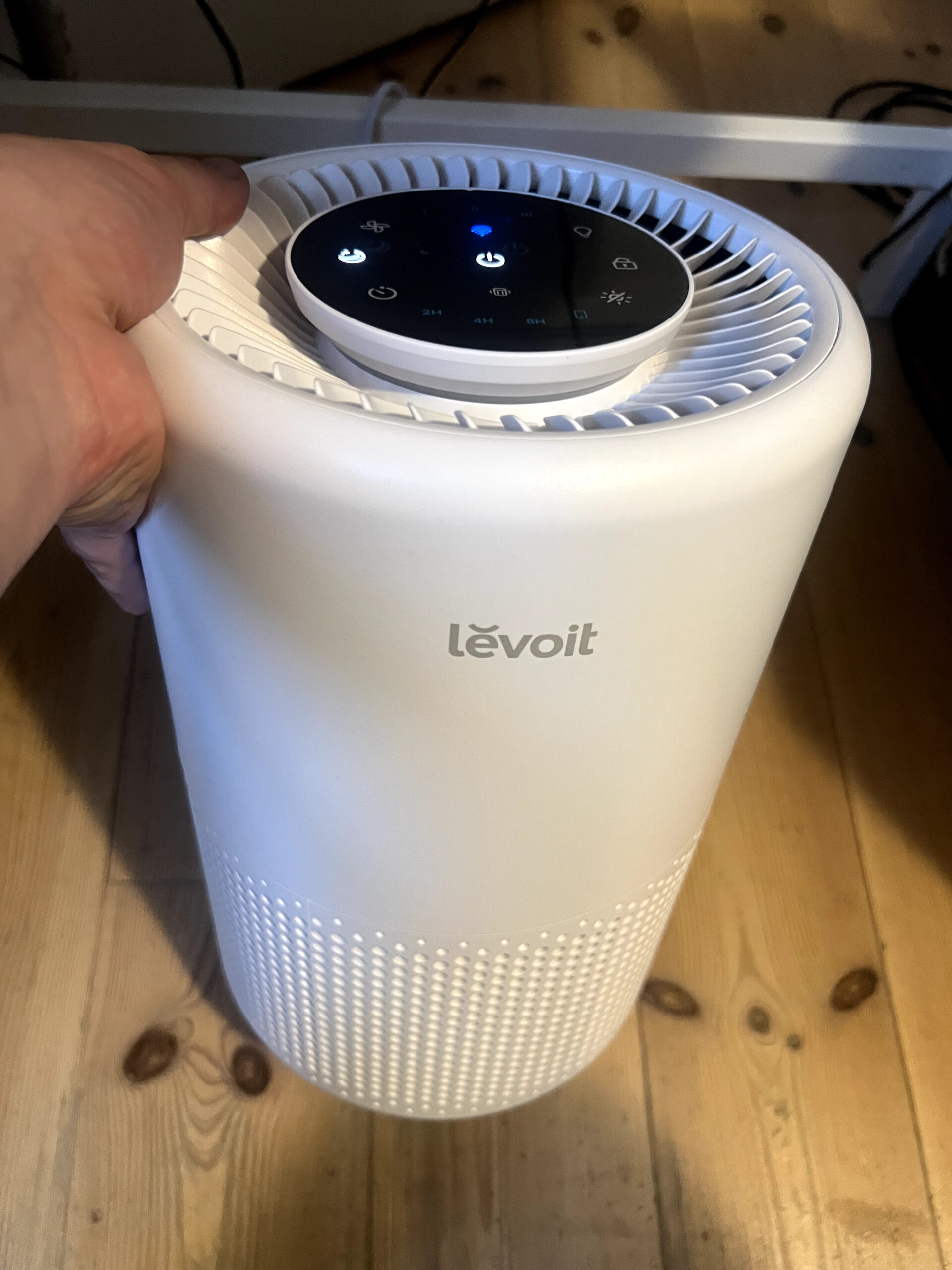
I bought the European Levoit Core 200S on July 22, 2026 and have kept it running almost continuously in my Copenhagen apartment. Most of that time has been in Sleep Mode, with the purifier tucked under my desk between two rooms. That setup is convenient, although it is not ideal for unrestricted airflow.
The main reason I still use it is mundane: on Sleep Mode it is quiet enough that I usually forget it is there. On Low I notice the fan, and Medium and High are too intrusive for me when I am working in an otherwise quiet room. The air near my desk seems fresher to me, but I have no particle-counter readings to show how much filtration it achieves in this particular location.
I paid €79.36 at Amazon Germany with my own money. No brand supplied the product, discount or compensation. This review draws on my own use and original photos; AI assisted with drafting and editing the text, not with conducting tests. I did not use a calibrated particle counter or sound meter, and I do not present subjective impressions as laboratory results.
Levoit Core 200S (European model) — 4.1/5
Quick verdict: I would buy this purifier again. Sleep Mode is quiet enough that I can leave it running around the clock, the VeSync app is simple, and the air around my desk feels and smells cleaner to me. The main compromise is noise: Low, Medium and especially High are more noticeable than I expected in a very quiet apartment.
Best for: bedrooms, small offices and people who want a quiet “set it and forget it” purifier with app control.
Skip if: you want strong airflow while staying nearly silent, an integrated air-quality sensor, or faster cleaning for a larger room.
Region note: I tested the European Core 200S. U.S. readers will see the closely related 120V Core 200S-P. They are in the same product family, but regional electrical specifications and listing IDs differ.
What worked for me
- Sleep Mode is quiet enough that I normally forget it is running.
- The air around my desk feels and smells cleaner to me.
- Very easy setup, touchscreen and VeSync app.
- Easy to move and genuinely low-effort in daily use.
- I would buy it again at roughly the price I paid.
What I would change
- Low, medium and especially high fan speeds are more audible than I expected.
- It was physically larger than I pictured from the listing.
- The design is functional rather than something I want on display.
- No built-in air-quality sensor, so the app cannot prove that the room air improved.
Bottom line
After roughly two months of 24/7 use, I think the Core 200S makes the most sense as a small-room purifier you can leave running quietly. I would buy it again, but I would still shop around for an equally effective model with a nicer design and even quieter higher fan speeds.
How I tested the Levoit Core 200S
- Purchased: July 22, 2026 from Amazon Germany
- Price paid: €79.36 (about US$91 at the July 2026 exchange rate), full price
- Relationship: no free product, sponsorship or review agreement
- Use: essentially 24/7, almost always in Sleep Mode
- Location: under my office desk, between two rooms in an older central-Copenhagen apartment
- What I did not test: I did not use a calibrated PM2.5 meter, particle counter or sound meter, so my comments about air feel and noise are personal observations rather than laboratory measurements.
That last point matters. The Core 200S does not have an integrated air-quality sensor, so although I can describe what I notice, I cannot honestly claim that it lowered my particulate concentration by a specific percentage in my apartment.
The exact model I tested vs. the U.S. Core 200S-P
My unit is the European Levoit Core 200S White, sold on Amazon Germany under ASIN B0FDQTRDW4. The U.S. model most readers will see is the Core 200S-P, Amazon ASIN B08FJ678YK. Levoit lists the U.S. model as Core 200S, 120V/60Hz, 37W, 8.1 × 8.1 × 12.6 inches, 6.6 lb and 90 CFM CADR. The physical dimensions match the European listing I bought, but I would not treat the regional SKUs as electrically interchangeable.
The most useful room-size number is not the biggest number on the box. Levoit currently lists the U.S. Core 200S-P for 672 ft² at one air change per hour, but only 140 ft² at 4.8 air changes per hour. For a bedroom or small office, that second number is the more meaningful reference if you care about faster repeated filtration. Independent testing from RTINGS measured about 91 CFM PM1.0 CADR, very close to Levoit’s current 90 CFM specification.
What I actually noticed after running it 24/7
The first thing I noticed was subjective but obvious enough that it changed how I felt about the purchase: the air around my desk seemed cleaner, looked less dusty in the light and smelled fresher. I still notice that the immediate area where I work smells cleaner than other parts of the apartment.
I am deliberately not turning that into a health claim. I bought the purifier partly because I live in an old city apartment and wanted to reduce airborne particles over the long term, but I cannot measure a “longevity” benefit from my own use. The EPA’s guidance is more cautious: portable air cleaners can reduce airborne particles, and studies sometimes show symptom improvements for allergies or asthma, but results vary and an air purifier is not a substitute for ventilation, source control or fixing moisture problems.
Noise is the main trade-off
Sleep Mode is the reason I can run this purifier continuously. In my apartment, where there often is very little background noise, I normally do not pay attention to it on Sleep Mode.
Low is different. I could live with Low if the purifier were farther away, but with the unit close to my desk I can still hear it. Medium and especially High are clearly intrusive to me. This is not a measured decibel test; it is simply how the machine fits into a very quiet home office.
The upside is that the airflow on higher settings is substantial enough to feel pleasant. In summer, placed strategically, the upward airflow can even give a mild fan-like effect. I would not buy it as a fan, but the airflow itself has never felt irritating.
My under-desk placement is convenient, but not ideal
I keep the Core 200S under my office desk between two rooms because that gets it out of the way. It works for my lifestyle, but it is not the placement I would choose if I were trying to maximize performance.
Placement caveat: Levoit’s U.S. manual says to keep at least 15 inches / 38 cm of clearance around the purifier and to avoid blocking its sides or top. My under-desk position can restrict free airflow, so my experience should not be treated as the purifier’s maximum possible performance.
This is one of those real-world compromises I think reviews often miss: the theoretically perfect position is useless if the appliance becomes annoying enough that you stop using it. I accept some placement inefficiency because I want it running all the time without cluttering the room.
Setup, touchscreen and VeSync app
Setup took me around five minutes. Levoit puts multiple reminders on the unit about removing the plastic around the filter before first use, so it was difficult to miss. After that, it has mostly been a “set it and forget it” appliance.
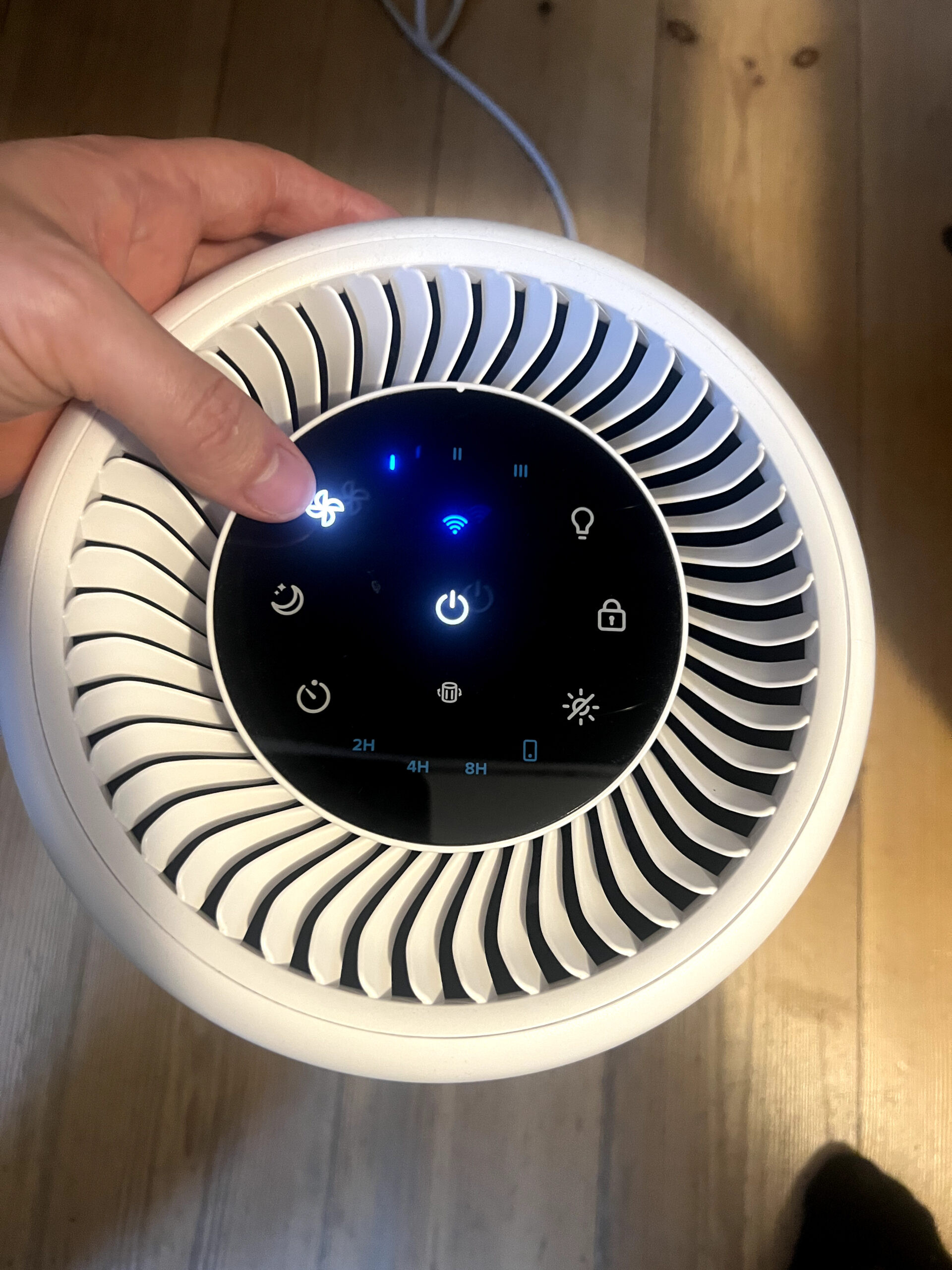
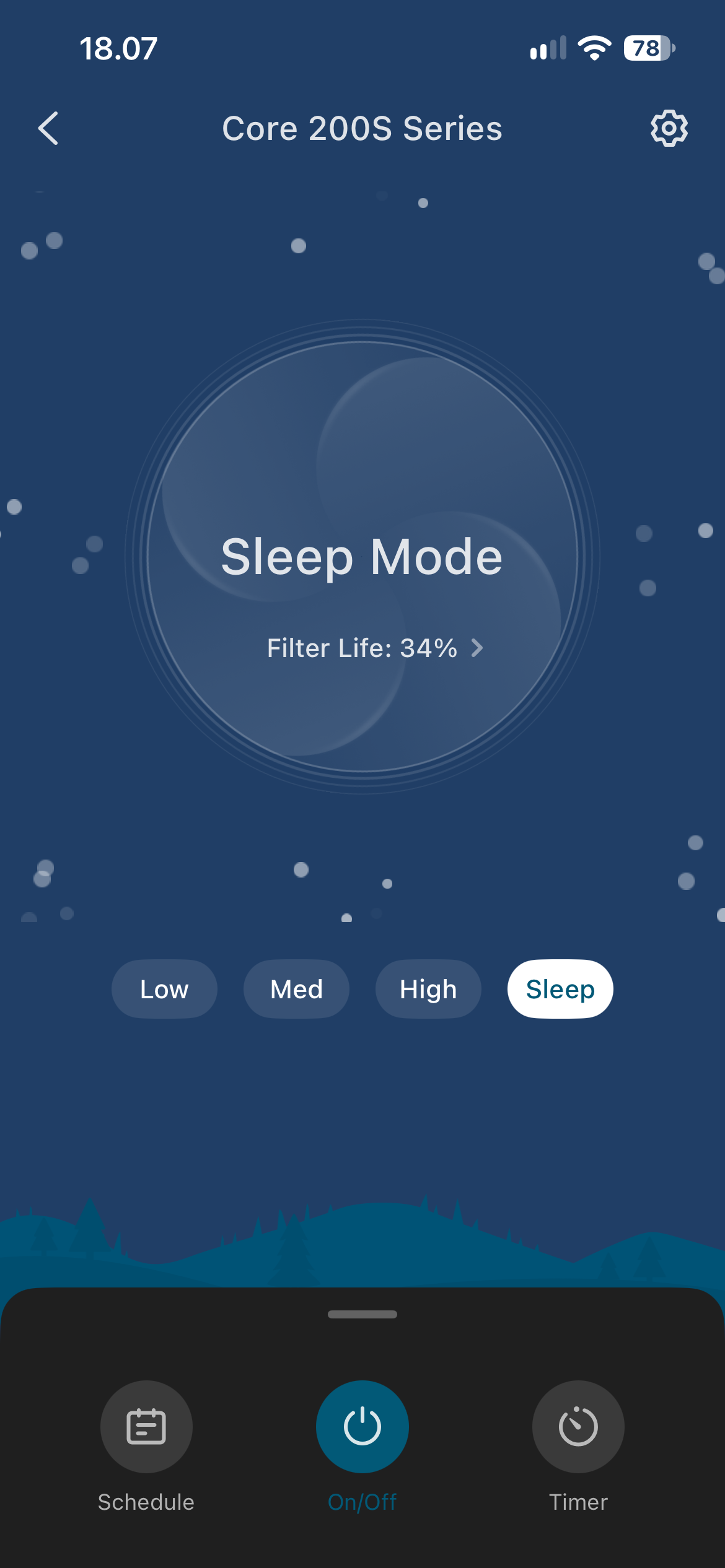
The touchscreen is straightforward, and the VeSync app is equally easy to understand. I do not spend much time changing settings because Sleep Mode is my default, but the app is useful for remote control, schedules and checking the filter-life estimate.
One limitation is that the Core 200S has no built-in air-quality sensor. That means VeSync gives me control and filter information, but not an objective live PM2.5 reading from the room. If you specifically want automatic fan-speed changes based on measured air quality, this is not the Levoit model I would choose.
Filter life: what the app says vs. what the manual says
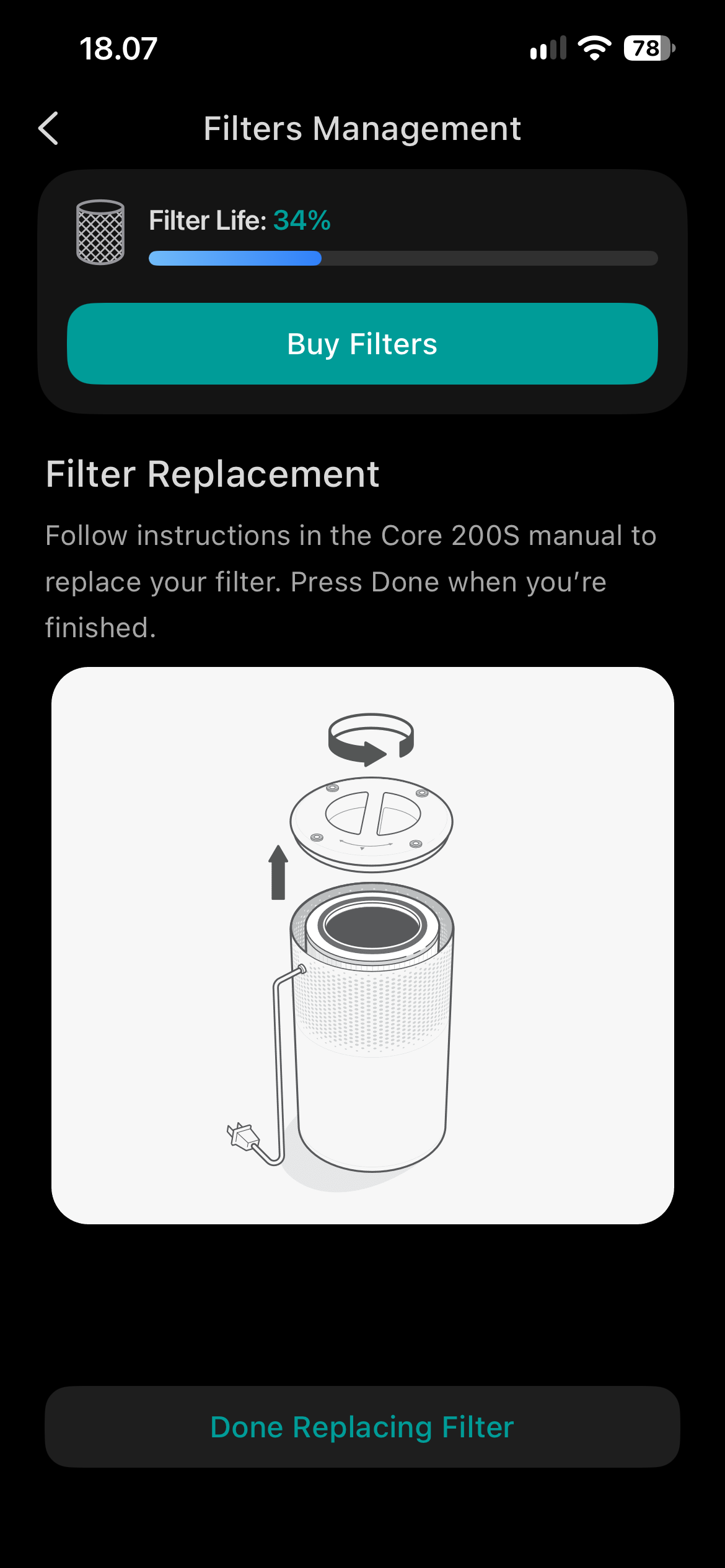
After roughly two months of running the purifier 24/7, my VeSync app is showing about 34% filter life remaining. I have not bought a replacement filter yet, and I had not cleaned the pre-filter before writing this review.
I originally assumed I could simply vacuum the full filter repeatedly and extend its life for a long time. The manual is more specific than that: the outer nylon pre-filter can be cleaned with a soft brush or vacuum hose, but the main filter and activated-carbon filter should not be cleaned. Levoit recommends cleaning the pre-filter every 2–4 weeks and says the complete filter typically needs replacement around every 6–8 months, depending on use and environment.
So my plan is to start vacuuming the pre-filter regularly, not to treat the whole filter as indefinitely reusable. I also view the app’s 34% figure as a maintenance estimate, not as a laboratory measurement of how much filtration capacity is physically left.
Can the Core 200S prevent mold or improve health?
This was one area where my initial assumption needed a correction. An air purifier can capture some airborne particles associated with mold, but it does not prevent or solve a mold problem. The EPA is explicit that mold is fundamentally a moisture problem; controlling humidity, fixing leaks and removing existing mold are the important steps.
The health case is also less absolute than “cleaner air equals longer life.” Portable filtration can lower concentrations of certain airborne particles, and that is a reasonable reason to use one. But the size of any personal health benefit depends on the pollutants actually present, purifier sizing, placement, fan speed, ventilation and individual sensitivity. That is why I describe my cleaner-air impression as an observation, not proof of a medical outcome.
Size and design
The Core 200S is easy to move and the power cable is long enough for my setup, but the purifier itself was larger than I expected from the product photos. Size alone does not prove performance, so the more useful number for U.S. buyers is Levoit’s 90 CFM CADR.
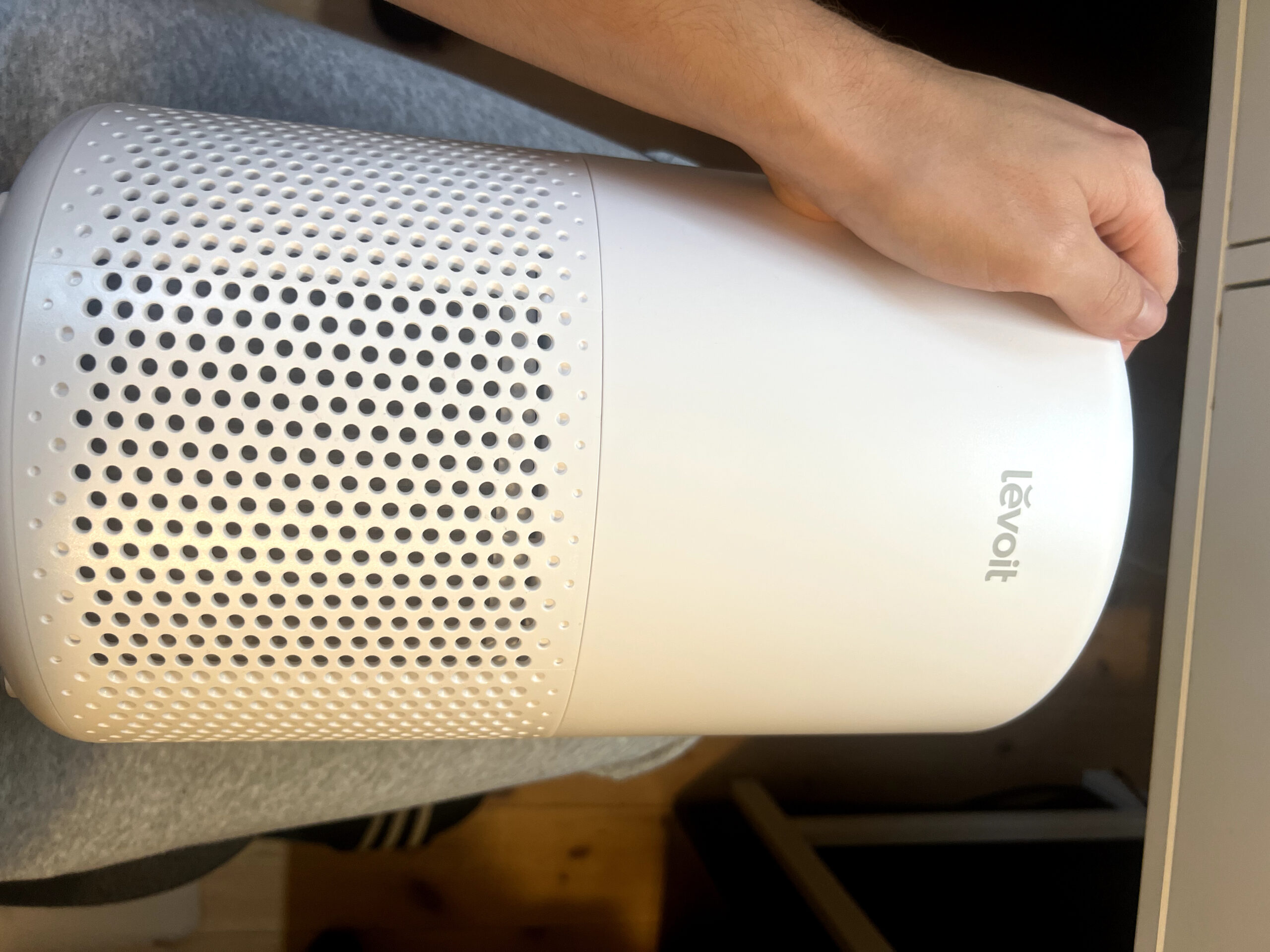
My girlfriend also does not particularly like how it looks, which is another reason mine lives under the desk. I would describe the design as clean and inoffensive rather than attractive enough to become part of the room.
How it compares with the other purifier I own
I also own the Pure Enrichment PureZone Mini, which sits on top of my desk. In my use, it is far smaller and generally unobtrusive, but it has occasionally become unusually noisy until I turn it off and on or physically adjust it. Since getting the Levoit, I see the PureZone Mini more as something suited to a car, office desk or very small personal space than as my main apartment purifier.
If you need materially more airflow, Levoit’s Core 300S-P is the more logical step-up within the same brand. Levoit currently rates the U.S. Core 300S-P at 141 CFM and 219 ft² at 4.8 air changes per hour, compared with 90 CFM and 140 ft² for the Core 200S-P. It is also physically larger and more expensive, so I would not automatically choose it for a small office.
Why I gave it a 4.1/5 rating
This score is my editorial summary of the experience above, not a laboratory grade. I defined the criteria first and weighted only things I have enough evidence to judge. The 4.1/5 rating follows the public Jon Tests rating method and is based on the weighted criteria below.
| Criterion | Weight | Score | Evidence from my use |
|---|---|---|---|
| Perceived air-cleaning experience | 25% | 4.0/5 | Air around my desk feels and smells cleaner, but I did not measure PM2.5. |
| Noise | 20% | 4.0/5 | Sleep Mode disappears into the background; Low and above are more audible than I expected. |
| Ease & smart controls | 20% | 4.5/5 | About five-minute setup, simple touchscreen, easy VeSync control and true set-and-forget use. |
| Setup & maintenance | 15% | 4.0/5 | Easy access and filter tracking, with recurring pre-filter cleaning and eventual replacement required. |
| Size & design | 10% | 3.5/5 | Easy to move, but larger than expected and not a design I want on display. |
| Value | 10% | 4.5/5 | I paid €79.36 (about US$91 at the July 2026 exchange rate) with my own money and would buy it again. |
| Weighted overall | 4.1/5 | Rounded to one decimal place. | |
Who should buy it?
- Buy it if you want a compact smart purifier for a bedroom or small office and expect to run it mostly on a quiet setting.
- Buy it if you value app control, scheduling and low day-to-day effort more than automatic air-quality sensing.
- Skip it if you need rapid cleaning for a larger open space.
- Skip it if you expect high fan speeds to remain almost silent.
- Skip it if you want the purifier itself to measure PM2.5 and automatically change fan speed.
Final verdict
I bought the Levoit Core 200S because I wanted cleaner-feeling air in an old city apartment without adding another appliance I would constantly have to manage. That is exactly where it has worked for me. Sleep Mode is quiet enough for continuous use, the controls are easy, and I like the air around my workspace more with it running.
The two caveats I would not hide are noise and placement. Higher fan speeds are noticeable in my quiet apartment, and my convenient under-desk location is less open than Levoit recommends. I also cannot prove a health or longevity benefit from my personal experience. Even with those limits, I would buy it again.
Check the current U.S. Core 200S-P price on Amazon (paid link) · See the European listing I bought (paid link)
FAQ
Is the Levoit Core 200S quiet enough for sleeping?
For me, yes on Sleep Mode. I normally stop noticing it. Low, medium and high are progressively more obvious in my very quiet apartment.
Can I vacuum the Core 200S filter and keep reusing it?
You can vacuum or brush the outer pre-filter. Levoit’s manual says not to clean the main filter or activated-carbon filter and gives a typical full-filter replacement interval of about 6–8 months, depending on use.
Does the Levoit Core 200S prevent mold?
No. It may capture some airborne mold-related particles, but an air purifier does not fix the moisture conditions that allow mold to grow. Moisture control and remediation are the important steps.
Is the U.S. Core 200S-P the same as the European Core 200S I tested?
They are closely related regional versions in the same Core 200S family and share the same basic dimensions and smart-control concept, but they have different regional listings and electrical specifications. I physically tested the European unit, not the U.S. 120V unit.
Is the “672 ft²” coverage claim realistic?
It needs context. Levoit states 672 ft² at one air change per hour, but 140 ft² at 4.8 air changes per hour for the U.S. Core 200S-P. If you want frequent repeated filtration, use the smaller figure when sizing a room.
Sources and review method
- Levoit Core 200S-P official product specifications
- Levoit Core 200S-P user manual
- U.S. EPA: Guide to Air Cleaners in the Home
- U.S. EPA: Mold and moisture control
- RTINGS Core 200S independent test data
- Levoit Core 300S-P specifications for comparison
For more on how first-hand reviews are handled on this site, see How I Test.