Kirkland Minoxidil 5% Foam Review: 10 Years on Minoxidil
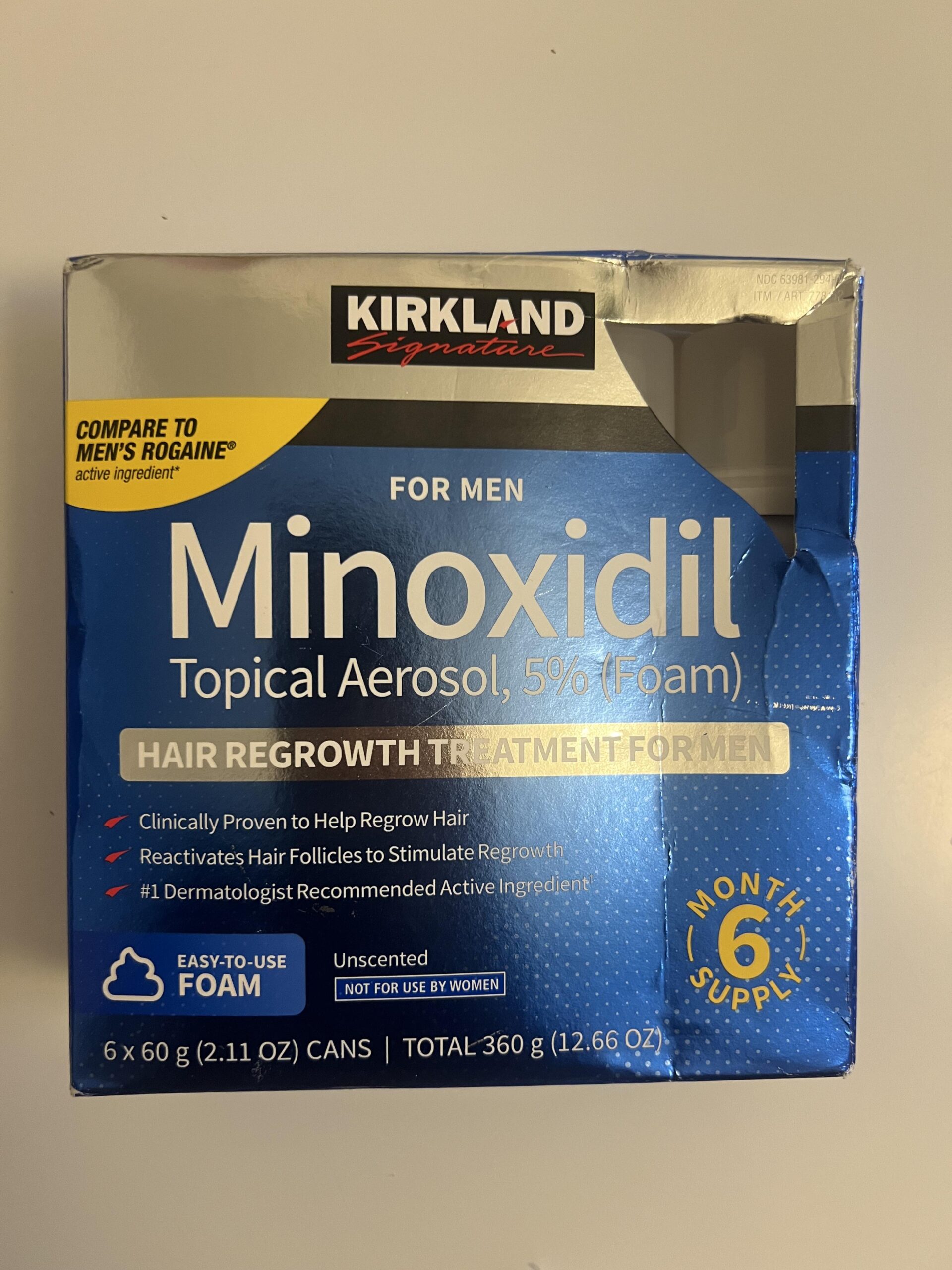
My Kirkland Signature Minoxidil 5% Foam review starts with an important distinction: I’ve used minoxidil for about 10 years, but this specific Kirkland six-pack arrived only four or five days before I wrote this review. I paid approximately €55 for six 60 g (2.11 oz) cans, sold as a six-month supply. So far, I like the foam’s scalp feel much more than the liquid/spray minoxidil I used in recent years. But I cannot honestly claim new hair growth from the Kirkland foam after less than a week.
My crown thinning began when I was approximately 23. Now, at 33, I don’t think my crown has significantly worsened—and I think long-term minoxidil might have helped me maintain what I have. However, I haven’t noticed convincing regrowth over those 10 years. Without an untreated control or standardised photos, I cannot establish that minoxidil alone prevented progression or predict what would have happened without treatment.
I bought the foam again mainly because my previous liquid/spray formulation caused scalp dryness, redness and itching. In these first several days, Kirkland foam already feels more comfortable. It is easy to work into the crown, with a small trade-off: the hair can feel slightly sticky or greasy afterwards. I intend to keep using minoxidil, but this is an early comfort review and 10-year minoxidil background, not a long-term Kirkland efficacy test.
Affiliate disclosure: This independent, self-funded firsthand review contains a user-supplied Amazon short link, which may earn JonTests a commission on qualifying purchases at no extra cost to you. I bought the six-pack myself; no manufacturer provided the product or approved the verdict. The short link’s final destination could not be independently verified, so confirm that any linked listing is for the exact Kirkland 5% foam, six 60 g cans shown here. See my affiliate disclosure.
I paid: about €55 for six 60 g cans
What I tested: comfort, scalp feel, ease of applying foam
User-supplied paid short link; destination unverified. Check the listing is men’s 5% foam, six × 60 g, not 5% liquid or a different pack size. US-labelled medication; check local purchase/import rules.
My verdict: much more comfortable than my recent minoxidil liquid
Best reason I’d choose the foam: My scalp feels significantly less dry, itchy or uncomfortable compared with the liquid/spray I used for years. That’s a first-week usability observation, not a controlled comparison of every foam versus every liquid.
On hair results: I haven’t seen much clear new growth throughout about ten years of minoxidil use. I personally feel my crown thinning has remained roughly stable, which I value, but I cannot isolate minoxidil’s effect from age, natural progression or other treatments.
Application: I dispense the white foam into my hand and apply it to the thinning crown. It’s straightforward, although my hair can feel a little more sticky/greasy afterwards than I would ideally like.
Would I buy it again? Yes, assuming this comfort continues. My biggest concern is the cumulative cost of years of ongoing treatment.
Pros based on my own use
- Quickly feels more comfortable on my scalp than the liquid that irritated me
- Easy foam dispenser and straightforward application to crown area
- Pack of six identical 60 g cans makes cost and routine planning simple
- Only minor stickiness/greasiness in my hair so far
- No other adverse effects noticed from this new foam in the first few days
- Good purchase value to me compared with the discomfort of the liquid
Limitations and drawbacks
- Too early to assess the new Kirkland foam’s hair-regrowth results
- Requires ongoing use and continuing spending to maintain any benefit
- Can leave hair slightly sticky or greasy after application
- Contains alcohol; foam is not guaranteed to suit every sensitive scalp
- Several other treatments in my routine complicate attributing future changes
- Cannot responsibly rank it above another brand for clinical efficacy based on active ingredient alone
Why I switched back from minoxidil liquid to foam
My hair thinning began around age 23, mainly at the top/crown of my scalp. I started minoxidil young and have been reasonably consistent with topical treatment over the following decade, apart from occasional short gaps. For roughly the first five years I used a foam; later I changed to a spray/liquid formulation that I used for several years.
Over time, the liquid became uncomfortable enough that I wanted to switch back. It left my scalp dry, red and itchy. I do not know the exact ingredients or brand of my previous liquid, so I can’t reliably identify which excipient caused that experience.
After only four or five days with my newly purchased Kirkland foam, my scalp already feels much better. I have not noticed the same itching or redness, and I find the foam pleasantly manageable. This is the most meaningful direct Kirkland-specific observation in this review.
There is relevant independent context: the American Academy of Dermatology notes that an irritated scalp is a possible side effect of topical minoxidil and that foam formulations may reduce that risk for some people. Less irritation does not mean greater regrowth efficacy and does not guarantee that the Kirkland foam is irritation-free.
Ten years of minoxidil: maintenance, not proven regrowth
I don’t want to turn a long personal history into an unrealistic success story. Looking back at approximately age 23 to 33, I don’t think I developed dramatically more crown hair from minoxidil. But I also don’t think my visible thinning has become substantially worse over that decade, despite male-pattern hair loss running in my family.
My interpretation is that long-term minoxidil might have helped maintain my hair. There is no objective untreated comparison: I cannot know whether I would be much balder today without it, and I have not supplied controlled ten-year photographic measurements. That is why this is my impression, not proof of long-term effectiveness for this specific Kirkland product.
This distinction is important because minoxidil is generally used continuously. Independent dermatology guidance states that it can help maintain hair and stimulate regrowth for some men, but benefits vary, can take months to develop, and may be lost after stopping. I have generally kept up with it; I am not claiming the several-week interruptions across ten years were a planned clinical test.
How I apply the Kirkland foam to my crown
My routine is simple: I dispense some foam into my hand, part the hair where my crown is thinnest, and work the foam onto the scalp rather than deliberately coating my hair shafts. I currently use minoxidil twice daily after periods of once-daily application. I think maintaining the proper schedule could be useful, but I have not measured whether switching back to twice daily changed my own results.
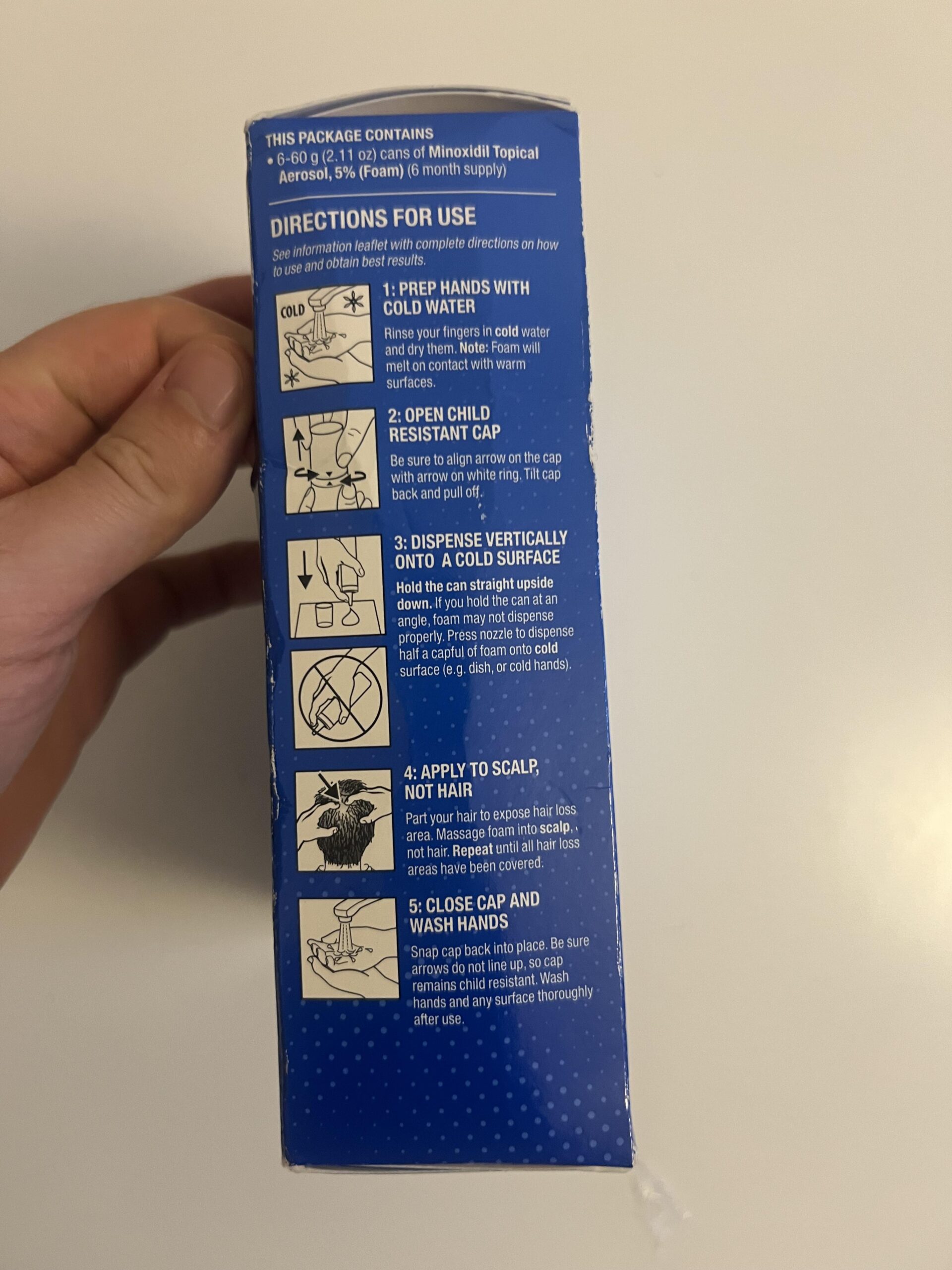
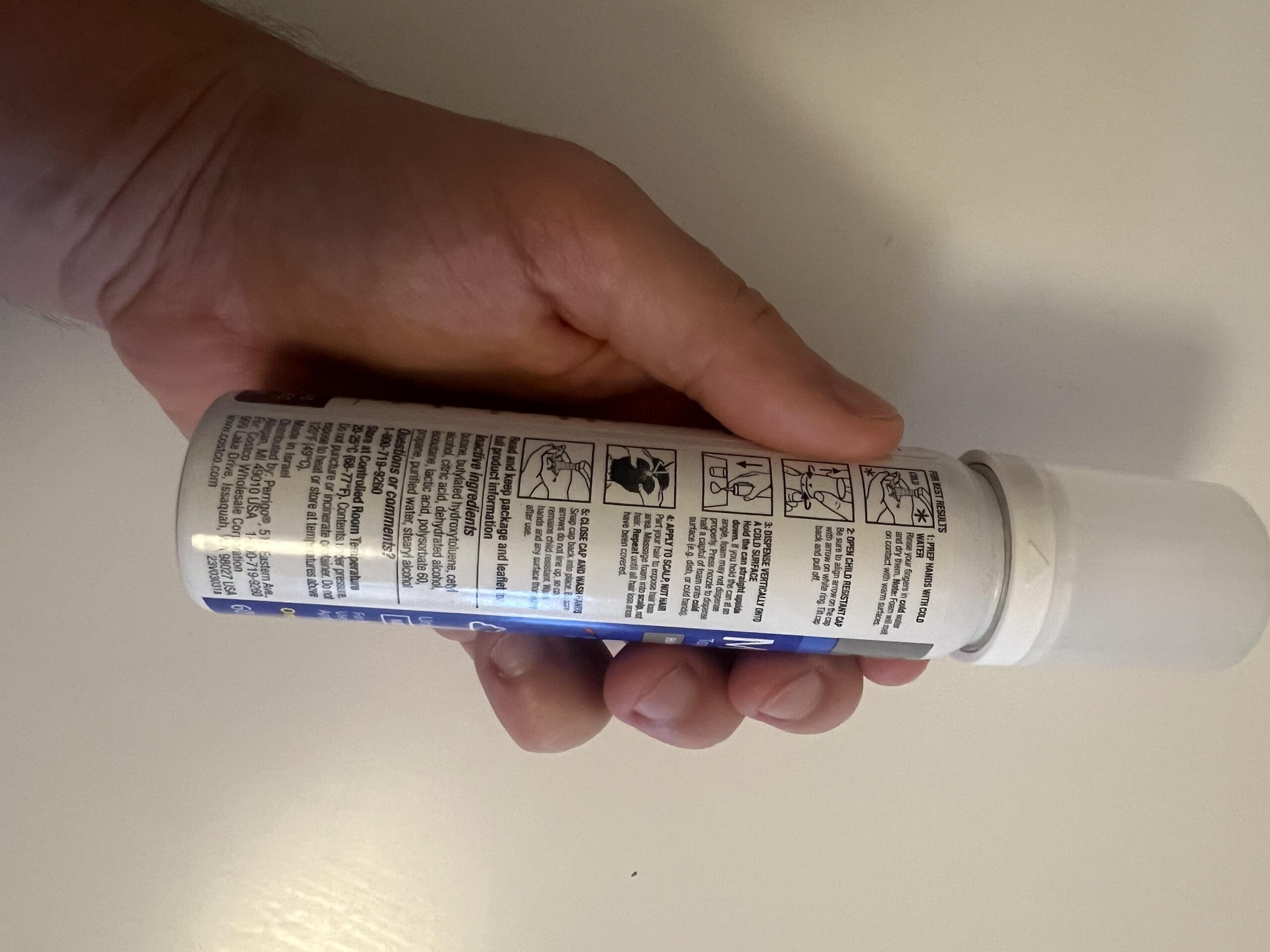
The package instructions for this US-labelled product specify a half-capful of foam twice daily to the thinning scalp, with hands washed afterwards. They also advise dispensing onto a cold hand or other cool surface, because foam can melt on contact with warmth, and keeping the container upside-down while dispensing. Follow the full directions and precautions on the actual package; increasing the amount or frequency is not a shortcut to better results.
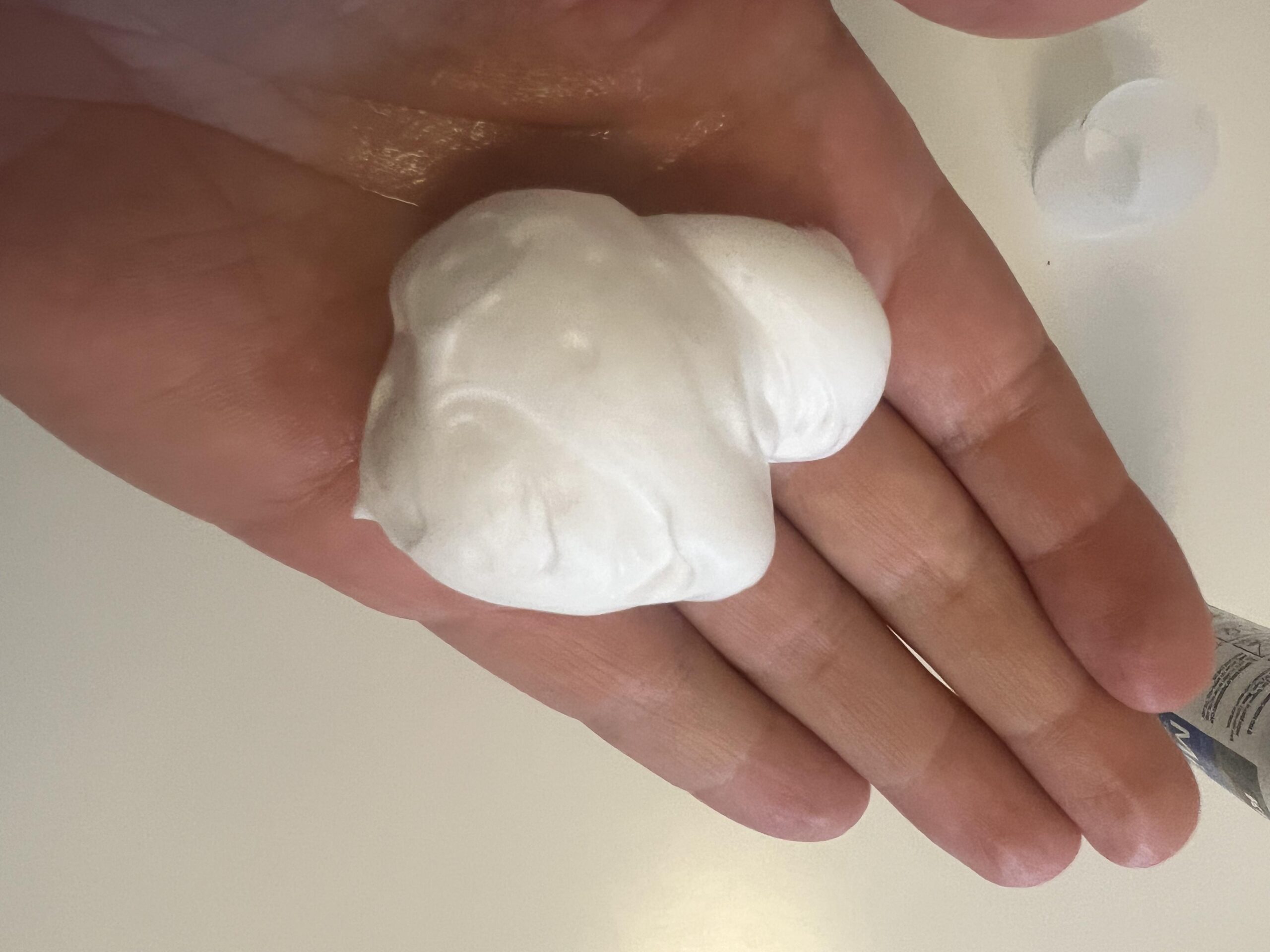
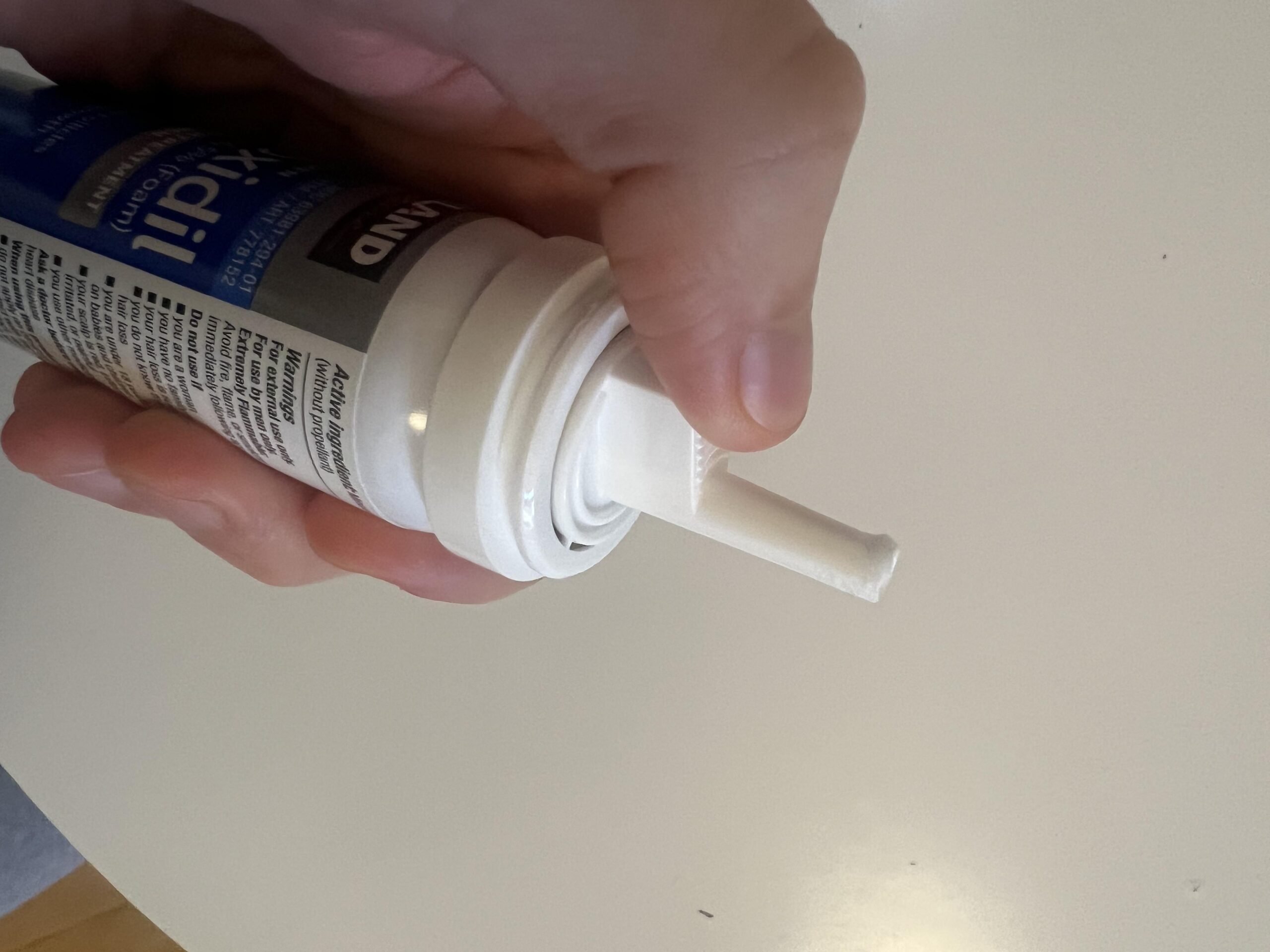
Within the first few days, the foam has been easy to distribute and much less irritating to me than my old liquid. My hair sometimes feels a little tacky or greasy afterwards, but not so much that it defeats the convenience of using it.
Exactly which Kirkland 5% minoxidil foam did I buy?
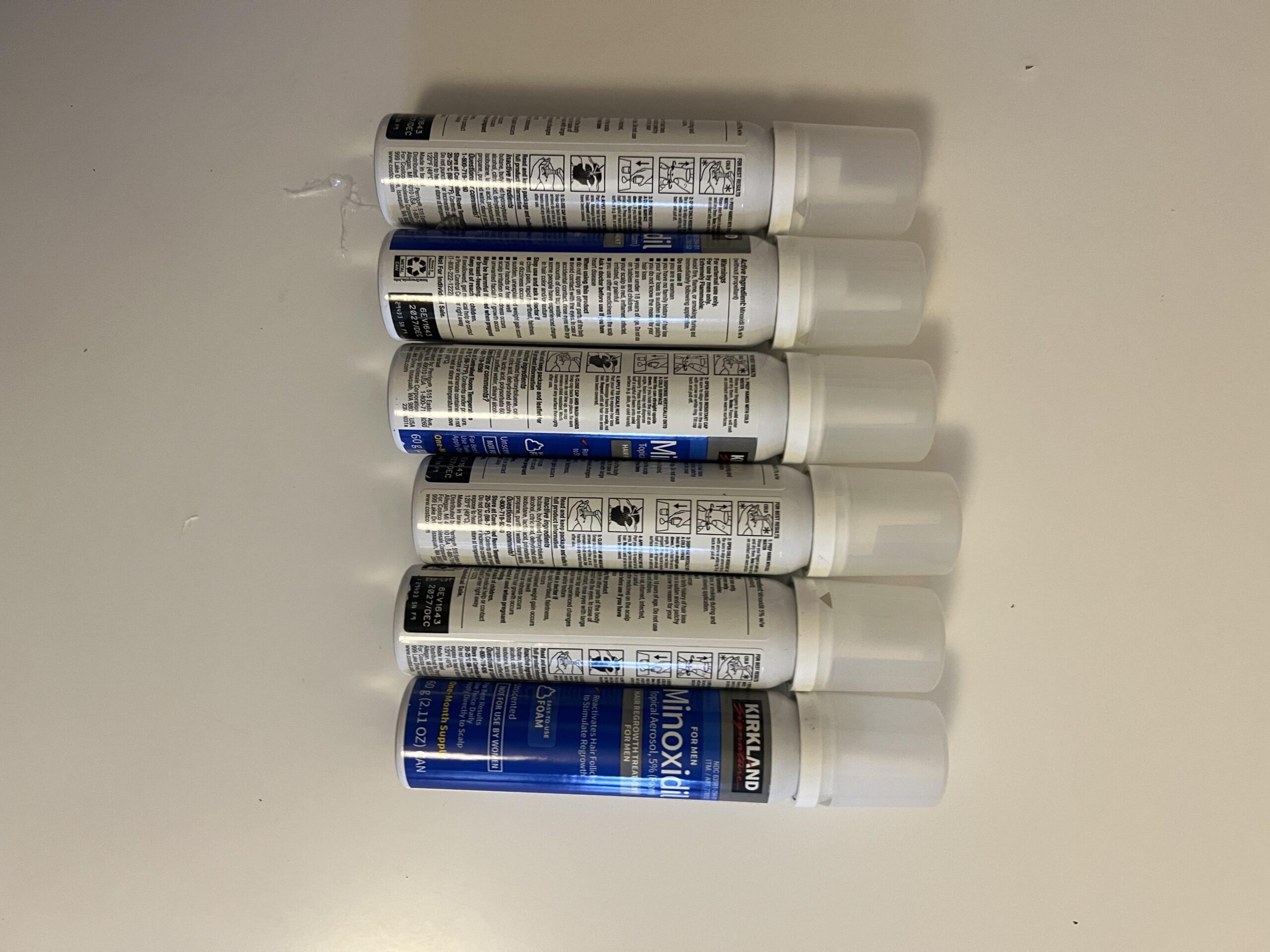
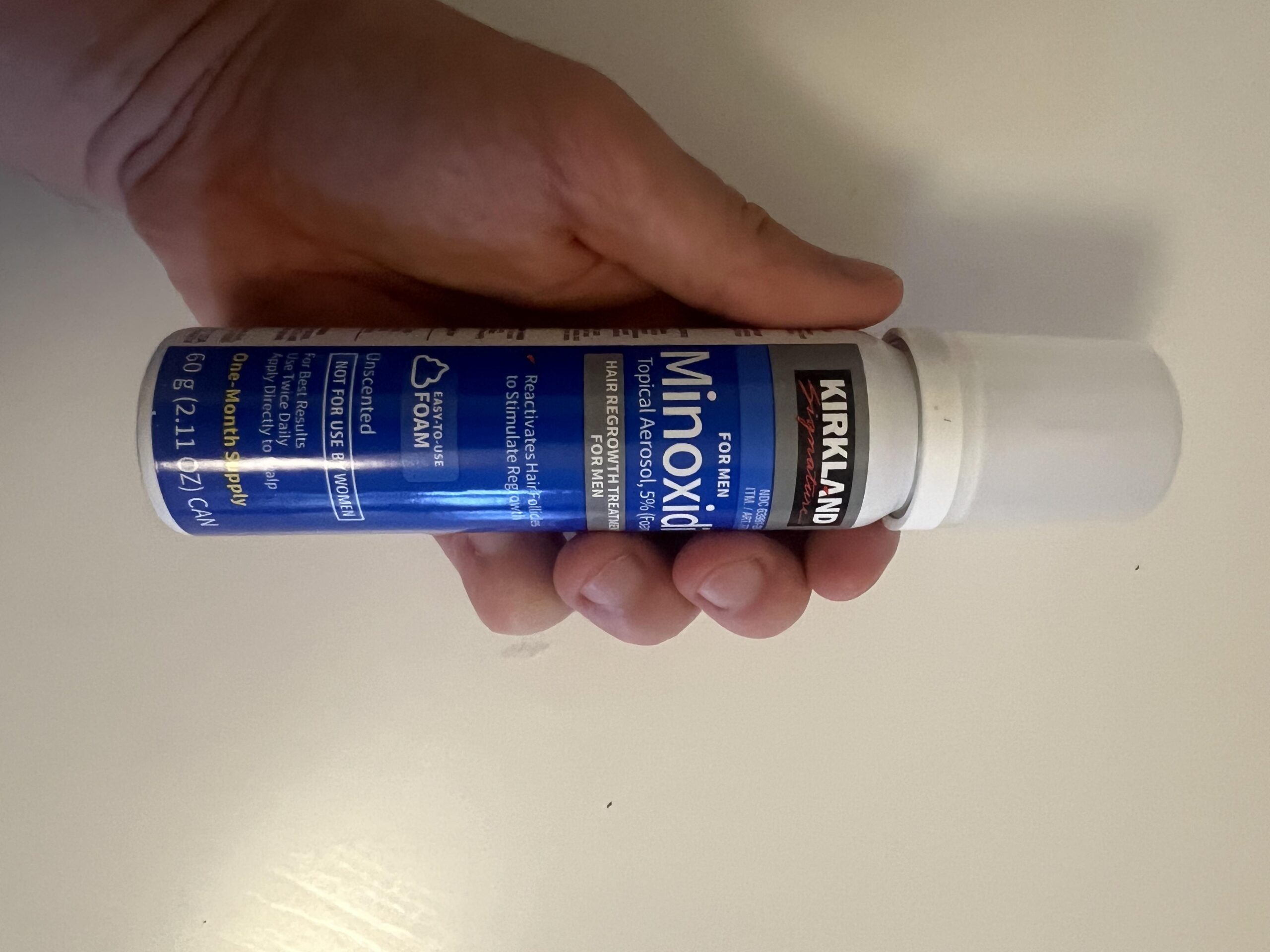
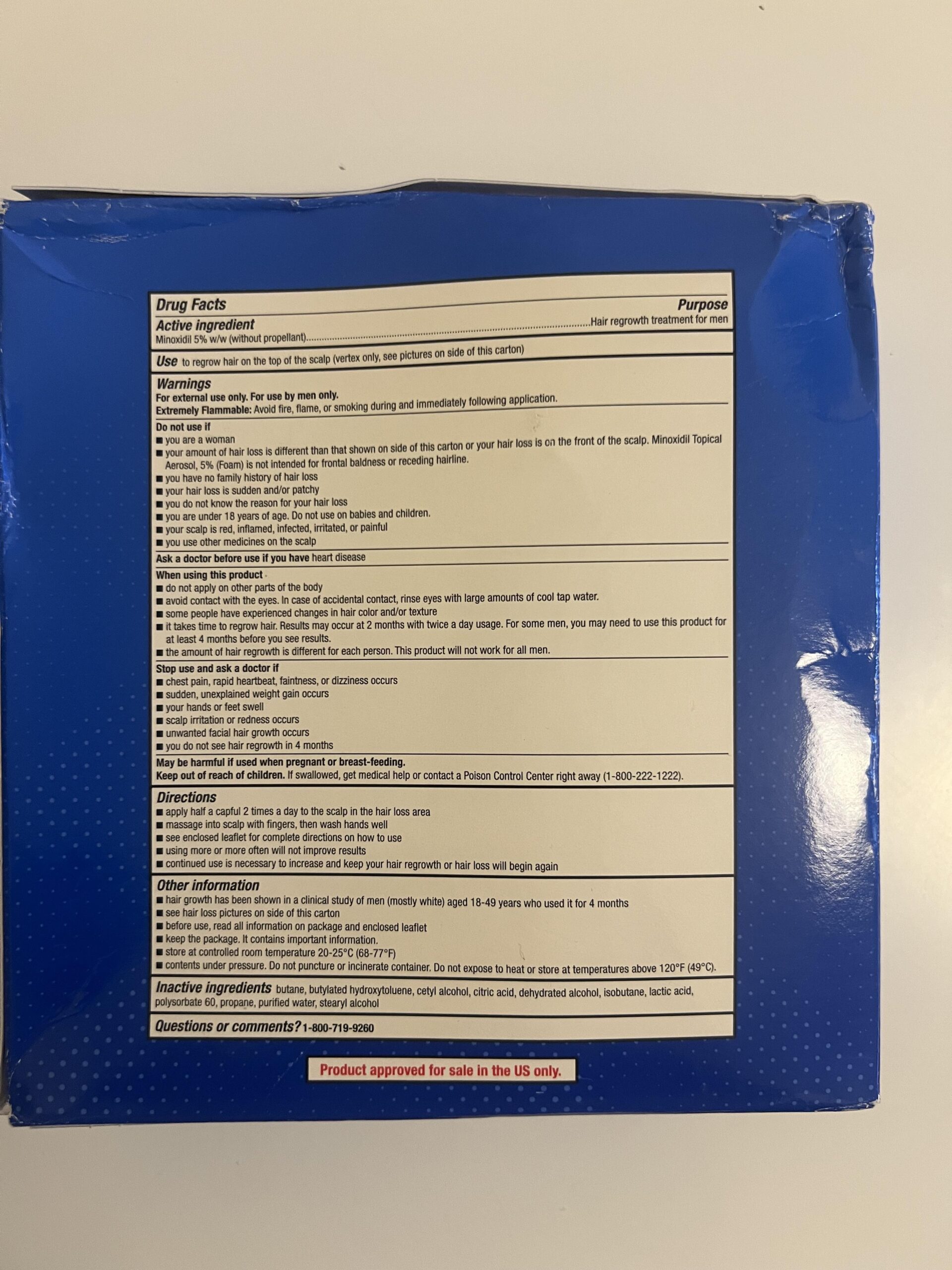
My original photos show the US-style Kirkland Signature Minoxidil Topical Aerosol, 5% (Foam) for Men, with a blue six-month carton and six 60 g / 2.11 oz cans (360 g total). The box lists minoxidil 5% w/w (without propellant), not 5% liquid solution, and specifically describes use for thinning on the vertex/top of the scalp.
The physical package displays US drug-labelling information matching the Costco/Kirkland DailyMed label, NDC 63981-294. There are newer or alternate US-listed NDCs for similarly named Kirkland foam packs, and a different retail ASIN or new carton design does not guarantee every inactive ingredient is identical. My remarks about ingredients refer to the photographed version.
| Detail | My actual box | Evidence / qualification |
|---|---|---|
| Exact form | Topical aerosol 5% foam for men | Original front and Drug Facts photos |
| Pack size | 6 × 60 g = 360 g | Carton markings and six cans laid out |
| Supply claim | 6 months | Manufacturer label, assuming directed use; not yet personally confirmed |
| Use indicated on US carton | Hereditary thinning on the top/vertex of scalp | FDA-format Drug Facts, not a personal diagnosis |
| Foam ingredients | 5% minoxidil and ingredients including dehydrated alcohol, fatty alcohols, propellants, and water | My carton and matching DailyMed label; propylene glycol is not listed on this version |
| Price paid | Approximately €55 for six cans | My historical purchase price, not current retailer pricing |
| Observed outcome | Better early scalp comfort than previous liquid | Just 4–5 days of use of this package; no regrowth results yet |
Why the foam feels different from my old spray
I have not done a blinded test, and I don’t know what was in the liquid I used. But my scalp comfort has been noticeably better with the Kirkland foam so far.
The photographed Kirkland foam formulation still contains alcohol. Its Drug Facts inactive-ingredient list includes cetyl and stearyl alcohol, as well as dehydrated alcohol, and does not list propylene glycol. Some liquid minoxidil products contain propylene glycol, but I have not verified whether my old liquid contained it, or whether alcohol, minoxidil or another ingredient was responsible for my earlier irritation. It would therefore be misleading to diagnose my past reaction or promise that all foam users will avoid redness.
Compared with that liquid, the foam leaves my scalp feeling more comfortable and a little less dried out. It can leave my hair modestly sticky, and the foam’s texture needs some care when dispensing, but these drawbacks have been minor during my first days of use.
Is €55 for the six-pack good value?
I paid around €55 for one six-can pack, approximately €9.17 per 60 g can. If one can lasts one month at the recommended dose, that’s about €9.17 per month, or roughly €110 per year at the same price and usage. These are estimates based on the manufacturer’s six-month-supply claim; I have not yet consumed the entire pack at a measured dose.
I think it’s worthwhile because I intend to continue minoxidil and care about preserving my hair. At the same time, ongoing treatment has a real cumulative cost. For example, €110 a year would add up to about €1,100 over ten years if the price and usage stayed identical. My actual spending over the previous decade was different and isn’t documented here.
The other value question is whether a foam that I am comfortable using is a better purchase for me than a liquid that repeatedly irritated my scalp. For me, that comfort difference matters, even before any Kirkland-specific regrowth result can be judged.
What other hair-loss treatments am I using?
I don’t use minoxidil in isolation, so I want to be open about the rest of my routine. Approximately six months ago, I started using an iRestore Professional light-therapy helmet. I also use rosemary hair oil, a biotin-marketed hair-growth shampoo and occasionally a hair spray. I am not currently taking finasteride and haven’t had a hair transplant, although I’ve considered both.
If my hair looks different months from now, these overlapping products will make it difficult to identify the cause. There is much stronger established clinical evidence behind minoxidil than behind a marketing claim that ordinary biotin shampoo regrows hair. I do not want to inflate the evidence for each extra product merely because it is part of my routine.
I may seek a professional discussion about finasteride or other options in the future if the situation warrants it; that is a decision to make with a clinician after considering effectiveness and risks, not a recommendation to add a prescription drug without medical advice.
What can minoxidil realistically do, and how long does it take?
Minoxidil is an established treatment for some forms of hereditary hair loss. According to the American Academy of Dermatology, studies show it can slow ongoing hair loss and stimulate some regrowth, but outcomes vary substantially and full regrowth is unlikely. Dermatology guidance notes that it can take six to twelve months to judge the full response, although US product labels describe some visible results from around two to four months.
Therefore, judging this newly purchased foam after four or five days by the number of new hairs would be meaningless. The observation worth reporting now is the improved scalp tolerability. I have not observed unusual initial shedding with foam in my experience, but others can have different responses and my recall across ten years is not systematic data.
I would like to see whether returning to a consistent twice-daily routine makes a difference, but that is a question for a future update—ideally with same-angle, same-light photographs of the crown over several months, rather than a confident prediction today.
Minoxidil safety: what the US-labelled box actually says
Pet owners: Dermatologists warn that minoxidil can be severely toxic to cats and dogs, including through contact with treated hair, bedding or discarded containers. Prevent pets from coming into contact with the product or residues, wash hands and clean up after use. If a pet is exposed, contact a veterinarian urgently.
The box photographed here says it is approved for sale in the US only. That label statement does not establish whether obtaining it from a particular seller or importing it into another country is permitted. If ordering internationally, verify authenticity, local rules, appropriate medicine packaging, and dispensing/expiry details with a pharmacist or regulator rather than relying only on an Amazon product title or short URL.
My conclusion: would I buy Kirkland 5% foam again?
Yes, I intend to keep buying minoxidil and would consider repurchasing this Kirkland foam if the early comfort continues. The most persuasive reason is not that I’ve suddenly regrown hair. It’s that I can now use a foam that feels much kinder to my scalp than the irritating liquid I used for years, while keeping a familiar minoxidil routine.
My ten-year experience is consistent with perceived maintenance of my crown hair despite a family history of male-pattern thinning, but I cannot demonstrate that this foam—or minoxidil by itself—caused that stability. I hope to track my crown more consistently over the coming months and update this exact review when I have genuinely new observations.
For now, the verdict is positive on application and comfort, not yet rateable on Kirkland-specific hair regrowth. That is more useful than attaching an impressive long-term success claim to a product I started using less than a week ago.
Frequently asked questions
Is this review based on ten years using Kirkland foam?
No. I have used minoxidil generally for roughly ten years in foam and liquid forms. I began this specific Kirkland 5% foam six-pack approximately four or five days before writing this review in October 2026.
Has Kirkland foam regrown my hair?
There is no verified new regrowth from this recent Kirkland purchase. My crown appears roughly stable to me across many years of minoxidil use, but I cannot isolate the treatment’s contribution.
Did foam irritate my scalp less than liquid minoxidil?
Yes, for me in the first few days. The liquid I used had caused itching, dryness and redness. The new foam feels more comfortable, although it can leave a bit of tackiness in my hair. This does not show all foam formulas are safer for everyone.
Does Kirkland foam contain propylene glycol?
The specific NDC 63981-294 packaging I photographed does not list propylene glycol among the inactive ingredients, but it does list alcohol. Check your own box, as formulations and labels can differ.
How much does the six-month pack cost?
My historical purchase price was about €55 for six 60 g cans, or about €9.17 per month if the manufacturer’s supply estimate matches my usage. Current prices differ by seller and country.
Can I use a lot more foam to speed up hair regrowth?
No. The official US product instructions say using more or applying more often than directed does not improve results. Consult the label and a healthcare professional if you have questions about appropriate use.
Why might it be too early to see results?
Hair-regrowth assessment takes months, not days. The American Academy of Dermatology notes that full response can take six to twelve months in some men, while the Kirkland label notes that visible results may start in two to four months. Outcomes vary.
My sources and review transparency
- Personal evidence: Self-funded October 2026 purchase of one Kirkland six-pack for approximately €55, eight original product photos, first four to five days of direct Kirkland use, and my own ten-year minoxidil history. No independent scalp photographs comparing treatment effect are used.
- Manufacturer/regulatory US label matched to my package: DailyMed — Kirkland Signature Minoxidil Foam 5%, NDC 63981-294, revised February 2025.
- Dermatology evidence and timeframe: American Academy of Dermatology — Male pattern hair loss treatment.
- Pet safety: American Academy of Dermatology — Minoxidil can be toxic to cats and dogs.
- Testing philosophy: How I test products on JonTests.
Editorial note, 15 October 2026: This is an initial exact-product hands-on usability review with a separately disclosed ten-year experience of minoxidil as a medicine. It does not claim independent scientific testing, medical review, a controlled clinical effect, or a proven new hair-regrowth outcome. No numeric editorial score or Review rating markup is assigned until there is an approved, suitably scoped method.