Doppelherz Omega-3 1000 Vegan Review: 3 Weeks, €11.62
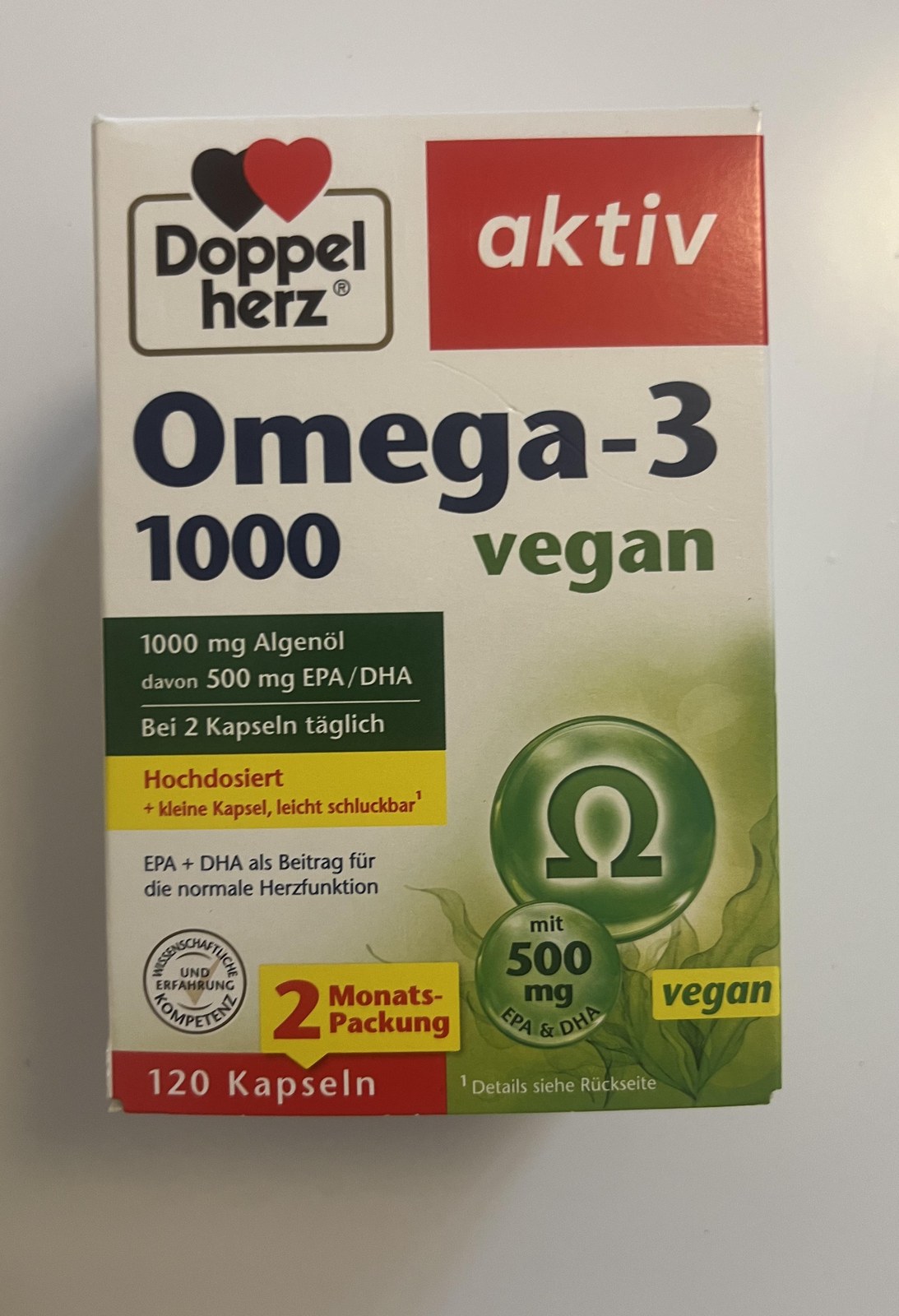
My Doppelherz Omega-3 1000 Vegan review after just over three weeks: 4.5/5. I bought two 120-capsule boxes on October 12, 2026, for €11.62 each (€23.24 total), and I have taken the capsules every day since. I wanted a less expensive vegan algae omega-3 supplement that was easier to swallow than my previous options. On those two everyday priorities, these have been a very satisfying switch.
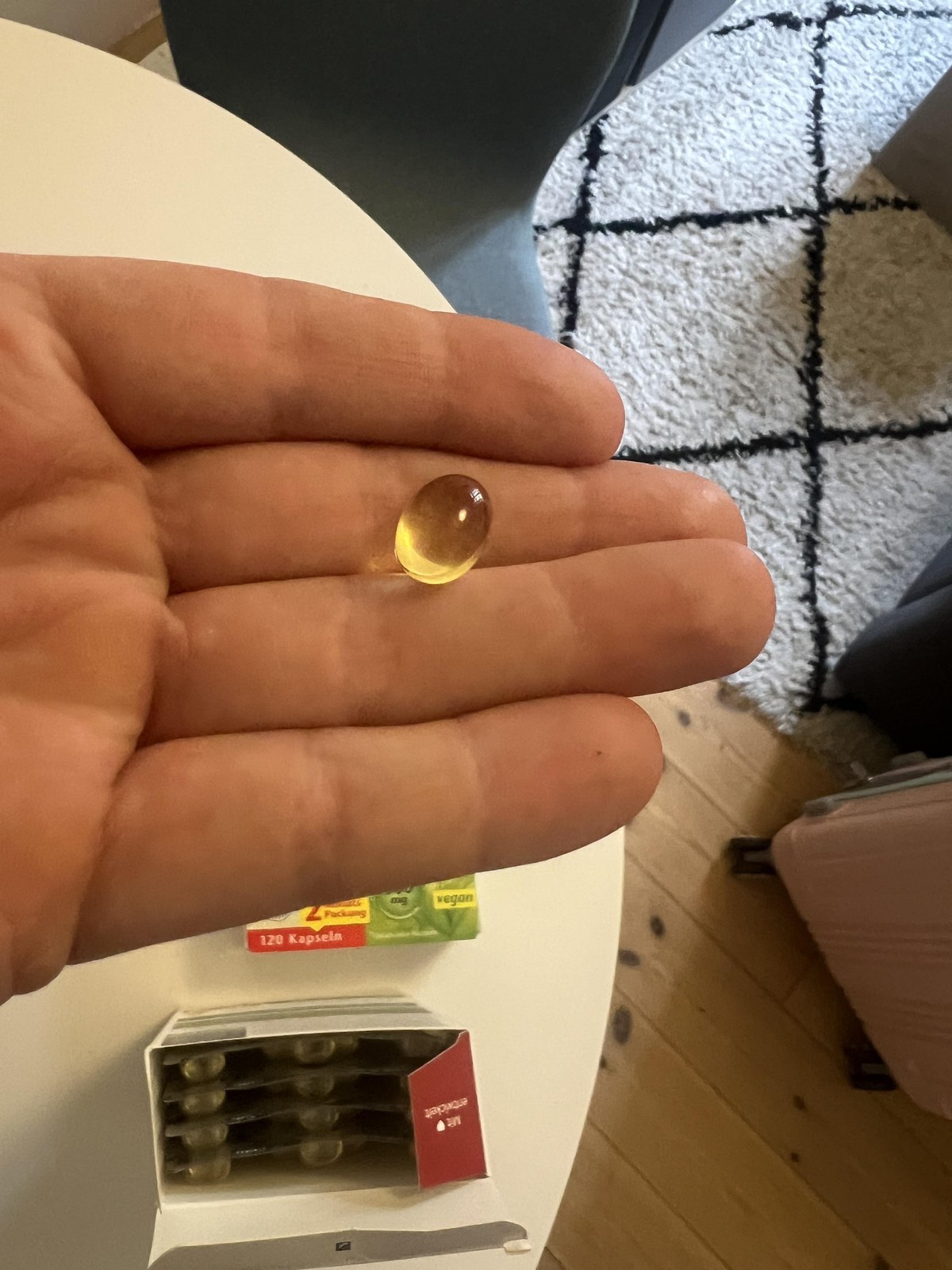
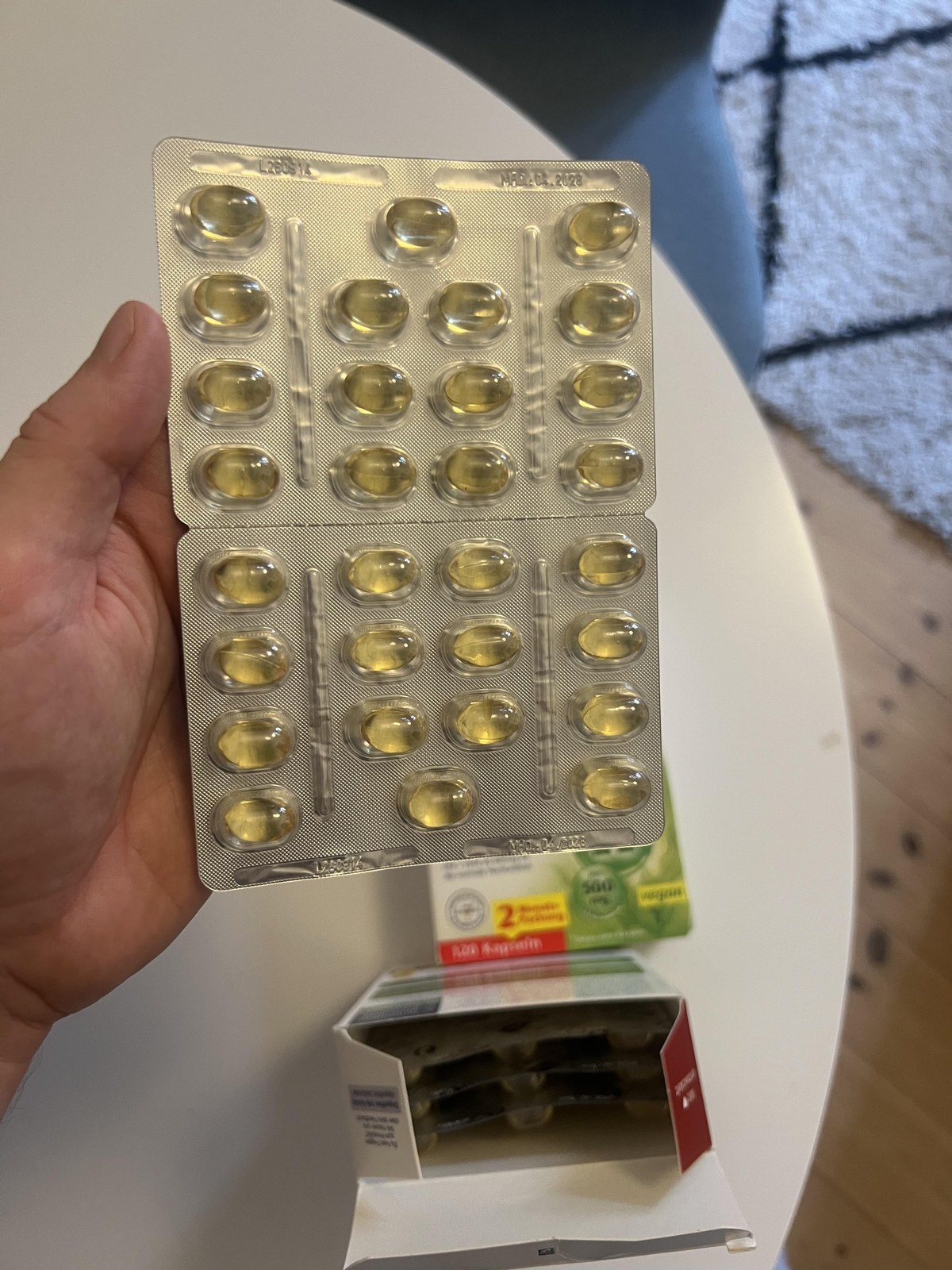
The capsules feel much easier to swallow than the larger algae-oil softgels I used before, and I have noticed no unpleasant smell or taste. There is, however, one recurring annoyance: they can be fiddly to push out of the blister packaging. That is a small problem, but one I encounter every day.
Affiliate disclosure: This hands-on review contains a paid Amazon link. As an Amazon Associate, I earn from qualifying purchases at no extra cost to you. I purchased the product myself. The review reflects my own use and independent examination of the label, not an Amazon customer rating or any payment-dependent verdict. See the full affiliate disclosure.
My use: 23 days, every day · small vegan softgels
I paid: €11.62 per 120-capsule box · €23.24 for two
Paid link · check the exact 120-capsule vegan version · price may change
Doppelherz Omega-3 1000 Vegan, 120 capsules — 4.5/5
Quick verdict: A genuinely good fit for my priorities: smaller, easier-to-swallow vegan algae-oil capsules, no discernible smell or taste in my routine, and a much lower daily outlay than the algae omega-3 I previously purchased.
Best for: budget-conscious people wanting a fish-free EPA + DHA source and anyone who dislikes swallowing large algae-oil softgels.
Skip if: you need the separately declared individual EPA and DHA quantities, require publicly accessible batch-specific third-party testing, dislike pushing capsules from blister sheets, or have been advised to use a different dose by a clinician.
My purchase verdict: Very happy so far. I bought two boxes, and I would be comfortable continuing based on my current everyday experience, while recognising that 23 days tells me nothing about long-term health outcomes.
What I like
- Noticeably easier for me to swallow than my older algae omega-3 supplements
- No noticeable unpleasant taste or smell during my use
- Vegan microalgae-based EPA + DHA without fish oil or gelatin
- At my purchase price, about €0.19 per two-capsule daily serving
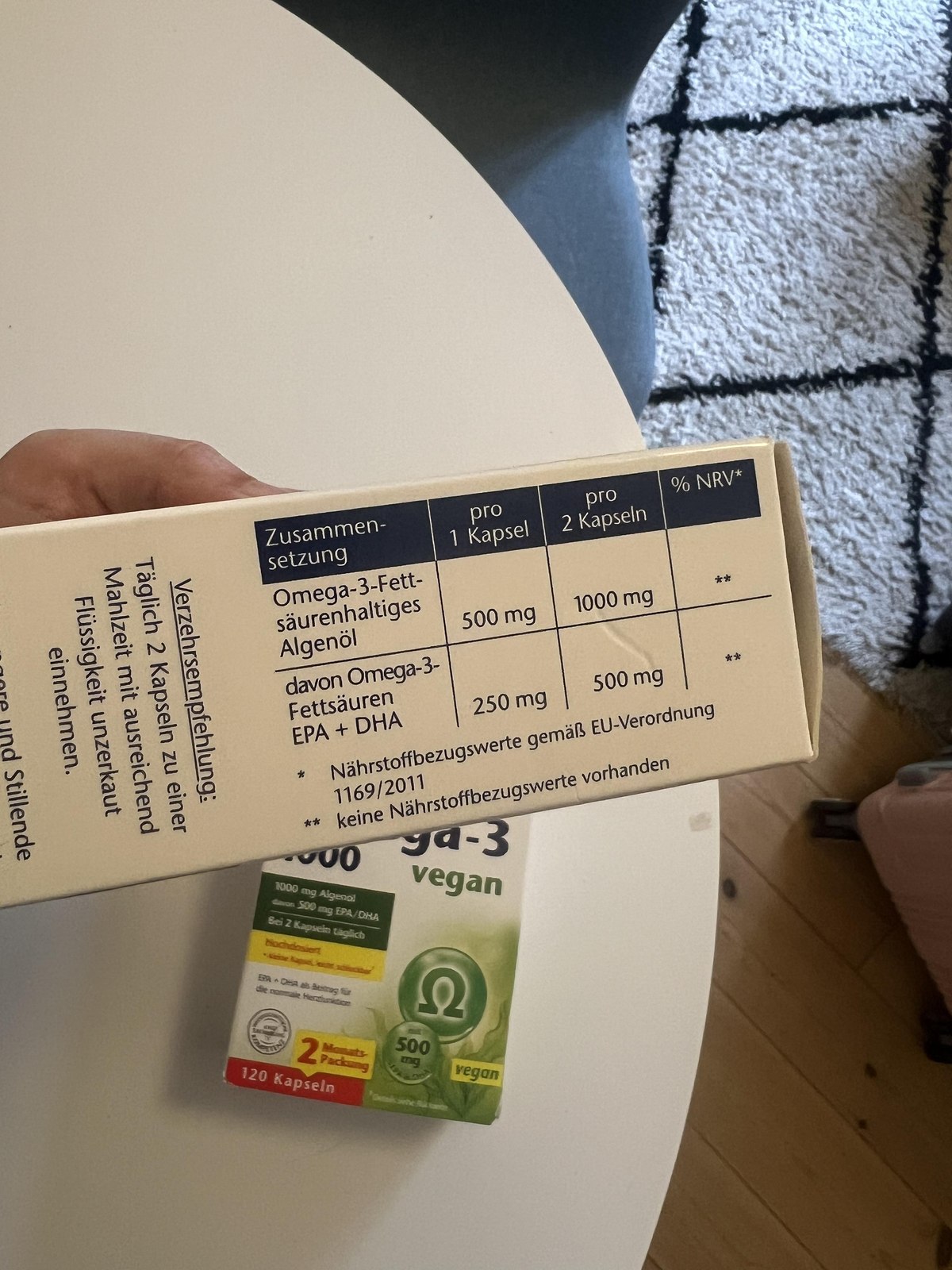
- 500 mg combined EPA + DHA per two capsules, clearly declared
What I would improve
- The blister foil can be frustrating when pressing capsules out each day
- Only 500 mg combined EPA + DHA per day versus 900 mg in my older EXVital formula
- Label provides a combined EPA + DHA figure, not separate EPA and DHA amounts
- No independent batch-purity certificate examined for this review
- Not a tested medical treatment, health-outcome assessment or long-term durability review
Bottom line: 4.5/5. I am very happy with the compromise: easier daily swallowing and lower spending, in exchange for less EPA + DHA than my previous higher-dose product. The annoying blister packaging and limited label detail prevent a near-perfect score.
Why I switched from my previous algae omega-3
Before buying Doppelherz I had used other algae-based omega-3 supplements, including EXVital algae omega-3, which I reviewed after buying four bottles. Those were useful to me, but the larger capsules and higher price kept bothering me. I wanted to avoid fish-derived oil and a fishy experience, while spending less and taking something I could swallow comfortably every day.
Doppelherz has solved the comfort part in my actual routine. These small translucent softgels are far less troublesome for me to swallow. That matters more to my daily compliance than having an impressive-sounding dose printed on the box. I am not saying a smaller capsule is medically better or that every person will find it easy to swallow; I am describing the difference I personally felt.
What does “Omega-3 1000” actually mean?
The name can be confusing. “1000” refers to the 1,000 mg of algae oil in the suggested two-capsule serving, not to 1,000 mg of EPA + DHA. The manufacturer lists 500 mg combined EPA + DHA per two capsules, so one capsule provides 500 mg algae oil and 250 mg combined EPA + DHA. That distinction is essential when comparing value against other supplements.
| Label or pack fact | Exact 120-capsule version | Why it matters |
|---|---|---|
| EPA + DHA | 500 mg combined per 2 capsules | The active long-chain omega-3 amount used for comparisons |
| Algae oil | 1,000 mg per 2 capsules | Not the same thing as 1,000 mg EPA + DHA |
| Single capsule | 500 mg algae oil; 250 mg EPA + DHA combined | Half a labeled daily serving |
| Recommended serving | 2 capsules with a meal and sufficient liquid | Manufacturer’s adult directions |
| Pack size | 120 capsules = 60 two-capsule servings | Two boxes theoretically cover 120 days |
| Omega-3 source | Oil from Schizochytrium microalgae | Non-fish and vegan formulation |
| Individual EPA and DHA amounts | Not separately listed in the label information I reviewed | Can’t confirm an exact EPA:DHA ratio from the combined total |
The pack uses a gelatine-free capsule with ingredients including modified starch, glycerol and carrageenan. That supports the vegan formulation claim; it does not on its own prove anything about a particular batch’s purity or clinical effectiveness. Product identity can be checked against Doppelherz’s official 120-capsule product information.
What I paid — and the fair cost comparison with EXVital
My purchase was on October 12, 2026: two boxes of 120 Doppelherz capsules at €11.62 per box. That is a documented personal purchase price, not a claim about Amazon’s current price or a guaranteed sale offer.
With two capsules a day, one 120-capsule box covers 60 days: €11.62 ÷ 60 = €0.1937 per day, or about €5.81 for a 30-day month. The two boxes cost €23.24 and give 120 nominal daily servings. Those are simple pack-and-label calculations; I have not yet consumed both boxes.
My earlier EXVital 120-softgel algae omega-3 cost me €21.95 a bottle and provided 900 mg combined EPA + DHA per two capsules (600 mg DHA and 300 mg EPA). Comparing the same two-capsule serving is revealing:
| Based on my actual purchase prices | Doppelherz 120 capsules | EXVital 120 softgels |
|---|---|---|
| What I paid per box/bottle | €11.62 (Oct 2026) | €21.95 (my earlier bottles) |
| Capsules per serving | 2 | 2 |
| EPA + DHA per serving | 500 mg combined | 900 mg combined |
| Servings per package | 60 | 60 |
| Cost per day at two capsules | €0.194 | €0.366 |
| Cost per 1,000 mg EPA + DHA, calculated from each serving | €0.387 | €0.406 |
| My swallowing experience | Very easy for me | Larger capsules; less convenient for me |
The honest takeaway: Doppelherz is about 47% cheaper per two-capsule day at my historical prices, but it supplies about 44% less EPA + DHA per day. Per milligram of combined EPA + DHA, its price advantage is only around 5% in this specific comparison. I still prefer it for my current use because I value the smaller capsules and lower total outlay. I cannot call it the cheapest or best EPA-to-DHA ratio across the whole market without verified comparisons, especially when the individual EPA:DHA split is not disclosed.
Swallowability, smell and taste after daily use
The biggest improvement is simple: these capsules are much easier to swallow than the algae-omega-3 capsules I had been using. This is my personal experience after taking the Doppelherz product daily for 23 days, not a measurement of capsule dimensions or a controlled comparison of every vegan omega-3 brand.
For me there has been no noticeable unpleasant smell or flavour. Avoiding a fishy experience was one of my reasons for choosing algae omega-3, and so far I have been happy on that front. This should not be read as a guarantee that everyone will have the same sensory experience. I have not assessed capsule ageing or taste after prolonged storage, and I did not measure any clinical benefit.
The one everyday drawback: the blister packaging
Each dose comes from a sheet of individually sealed softgels rather than a loose bottle. My main frustration is having to press capsules through the packaging every day. They take a little more effort than I would like to pop out. It is not a product-breaking flaw, but it is a genuine, repeated inconvenience, particularly for something designed for daily use.
The foil and individual cavities are visible in my original photographs. I have not independently tested whether this packaging improves shelf life or oxidation protection compared with a bottle, so I will not award it imaginary freshness benefits.
Is 500 mg EPA + DHA enough? My goal versus the evidence
My personal goal was to get a meaningful EPA + DHA intake from algae without paying for a larger dose I did not feel I needed. The word optimal is too individual to use as a universal health claim: nutrition, existing diet, medical conditions and clinician guidance can all change what is appropriate.
For context, the European Food Safety Authority has described 250 mg per day of EPA + DHA as an adequate intake for maintenance of normal cardiovascular health in healthy adults, and the authorised normal-heart-function claim is based on a daily intake of 250 mg combined. This product’s labelled 500 mg combined daily is above that benchmark, but does not establish that it is optimal for every person, treats disease, or produces a measurable health improvement. See EFSA’s omega-3 intake assessment.
A higher dose may be relevant for some clinical goals, but that is a different question requiring individualized advice. I have not measured my omega-3 blood status before or after using these capsules and cannot credit the product with any biological effect from my subjective experience.
What about mercury, heavy metals and purity?
I deliberately prefer a vegan algae source and want to avoid the fishy taste I associate with some fish-oil products. I also considered contaminants when choosing this category. But it would be misleading to write that ordinary fish-oil supplements necessarily contain mercury or that my Doppelherz box has been proven free of every contaminant.
The NIH Office of Dietary Supplements explains that although fish can accumulate methylmercury, this contaminant has not generally been detected in processed omega-3 supplement oils because of purification. The CHIP comparison of vegan algae omega-3 products also raises the lack of publicly accessible product-specific lab certificates and separate EPA/DHA figures as transparency limitations for Doppelherz. These are reasons to be careful about purity claims, not evidence that my particular box is contaminated.
My evidence limit: I inspected the manufacturer’s label and have photographed the actual product. I have not had my specific batch independently analysed for heavy metals, oxidation or microbiological contaminants. The vegan source is a useful dietary preference, but no untested batch gets an automatic “purity certified” label in this review.
How I arrived at my 4.5/5 editorial rating
This is a site-owned, evidence-based editorial score, not an Amazon customer aggregate, laboratory efficacy rating or claim of a medically measured benefit. I weighted the things that actually drove my switch: swallowing comfort and price first; taste, packaging convenience and factual label transparency second.
| Criterion | Weight | My score | Reason |
|---|---|---|---|
| Swallowing comfort | 30% | 5.0/5 | Noticeably easier for me than my previous larger algae softgels |
| Value for my intended daily use | 30% | 4.8/5 | €0.194/day at my price, attractive trade-off despite lower EPA + DHA amount |
| Smell and flavour experience | 20% | 5.0/5 | No unpleasant smell or taste noticed across my current daily use |
| Blister convenience | 10% | 2.5/5 | Genuinely annoying to press the capsules out every day |
| Formula/label transparency | 10% | 3.0/5 | Combined 500 mg EPA + DHA declared, but no individual split or independently verified batch report here |
Calculation: (5.0 × 30%) + (4.8 × 30%) + (5.0 × 20%) + (2.5 × 10%) + (3.0 × 10%) = 4.49/5, rounded to 4.5/5. This score does not rate unmeasured long-term health outcomes, purity or clinical efficacy; those criteria are intentionally excluded rather than guessed.
Who I would recommend it to — and who should look elsewhere
I would recommend considering it if you want an affordable, gelatin-free algae source of combined EPA + DHA, you have previously struggled with large softgels, and a labelled 500 mg per two capsules matches your nutritional plan. At my purchase price, I find it easy to justify continuing.
I would compare other products first if you need a higher separately specified EPA or DHA dose, a documented EPA:DHA ratio, transparent lot-level certificates, or more convenient bottle packaging. My first-hand EXVital omega-3 review covers an alternative with a higher combined daily dose (900 mg) but also substantially larger capsules and a higher historical daily cost. This is a comparison of products I actually owned, not a claim that two different formulations are nutritionally interchangeable.
Practical questions about this exact pack
Is Doppelherz Omega-3 1000 Vegan really vegan?
The manufacturer labels this 120-capsule version vegan, using Schizochytrium microalgae oil and a gelatin-free capsule. I did not commission an independent vegan certification audit.
Is it 1,000 mg EPA plus DHA per day?
No. Two capsules provide 1,000 mg algae oil, containing 500 mg combined EPA plus DHA. The individual EPA and DHA amounts are not separately stated in the product information I checked.
How long does a 120-capsule box last?
At the manufacturer’s usual two-capsule-a-day instruction, 60 days. My two purchased boxes therefore contain 120 daily servings, though I had used only about three weeks’ worth when writing this review.
Are the capsules suitable for children, pregnancy or specific medical treatment?
Do not treat this review as medical advice. The product label says it is unsuitable for children and adolescents and gives a different one-capsule daily instruction for pregnancy and breastfeeding. Check the current label and speak to a qualified clinician about supplements if you are pregnant, breastfeeding, take medication or need a therapeutic dose.
Sources, review scope and updates
First-hand evidence: My self-funded purchase on October 12, 2026; daily swallowing/taste and blister observations through November 4; four original photos reproduced here and nine originals retained in my product-photo folder. Manufacturer facts: Doppelherz Omega-3 1000 Vegan (120 capsules). Nutrition and contamination context: EFSA and NIH ODS. Independent comparison context: CHIP algae-oil supplement comparison. Prices are historical prices I paid, not current retail price quotes. I will revise this review if longer use changes the verdict.