Google Nest Protect 2nd Gen Review: Nearly 3 Years of Use
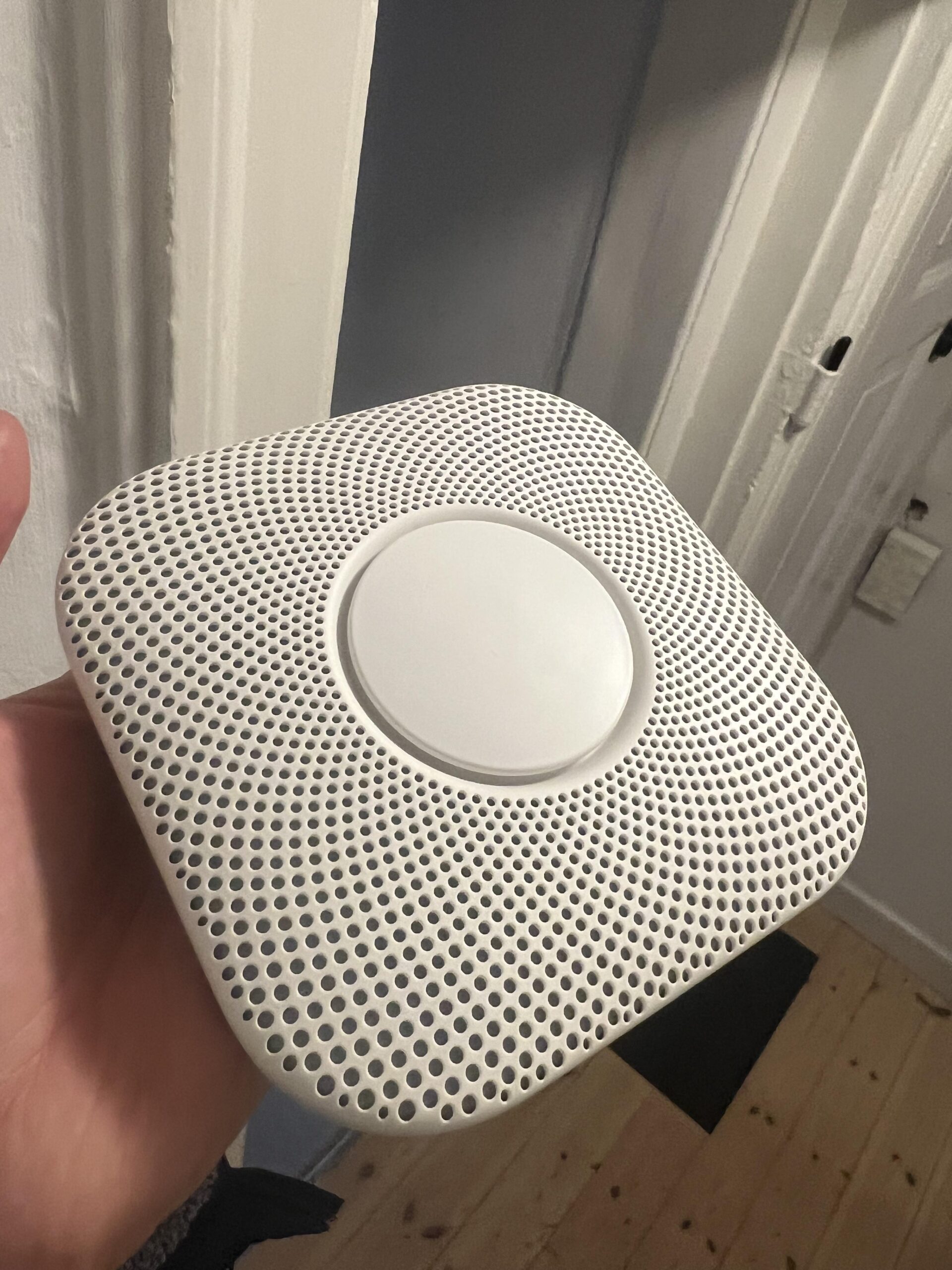
I bought my battery-powered Google Nest Protect 2nd Gen on January 30, 2024, and it has been running continuously ever since. In nearly three years of ownership, I have had no hardware faults, no random false alarms and no battery warning — even though I keep Pathlight enabled on Low every night.
The feature I value most is not the app or the design. It is the combination of sensitivity, early warning and clear information. When I burn food badly enough to create smoke, Protect warns me before the full siren starts, sends a prompt phone notification and lets me deal with the situation quickly. That has made the product feel reassuring rather than annoying.
Affiliate disclosure: This page contains a paid Amazon link. If you buy through it, Jon Tests may earn a commission at no extra cost to you. I bought my Nest Protect myself from a local Danish retailer at full price and received no product, discount or compensation for this review. As an Amazon Associate I earn from qualifying purchases. The Amazon link is for U.S.-market stock; regional certification, labeling and compatibility can differ from the Danish battery model I tested. Full disclosure.
Google Nest Protect 2nd Gen — 4.7/5
Quick verdict: This is the best smoke alarm I have personally owned. Setup was easy, Wi-Fi has been stable, phone alerts arrive quickly, the spoken warnings are useful and the six original AA lithium batteries are still going after nearly three years in my unit. My main complaint is price — especially because a home may need more than one alarm.
Best for: homeowners and long-term renters who value smart alerts, voice warnings, smoke + CO detection and low-maintenance ownership.
Skip if: budget matters more than smart features, you need several alarms at once, or you are buying old stock without checking the manufacture/replace-by date.
2026 buying note: Google Store now marks Nest Protect as no longer available, and Google points owners toward a First Alert smart smoke/CO alarm as the replacement path. If you buy remaining Nest Protect inventory, check the manufacture date immediately because the 10-year service life runs from manufacture, not purchase.
- No faults or unexplained false alarms in nearly three years
- Prompt phone notifications when smoke is detected
- Heads-Up warning gives me time to deal with cooking smoke before the full siren
- Clear spoken alerts instead of meaningless beeps
- Original six AA lithium batteries still working in my unit
- Pathlight is genuinely useful every night
- App history gives a clear record of alerts and tests
- Expensive if you need multiple alarms
- Google no longer sells Nest Protect directly
- Remaining retail stock may already be partway through its 10-year life
- Changing Wi-Fi required reconnecting it when I changed network credentials
- Smart features are useful, but not necessary for every buyer
Bottom line
As an ownership experience, I would buy the Nest Protect again. As a new purchase in 2026, I would be more selective: I would check the manufacture date before keeping old stock and compare it with Google’s current First Alert replacement before paying a premium.
How I tested the Google Nest Protect
- Purchased: January 30, 2024 from a local Danish retailer
- Price paid: 969 DKK (about US$141 at the January 2024 exchange rate) for the alarm; full price, no sponsorship or review agreement
- Exact unit: European battery model A13, Type B
- Power: six AA lithium batteries; I am still using the original set
- Use: continuous 24/7 operation since purchase
- Home: 54 m² apartment
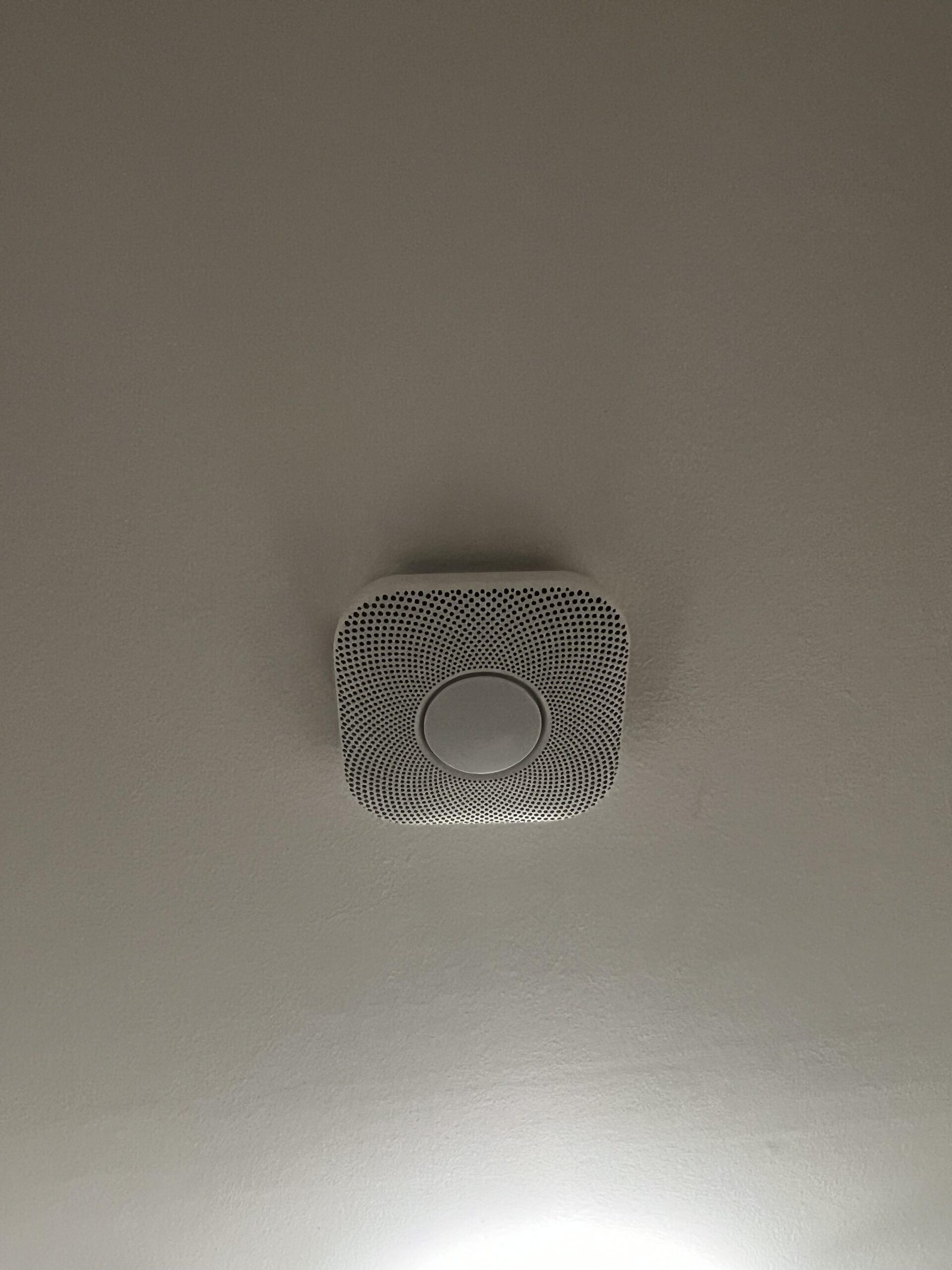
- Placement: ceiling-mounted in the central hallway near the kitchen, living area and bathroom
- Pathlight: enabled on Low every night
- Real smoke events: cooking smoke from burnt eggs/popcorn and similar kitchen mistakes
- CO events: none, so I cannot personally evaluate real-world CO detection performance
I also checked the physical label on my exact unit. It shows a manufacture date of August 2022 and a replace-by date of August 2032. I am deliberately not publishing the full rear-label photo because it contains device-specific setup information, a QR code and a serial number.
One important caveat: my single-alarm setup is not a placement recommendation
Safety note: I currently use one Nest Protect in the most central part of my 54 m² apartment. That describes my setup; it does not mean one alarm is sufficient for a home. U.S. Fire Administration guidance recommends smoke alarms in every sleeping room, outside each separate sleeping area and on every level of a home. Follow your local fire code and the alarm manufacturer’s placement instructions.
This is also why price is my biggest criticism. I like this alarm enough that I would prefer broader coverage, but buying several premium smart alarms gets expensive quickly.
Installation took me about five minutes
Physical installation was extremely easy in my apartment. I used the included mounting base and screws, and I did not need to drill new holes. App and Wi-Fi setup took around five minutes as well.
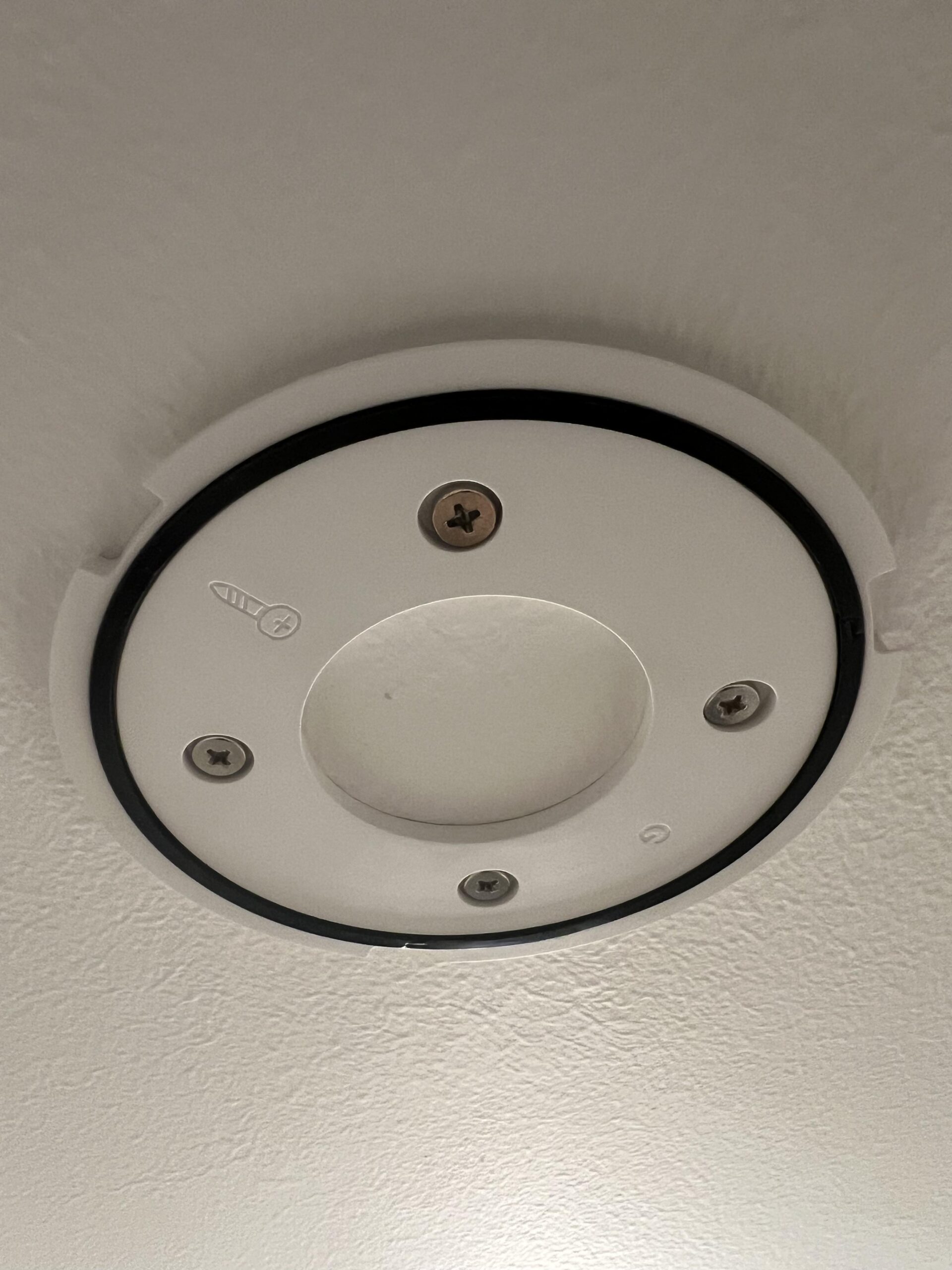
I am comfortable with technology, so I would not assume everyone will finish app setup in five minutes. But I found the process straightforward. In nearly three years I have only had to reconnect it once, when I changed my Wi-Fi network and password.
The early smoke warning is the feature I trust most
My real smoke experience has been ordinary cooking mistakes rather than an actual home fire: burnt eggs, popcorn and similar situations when I failed to ventilate quickly enough.
What I like is the sequence. The alarm is sensitive enough to notice the smoke, but instead of immediately becoming a screaming nuisance it gives me a spoken warning first. I usually receive a phone notification promptly as well. If I know the cause is burnt food and it is safe, a simple press of the large button can stop the warning before it becomes a full siren.
Google calls this lower-level warning Heads-Up. Its current support documentation also confirms that 2nd-gen Protect can be silenced with the physical button or compatible app in situations where smoke levels are not too high.
I have had no unexplained false alarms. That matters to me because an alarm that cries wolf too often is easy to resent or ignore. In my use, Nest Protect has been sensitive without becoming irritating.
The phone notifications are genuinely useful when I am away
I rarely open the app just to look at the device — probably only a few times in almost three years. But I still benefit from the app because notifications come to me instead of requiring me to remember to check anything.
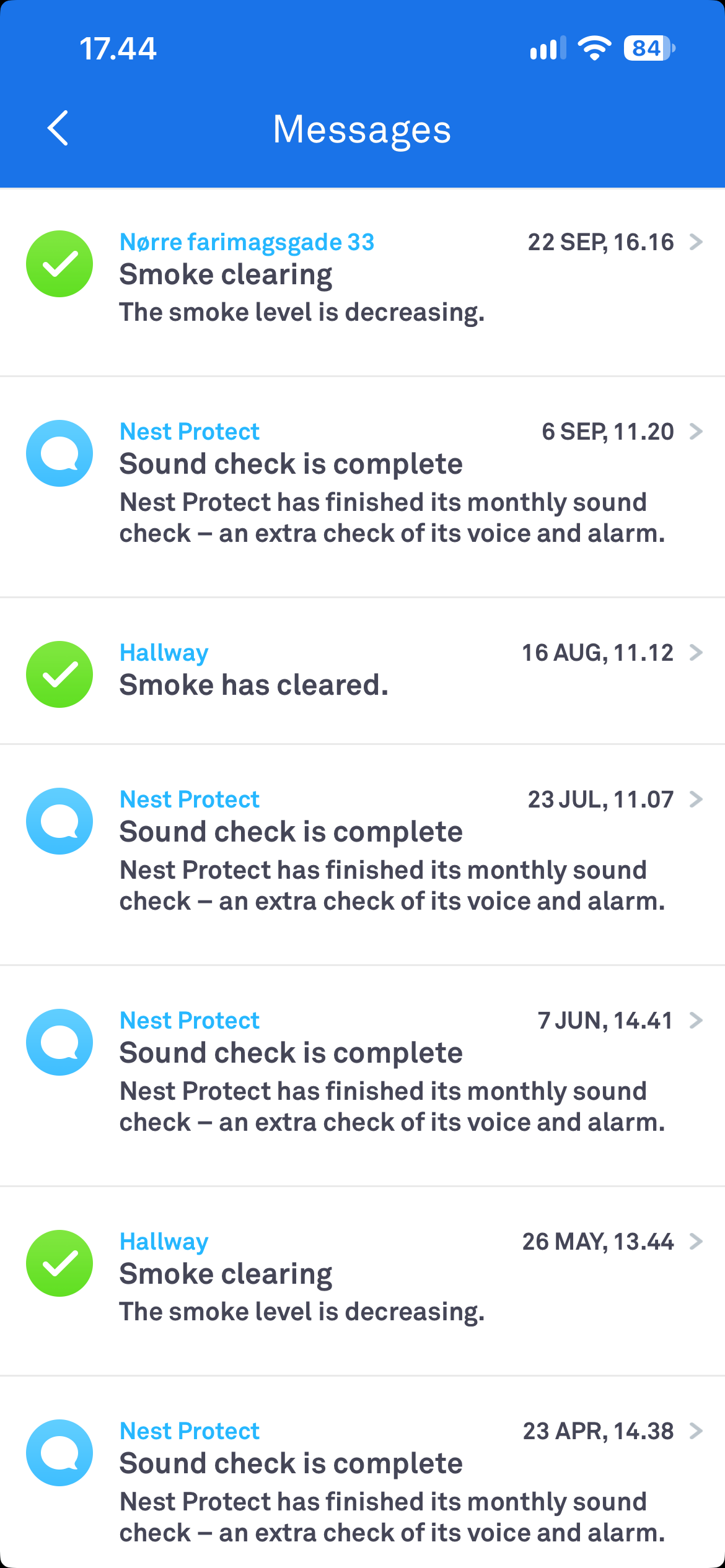
If I am away and get a smoke notification while my girlfriend is home, I can call or message her immediately and ask whether something is burning. If nobody is home, a remote alert gives me information I would not get from a conventional standalone alarm.
I would not say the app “prevents fires.” The alarm detects smoke and sends alerts; what happens next depends on the situation, connectivity and the person’s response. But earlier information can give you a chance to investigate sooner.
Protect History is simple and useful
The event history is one of those features I do not need every day but really appreciate when something happens. It gives me a clear record of when the alarm detected smoke and when tests occurred.
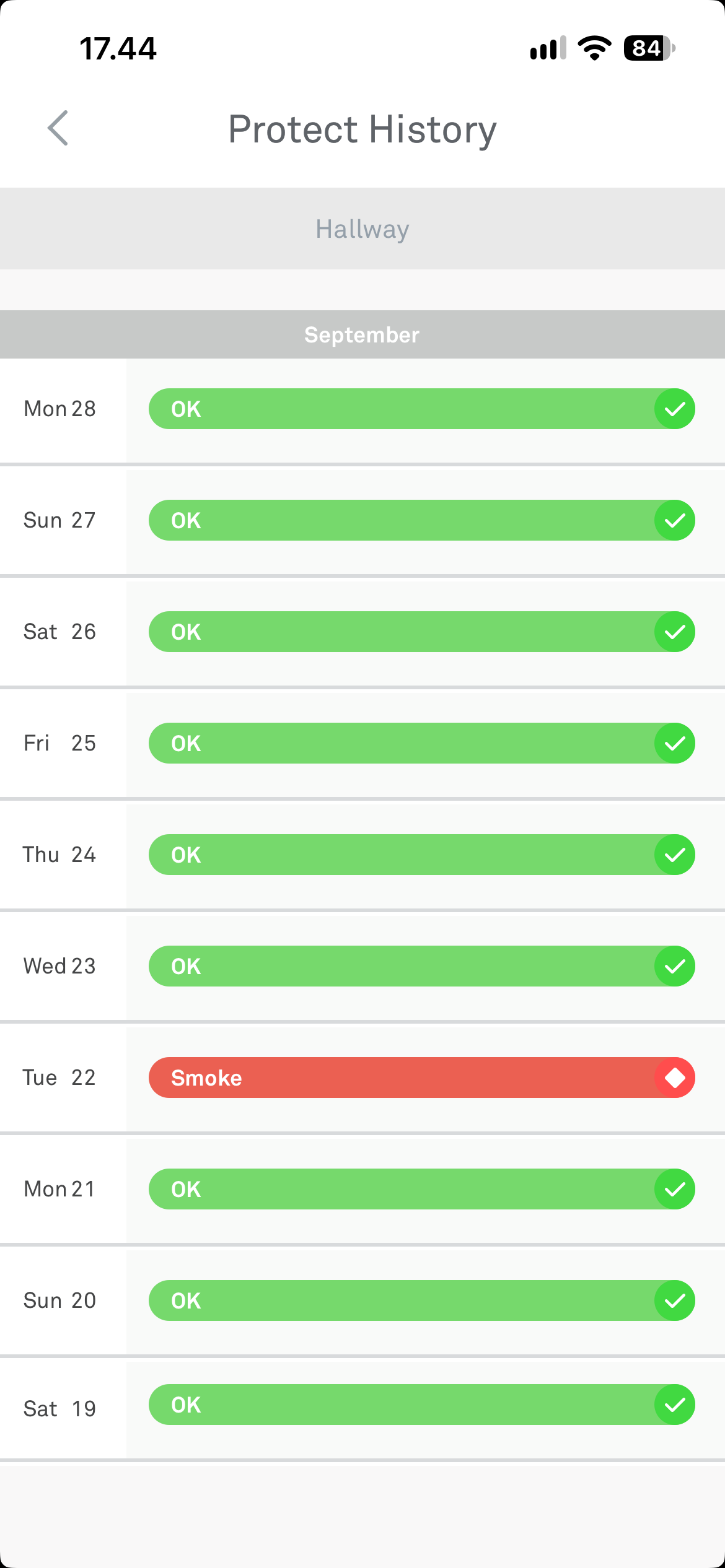
Google has also expanded Nest Protect support in the Google Home app, so the product is not dependent only on the older Nest app experience.
Battery life has been exceptional in my unit
This is the part of my long-term test that surprised me most. My battery-powered Protect uses six AA cells, has been active 24/7 since January 2024 and runs Pathlight every night on Low. I have not replaced the batteries once and I have not received a low-battery warning.
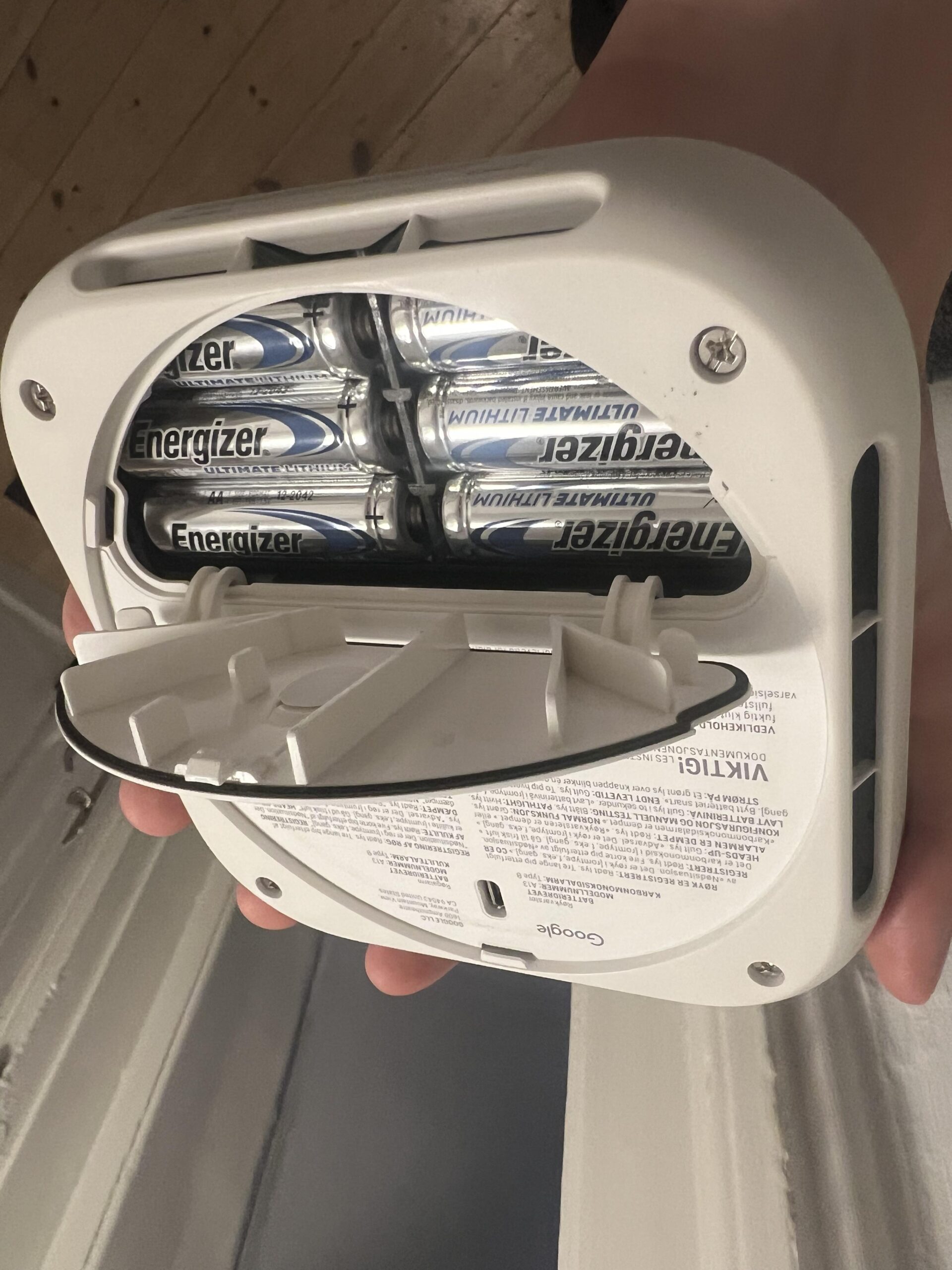
Google specifies six Energizer Ultimate Lithium L91 AA batteries for the battery-powered 2nd-gen Nest Protect and specifically warns against substituting rechargeable or alkaline cells. My experience should not be read as a guaranteed battery-life figure for every home; Pathlight usage, tests, alarms, wireless conditions and battery age can all differ.
Pathlight sounded gimmicky — I now use it every night
I originally viewed the motion-activated light as a bonus. It has turned into one of my favorite everyday features.
When I walk through the hallway at night to use the bathroom or come home late, the ring lights up automatically. I keep brightness on Low because that is enough to see where I am going without filling the apartment with light.
It also makes the Nest Protect feel like a better-designed household object rather than a plastic alarm I want to hide. Mine blends into the ceiling well enough that I usually do not notice it.
The spoken alerts are much better than cryptic beeps
I strongly prefer the voice system to a traditional alarm that simply chirps or screams. Nest Protect tells me what is happening in clear language, and the voice is loud enough to understand without being unpleasant during routine warnings or tests.
The full siren is still properly loud. I expect it would wake me quickly, which is exactly what I want from a life-safety device.
Nearly three years with no faults
My unit has not required a reset for a hardware fault, has not developed random chirping, has not dropped off Wi-Fi under normal operation and has not shown a sensor error. The only connectivity interruption happened when I deliberately replaced my Wi-Fi network credentials.
Physically it is a little dusty because I do not clean it often, but it still looks close to new.
This is first-hand evidence about my unit, not a failure-rate study across all Nest Protects.
The 10-year life starts before you buy it
This is the most important buying detail I would check if shopping for one today.
Google states that a 2nd-gen Nest Protect must be replaced 10 years after its manufacture date. My exact unit was manufactured in August 2022, but I bought it in January 2024. In other words, some of its certified service life had already elapsed while it was in the supply chain.
That mattered less when Nest Protect was a current retail product. It matters much more now because Google Store lists the product as no longer available, while remaining third-party inventory may continue to be sold.
If I were buying from Amazon today, I would check the manufacture and replace-by dates immediately after delivery. An unusually old unit is not equivalent in value to recently manufactured stock.
Google no longer sells Nest Protect directly
This review has an unusual split verdict: I rate my ownership experience very highly, but buying one new in 2026 requires more caution.
Google Store currently marks Nest Protect as no longer available. Google’s own replacement guidance points 2nd-gen owners toward the First Alert Smart Smoke & Carbon Monoxide Alarm for use with Google Home.
That does not make my Nest Protect obsolete overnight. Google still provides Nest Protect support information and Google Home integration. But if mine failed tomorrow, I would compare the current First Alert replacement before automatically buying old Nest Protect inventory.
Check remaining Nest Protect stock on Amazon US (paid link) →
My European model vs the U.S. Amazon listing
I physically tested the European model A13, Type B, battery-powered version. The U.S. Amazon listing linked on this page identifies its battery model as S3000BWES. Both are 2nd-generation Nest Protect smoke + CO alarms, but they are regional products with different certification/market identifiers.
I therefore do not present my European serial/model label as proof of every U.S.-specific specification. My first-hand observations cover the features I actually used: battery operation, spoken smoke warnings, app notifications, Pathlight, Wi-Fi behavior, self-testing and long-term reliability.
Compared with ordinary smoke alarms I have used
I have used conventional inexpensive smoke alarms before. My experience with those is why I was willing to spend more here.
The differences I notice most are:
- traditional alarms do not notify me when I am away;
- Nest Protect gives context before the full siren rather than only making noise;
- I get visible app history and device status;
- the Pathlight adds daily usefulness;
- my Nest’s original battery set has lasted far longer than I expected.
I would not claim that every cheap smoke alarm is unreliable. A properly certified conventional alarm can perform the core safety job without smart features. Nest Protect’s advantage for me is the user experience and remote information around that core job.
Why I rate the Google Nest Protect 2nd Gen 4.7/5
My overall rating is 4.7/5. I am deliberately rating the ownership experience, not pretending I performed a laboratory smoke/CO certification test.
| Criterion | Weight | Score | Evidence from my use |
|---|---|---|---|
| Reliability & nuisance-alarm behavior | 25% | 4.8/5 | No hardware faults or unexplained false alarms; cooking-smoke warnings have behaved predictably. |
| Smart alerts & app | 20% | 4.8/5 | Prompt notifications, useful history and clear warnings; only minor account/app friction. |
| Battery & maintenance | 15% | 5.0/5 | Original six lithium AAs are still running in my unit with Pathlight on Low. |
| Setup & usability | 15% | 4.8/5 | Roughly five-minute setup for me, simple mounting and stable Wi-Fi except after my network change. |
| Everyday safety UX | 10% | 4.8/5 | Clear voice, Heads-Up warnings, self-testing and an appropriately loud siren. |
| Design & Pathlight | 5% | 4.8/5 | Unobtrusive on the ceiling and the night light is genuinely useful. |
| Value | 10% | 3.5/5 | I think my 969 DKK (about US$141 at the January 2024 exchange rate) purchase was worth it, but outfitting a home with several is expensive. |
| Weighted rating | 4.7/5 | Rounded to one decimal place. | |
Who should buy one?
- Good fit: homeowners and long-term renters who value phone alerts, smart-home integration and smoke + CO detection.
- Good fit: people who are often away from home and value remote awareness.
- Good fit: buyers willing to pay extra for polished safety UX and low day-to-day maintenance.
- Look elsewhere: anyone on a tight budget who needs several alarms at once.
- Look elsewhere: buyers who only want basic certified smoke detection and do not care about smart features.
- Be cautious: anyone buying remaining Nest Protect stock without checking manufacture date and remaining service life.
Would I buy it again?
Yes — but my answer is different in 2026 than it would have been in 2024.
If an identical fresh unit were still a current product at the price I paid, I would buy it again. The reliability, battery life, notifications, clear voice warnings and Pathlight have all justified the premium for me.
Today I would first compare Google’s recommended First Alert replacement. I would also consider whether two less expensive smart alarms could give my apartment better coverage for similar money, because the biggest weakness of a premium alarm is that price can discourage you from buying enough units.
Frequently asked questions
How long have my Nest Protect batteries lasted?
I am still using the original six AA lithium batteries from January 2024, with Pathlight enabled on Low nightly. That is my unit’s result, not a guaranteed battery-life figure.
Does Nest Protect warn you before the full alarm?
In my cooking-smoke events, yes. It has given me a spoken Heads-Up warning and phone notification before the full siren, which is one of my favorite features.
Have I had false alarms?
No unexplained ones. It has reacted to real cooking smoke when I burned food and did not ventilate quickly enough.
Does Nest Protect detect carbon monoxide?
Yes, the product includes a CO sensor, but I have never experienced a real CO event and therefore cannot personally evaluate its detection performance.
Is Nest Protect still sold by Google?
Google Store now marks Nest Protect as no longer available. Google points owners toward the First Alert Smart Smoke & Carbon Monoxide Alarm as a compatible replacement path.
Should you buy old Nest Protect stock?
Only after checking the manufacture and replace-by dates. Google says 2nd-gen Protect must be replaced 10 years after manufacture, so old inventory can have materially less remaining service life.
Sources and review method
- Google Store — Nest Protect 2nd Gen specifications / current availability
- Google — Nest Protect battery requirements
- Google — replacing Nest Protect after expiration and First Alert replacement
- Google — Nest Protect 10-year expiration
- Google — Heads-Up / silencing behavior
- U.S. Fire Administration — smoke alarm placement guidance
For more about how Jon Tests handles long-term product reviews, see How I Test.