ADE KE2500-1 Digital Kitchen Scale Review: My 1-Day Test
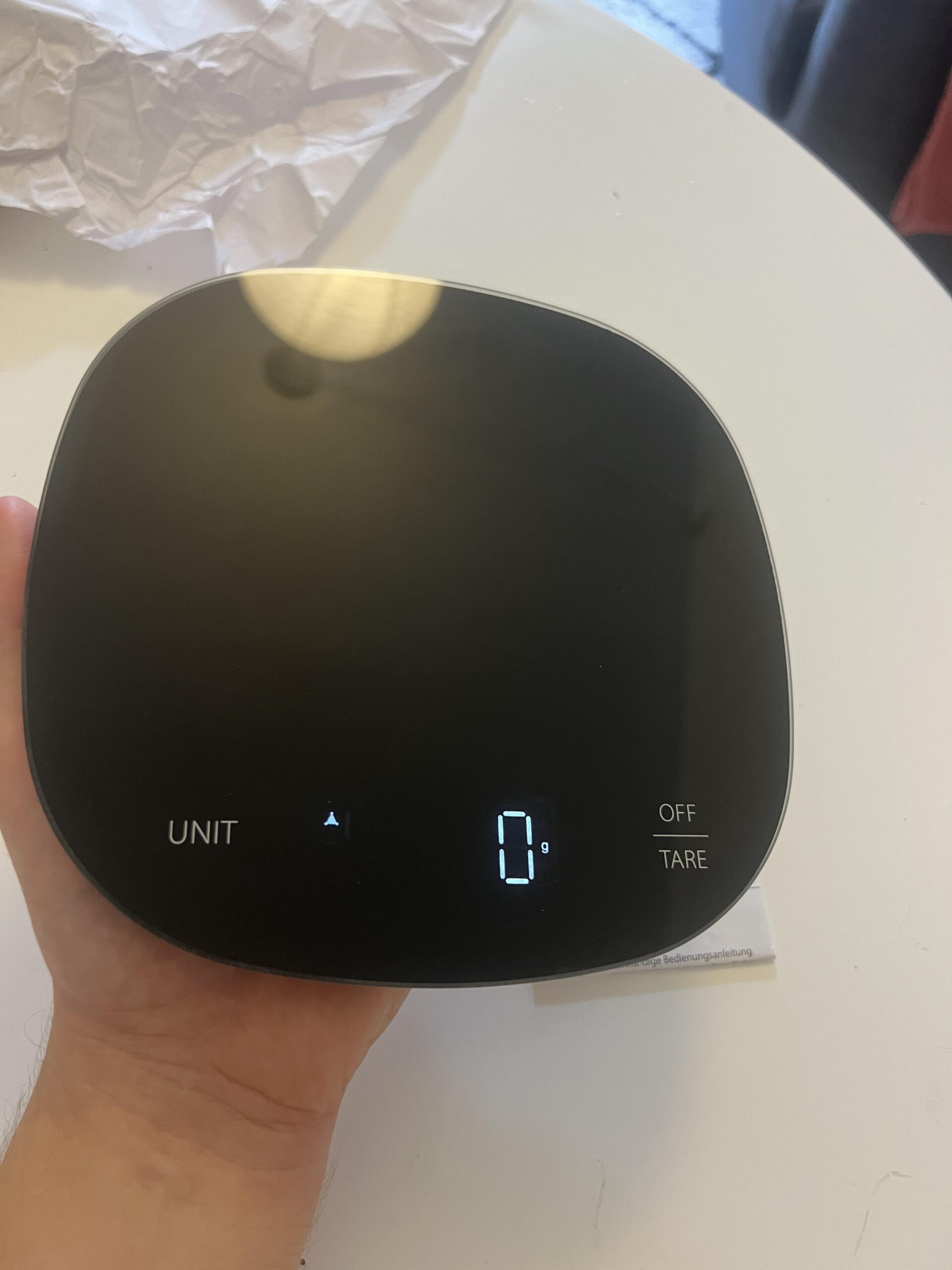
My ADE KE2500-1 digital kitchen scale review after one day of hands-on testing: 4.1/5. I bought this black-glass 15 kg kitchen scale on October 3, 2026 for just €7.95, with my own money and no discount or compensation. I really like the large, easy-to-read illuminated display, quick touch controls, stable platform and easy-clean glass surface. Its advertised 15 kg maximum capacity also stands out at this price.
But I discovered a drawback in the exact kind of weighing where some cooks need their scale most: very light ingredients. After I zeroed the scale and placed a single cashew nut on it, the screen still read 0 g. I estimate that nut was around 2 g, but I did not independently verify its actual mass. For me, that is enough to hesitate before recommending this scale for single-digit-gram amounts, despite its advertised 1 g display increments.
Would I choose it again? Probably not as my personal first choice: another kitchen scale I tried has a design I prefer and seemed to handle very light objects better. I am saving the full comparison and rankings for a separately tested best-kitchen-scales guide. On its own, though, this ADE is very good value for ordinary kitchen weighing if you do not need reliable measurements of tiny ingredients.
Affiliate disclosure: JonTests may earn a commission from qualifying purchases through marked Amazon links, at no added cost to you. This exact scale was bought by me, without a free product, discount or compensation. The first-hand findings and editorial score are independent of commissions. Read our full affiliate disclosure. The owner-provided Amazon shortlink is used unchanged below; its redirect and tracking have not been independently confirmed, so check the exact black ADE KE2500-1 variant when shopping.
My test: 1 day · repeatability checks · cashew and larger objects
I paid: €7.95 on Oct 3, 2026 · black KE2500-1
Paid Amazon link · select exact ADE KE2500-1 15 kg scale · product selection/availability may change · shortlink redirect/tracking not independently verified
ADE KE2500-1 15 kg Kitchen Scale — 4.1/5
Quick verdict: Excellent features for €7.95: one of the clearest illuminated displays I have tried, fast touch buttons, useful tare and unit switching, a stable glass top and an advertised 15 kg capacity. My repeated ordinary-item weighings gave the same reading.
Big drawback: My single cashew nut did not register at all: 0 g even after I had zeroed the scale. A 1 g display increment is not proof that it reliably detects every object weighing a gram or two.
Best for: Budget-minded home cooks weighing everyday ingredients, bowls and heavier items, who value a clear display and more weighing headroom.
Skip if: You measure individual spices, tiny quantities or small ingredients and need verified sub-10 g performance. Consider a separately verified precision scale for that use.
My buying choice: Good value, but my personal runner-up because another scale I tried handled low weights better and suited my design preferences.
What worked well
- Really bright, legible display even with larger items on top
- Quick, responsive touch controls and unit changing
- Tare worked fine during my short test
- My repeat weighings showed consistent results
- Stable glass platform with easy wipe-clean finish
- Advertised 15 kg limit and high practical capacity for the price
- Extra surface room feels useful for bowls and containers
- Only €7.95 from my self-funded purchase
What held it back
- Failed to register a single light cashew after zeroing (0 g)
- My test raises doubts for very small quantities under roughly 10 g
- Only one test day: no multi-month reliability or battery-life evidence
- Some shoppers will prefer a smaller scale or different design
- Another scale I tested would be my personal first choice
Bottom line
4.1/5, with a meaningful warning: A genuinely good budget kitchen scale for most ordinary portions. Its display, ease of use and price impressed me, but I would not choose it for weighing one or two grams at a time based on this one-day test.
Why the zero-gram cashew result matters
I did not assume the nut weighed zero. I reset the scale to zero first, set one cashew on its surface and watched the display stay at 0 g. I expected a small nonzero result, perhaps around 2 g, although I did not place it on an independently calibrated reference scale. This is a real, repeatable-in-context use concern from my own test, not proof that every KE2500-1 behaves the same or that the precise detection threshold is 10 g.
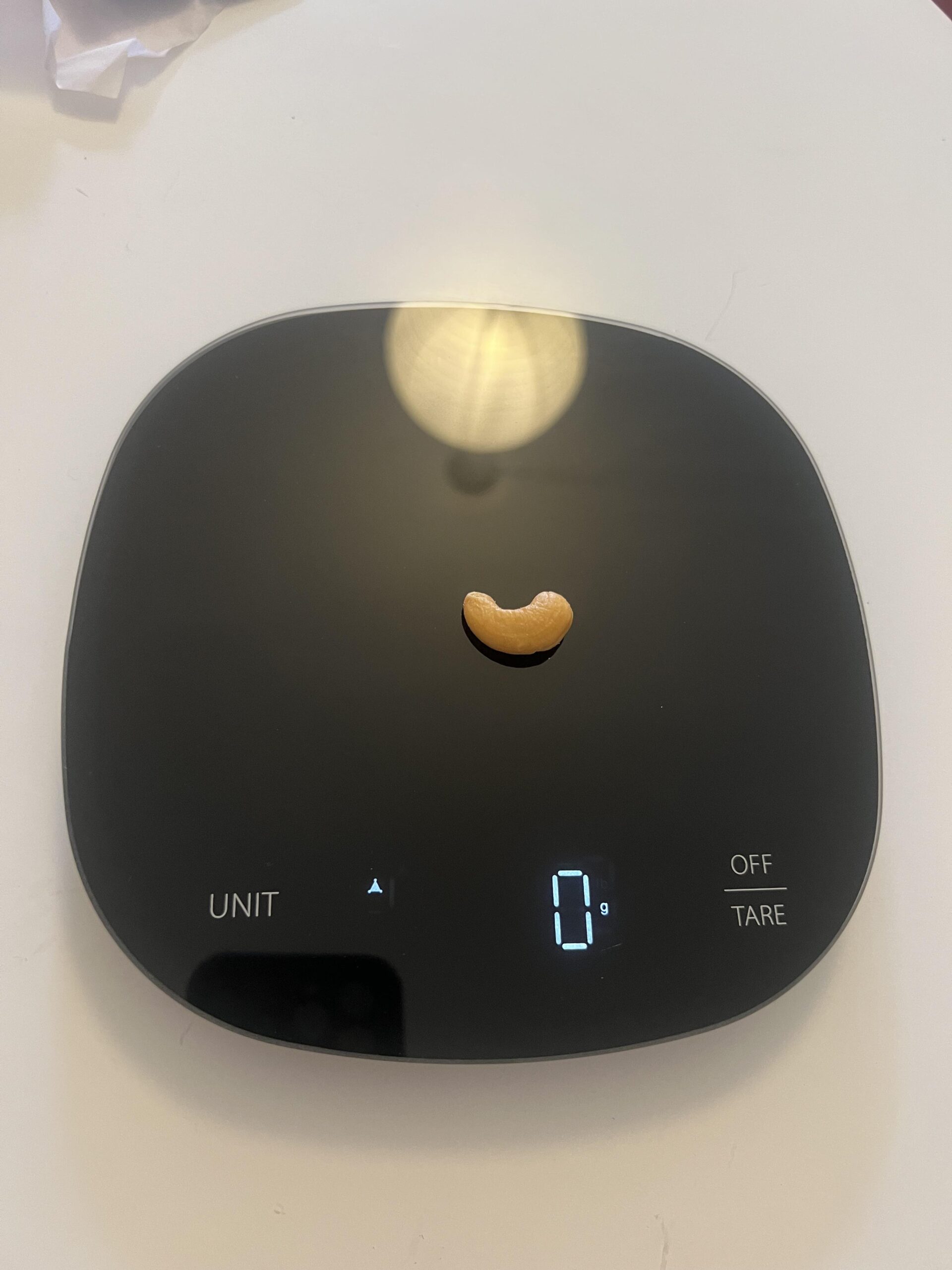
ADE advertises 1 g graduations. That means the digital result is shown in one-gram steps; it does not by itself guarantee the scale can reliably sense a one- or two-gram addition from an unloaded platform. For baking yeast, spices or other tiny amounts where a gram matters, I would want better independently verified low-weight performance, perhaps from a purpose-built precision scale.
I would not describe the whole scale as broadly inaccurate based on one light object. It is more precise to say that the smallest item I tested was not detected, and that the results leave me cautious for single-digit-gram use. I did not conduct a systematic test at 1, 2, 3, 5, 7 or 9 g with certified weights, so I cannot draw a numerical error curve or establish the minimum reliable load.
Everyday food weighing and repeatability
I also weighed larger objects, including a one-liter milk/oat-drink carton, and tried the scale with a pan and other items. The results seemed reasonably plausible to me and, when I weighed the same item again, the display gave me the same value. That is a reassuring indication of short-term repeatability, but a repeated reading can still be biased. I did not verify the mass of the objects with a calibrated reference.
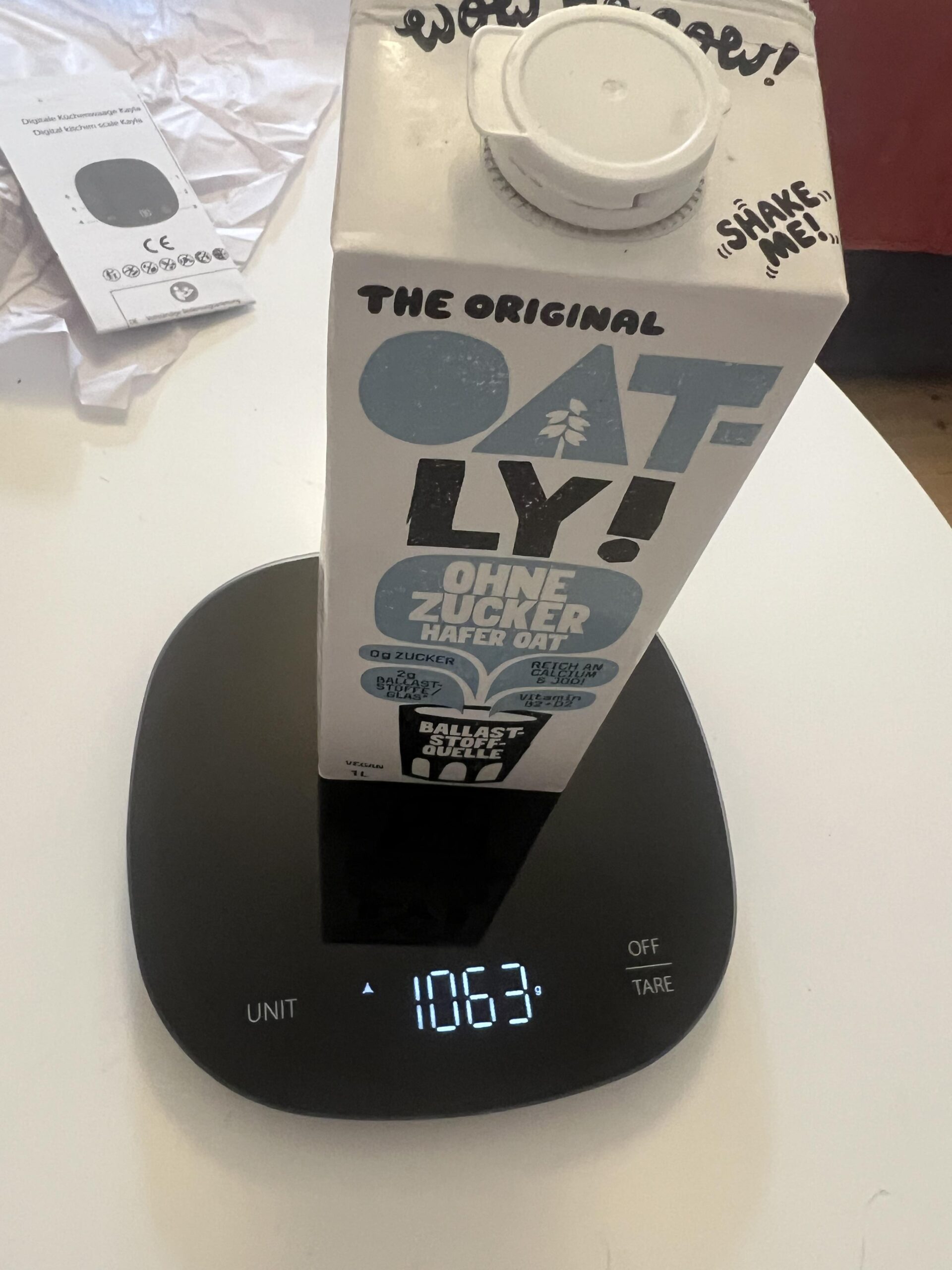
The distinction matters: repeatability is whether the scale shows the same number for the same object; accuracy is whether that number matches the true mass. My one-day tests support the former better than the latter. For normal kitchen portions, I was satisfied with the practical result.
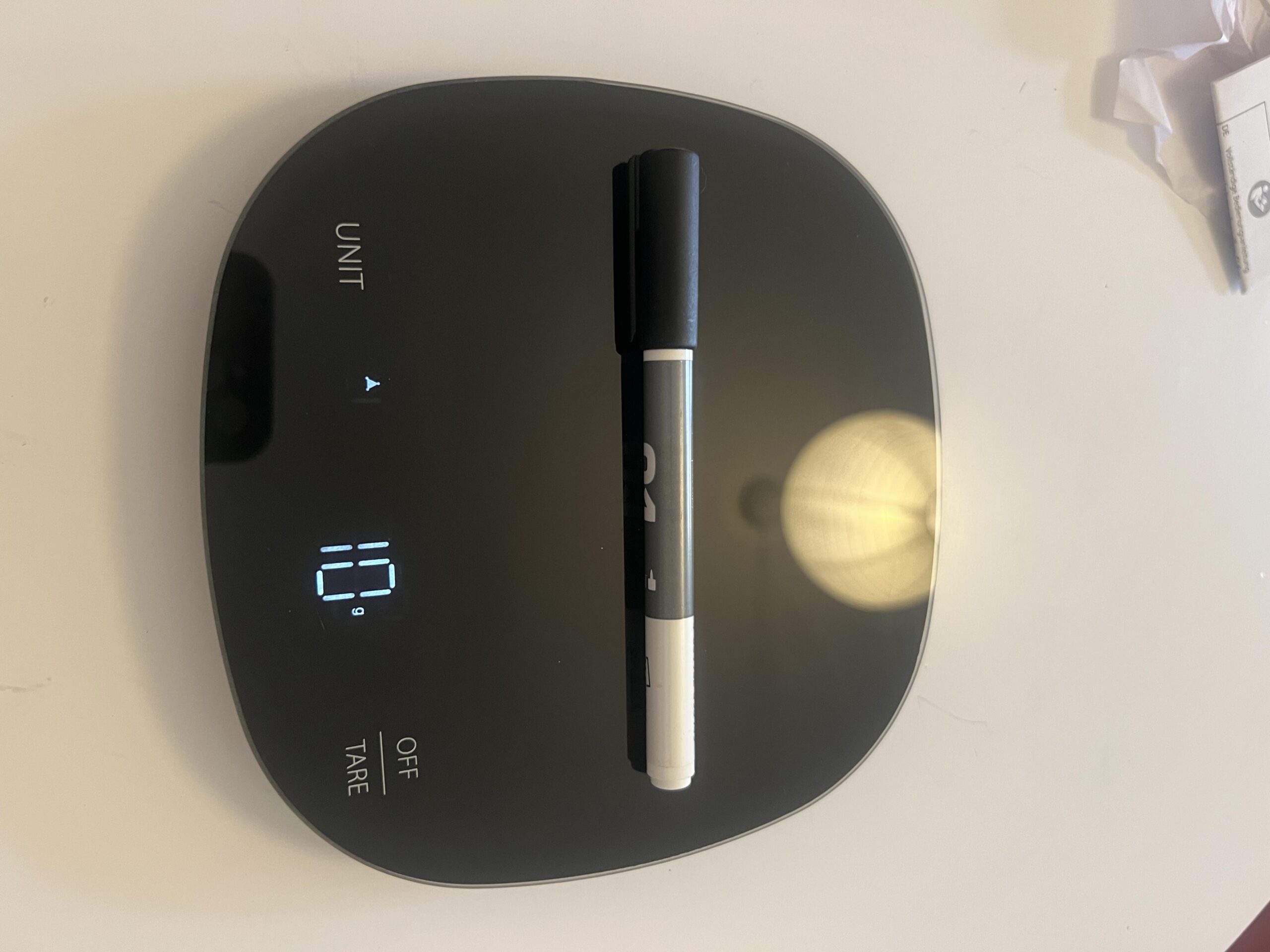
The large illuminated display is a standout
The display was one of my favorite features. It is bright, high-contrast and among the easiest to read of the kitchen scales I have personally tried. I could still see the result conveniently with an object placed on the platform, something I value when using a large bowl or weighing awkward items.
I also liked how the touch buttons responded. Switching units and using the tare control worked smoothly and quickly. I had no trouble learning the basics. I did not time the scale’s response or record every possible operating mode, but its everyday interface made a good first impression.
Tare function, controls and what they really do
The tare function subtracts the weight of a bowl or other container so you can add ingredients and read the net weight. In my use the button behaved normally, the screen reacted quickly, and changing weighing units was straightforward. ADE lists grams (g), kilograms (kg) and pounds (lb) as units for this model.
I did not log a precise maximum tare capacity or a sequence of ingredients in a long baking session, so I would not claim unusually advanced tare performance. My verdict is simply that the basic controls do their job and the light-up display makes the numbers easy to follow.
Size, glass surface and cleaning
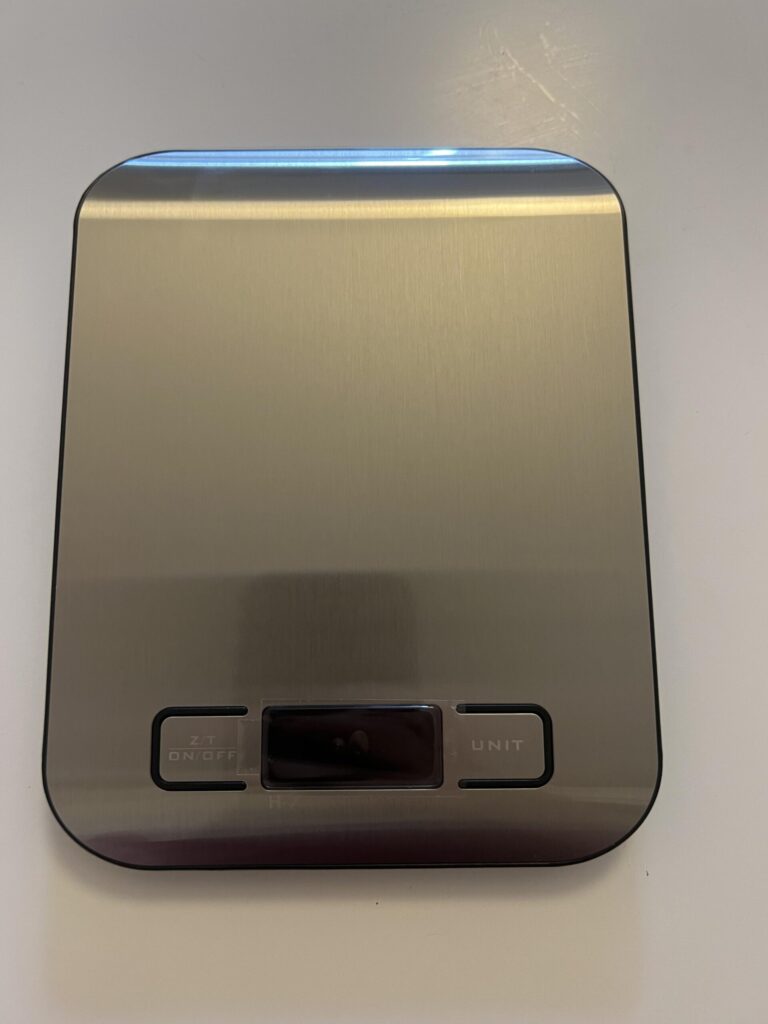
I like the black glass finish. It feels reasonably solid and the scale stood stable on my kitchen surface during testing. I also liked having a fairly generous area to set objects down, even though ADE markets the nominal 18 cm body as compact. Relative to some of the other scales I have tried, it feels a little larger. Whether that is good or bad depends on your available drawer space and the bowls you use.
After a session, I could wipe the glass top with a cleaning cloth. This is a meaningful day-to-day advantage compared with awkward crevices or textured surfaces, although I have not evaluated scratch resistance, staining over months or damage from spills. I saw no issues with the housing or feet during this short test.
15 kg capacity: useful headroom, not a tested 15 kg load
The standout specification is ADE’s stated 15 kg maximum capacity, considerably more than many entry-level scales marketed for lighter kitchen quantities. For home bakers using heavy mixing bowls, big batches or containers, the extra capacity could be useful. At €7.95 that headline specification contributes to the value proposition.
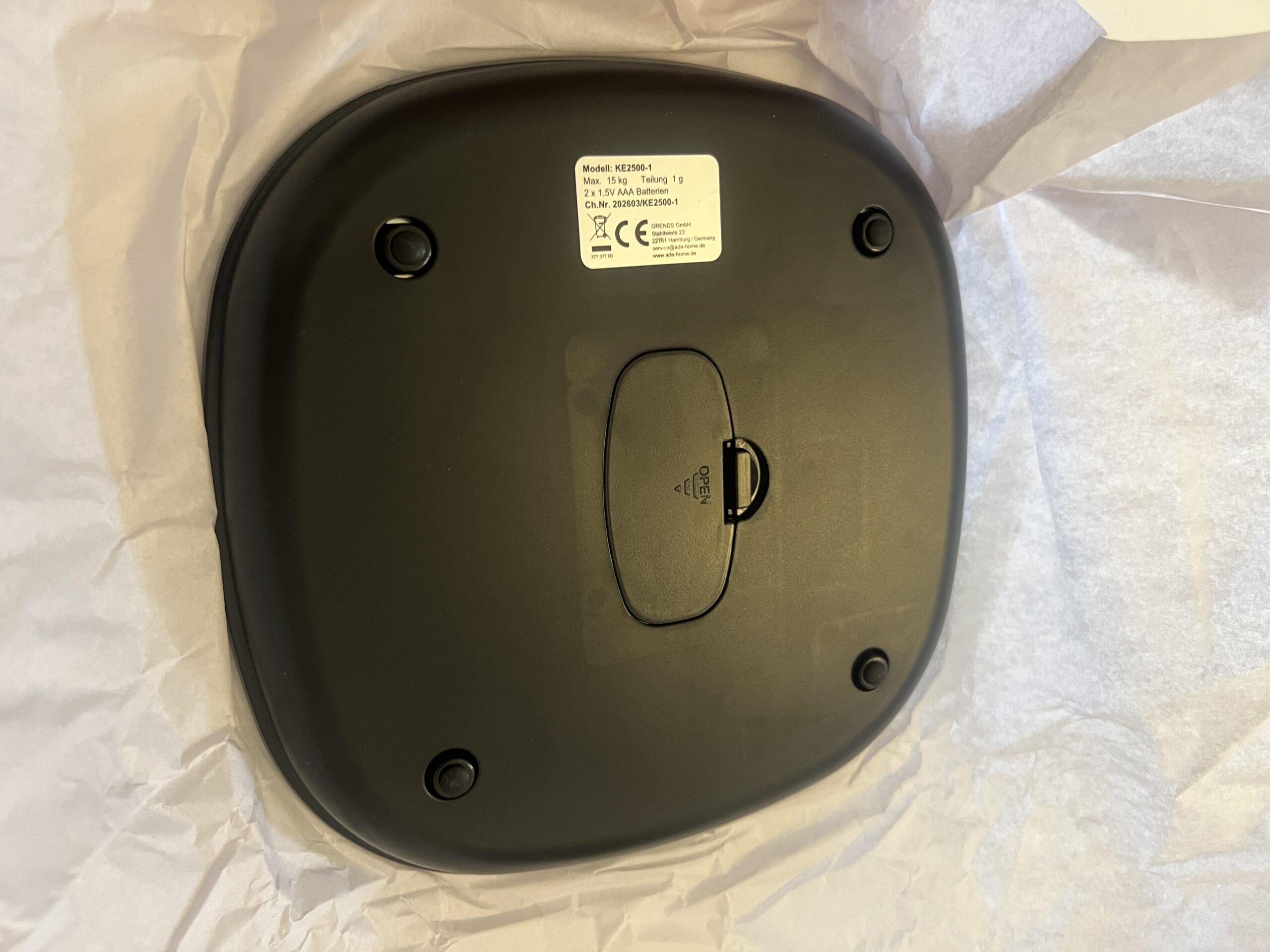
I did not load a certified 15 kg mass onto the scale, or independently establish its accuracy at high loads. The capacity is therefore a manufacturer statement confirmed by the original retail box and underside label, not a result I personally stress-tested.
Batteries, auto-off and first-day reliability
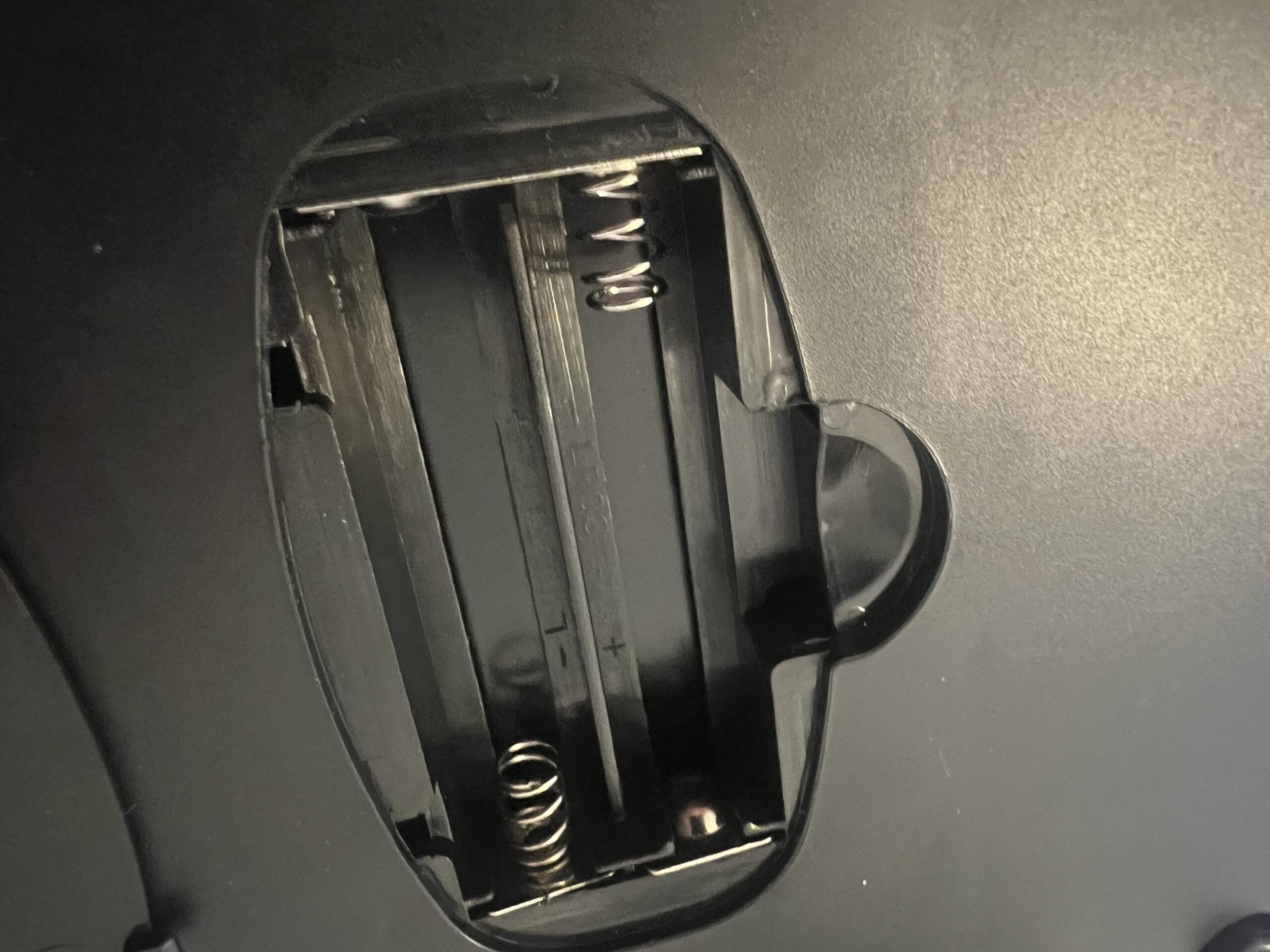
My scale takes two AAA batteries, included according to ADE. The battery compartment in my original photo confirms the type. The manufacturer says it switches off automatically after about two minutes and provides a battery-status indicator. I did not encounter any battery or shutdown problem during the one-day trial.
That is not evidence of long battery life or multi-year electronic reliability. I have not lived with this unit for months, changed a set of batteries or checked whether automatic switch-off happens at exactly the advertised interval.
ADE KE2500-1 exact specifications
ADE’s official KE2500-1 product listing and my original packaging identify the model. These are listed product specifications rather than engineering values independently validated during my one-day test.
| Feature | ADE stated specification or documented detail |
|---|---|
| Model / color | ADE KE2500-1, black glass |
| Maximum load | 15 kg (manufacturer claim; not stress-tested) |
| Display increment | 1 g (does not guarantee every 1–2 g addition is detected) |
| Weighing units | g, kg and lb |
| Weighing surface/body | About 18 cm with rounded form and glass top |
| Controls | Touch-sensitive unit selection and tare |
| Display | Illuminated LED-style digits; excellent legibility in my trial |
| Power | 2 × AAA batteries; included per ADE |
| Automatic switch-off | ADE states approximately 2 minutes |
| Stability | Non-slip feet per manufacturer; stood stably in my test |
| Price paid | €7.95 on October 3, 2026 (personal historical price) |

Who should buy it — and who should skip it?
- Good fit: Budget-conscious home cooks who mostly weigh ordinary ingredients, food containers and larger kitchen portions.
- Good fit: Anyone who values large, illuminated digits and responsive controls.
- Good fit: Home bakers attracted to the advertised 15 kg headroom, provided they understand I have not stress-tested that load.
- Think twice: You frequently measure tiny ingredients of just a few grams or need trusted low-weight accuracy.
- Think twice: You want a particularly small scale for a cramped drawer or prefer a different design.
- Think twice: You need documented months-long durability; my review is only a one-day practical evaluation.
Why this is my runner-up, not my favorite kitchen scale
I have tried other kitchen scales. One competing model suited my design preferences better and seemed more capable with very small objects. That is why this ADE would likely be my second choice personally, even though I consider it very good value. I am deliberately not presenting a full seven-scale ranking here: I plan to publish a separately supported comparison once the actual measurements and models for that buying guide are documented.
If you rarely weigh less than 10 g, you may be perfectly happy with this ADE, as I was for the larger objects in my trial. I simply would not buy it with the assumption that the advertised 1 g increment means it can always detect a single small nut or a pinch of spice.
My transparent editorial rating: 4.1/5
This is my one-day, first-hand editorial assessment on a five-star scale, not an Amazon average, calibration certificate or long-term reliability test. I chose six criteria based on what actually mattered in my test. The weights total 100%. Long-term battery life and durability are intentionally not scored because I did not test them over time.
| Criterion | Weight | Score | Evidence or limitation |
|---|---|---|---|
| Ordinary weighing and repeatability | 25% | 4.2/5 | Same item generally returned the same displayed result, but no calibrated reference weights. |
| Very light-weight detection | 20% | 2.0/5 | One cashew showed 0 g after zeroing, despite expected small nonzero mass. |
| Display and controls | 20% | 4.9/5 | Exceptionally readable digits, quick unit switching and responsive tare. |
| Design, stability and cleaning | 15% | 4.6/5 | Stable glass platform, generous room and easy wipe-clean surface; design is subjective. |
| Advertised capacity and practicality | 10% | 4.6/5 | 15 kg listed capacity and everyday usability; max load not independently tested. |
| Value at my price | 10% | 4.9/5 | €7.95 was excellent value for features, provided tiny weights are not your priority. |
Weighted calculation: (4.2 × 0.25) + (2.0 × 0.20) + (4.9 × 0.20) + (4.6 × 0.15) + (4.6 × 0.10) + (4.9 × 0.10) = 4.07, rounded to 4.1/5. The relatively low light-weight score is not hidden by the strong overall value score. See How I Test for our hands-on policy.
Frequently asked questions
Is the ADE KE2500-1 accurate to 1 g?
The manufacturer specifies 1 g graduations. In my trial a cashew expected to weigh a couple of grams did not register, giving a 0 g reading after zeroing. I did not use calibrated reference masses, so I cannot state an exact error specification or a universal detection threshold.
Can it weigh a single cashew or tiny portions of yeast?
I would not rely on it for that without checking your own unit with reference weights. Mine showed 0 g for one cashew. Larger amounts can behave differently, and my experience does not establish the precise weight at which detection becomes reliable.
Can the scale really weigh up to 15 kg?
ADE lists a maximum of 15 kg and the label on my actual unit agrees. I did not put a verified 15 kg load on it, so this is the specified capacity, not a measured performance claim.
Does it work with a bowl, and can I change units?
Yes. The tare button and unit switching worked normally during my use. ADE lists grams, kilograms and pounds. I found the display easy to read with objects on the platform.
Is it worth buying for €7.95?
Yes, if your main priorities are value, an easy-to-read display, a stable glass platform and regular kitchen portions. I would personally choose a different scale for more confidence with very light ingredients, but I still rate the ADE highly for its price.
How long have you tested it?
One day of hands-on weighing. I bought it on October 3, 2026. I cannot honestly claim weeks of continuous daily use, reliable long-term calibration, or tested years of battery life.
Sources, original photos and editorial independence
- ADE official KE2500-1 product listing — model, advertised 15 kg capacity, 1 g increments, size, AAA batteries, units and automatic-off details.
- Owner-supplied Amazon.de listing reference (ASIN B0F4XXP2Q3) — product identification only; not substituted for my supplied affiliate shortlink.
- JonTests: How I Test — editorial method and importance of first-hand evidence.
- JonTests affiliate disclosure — how purchases may support the site.
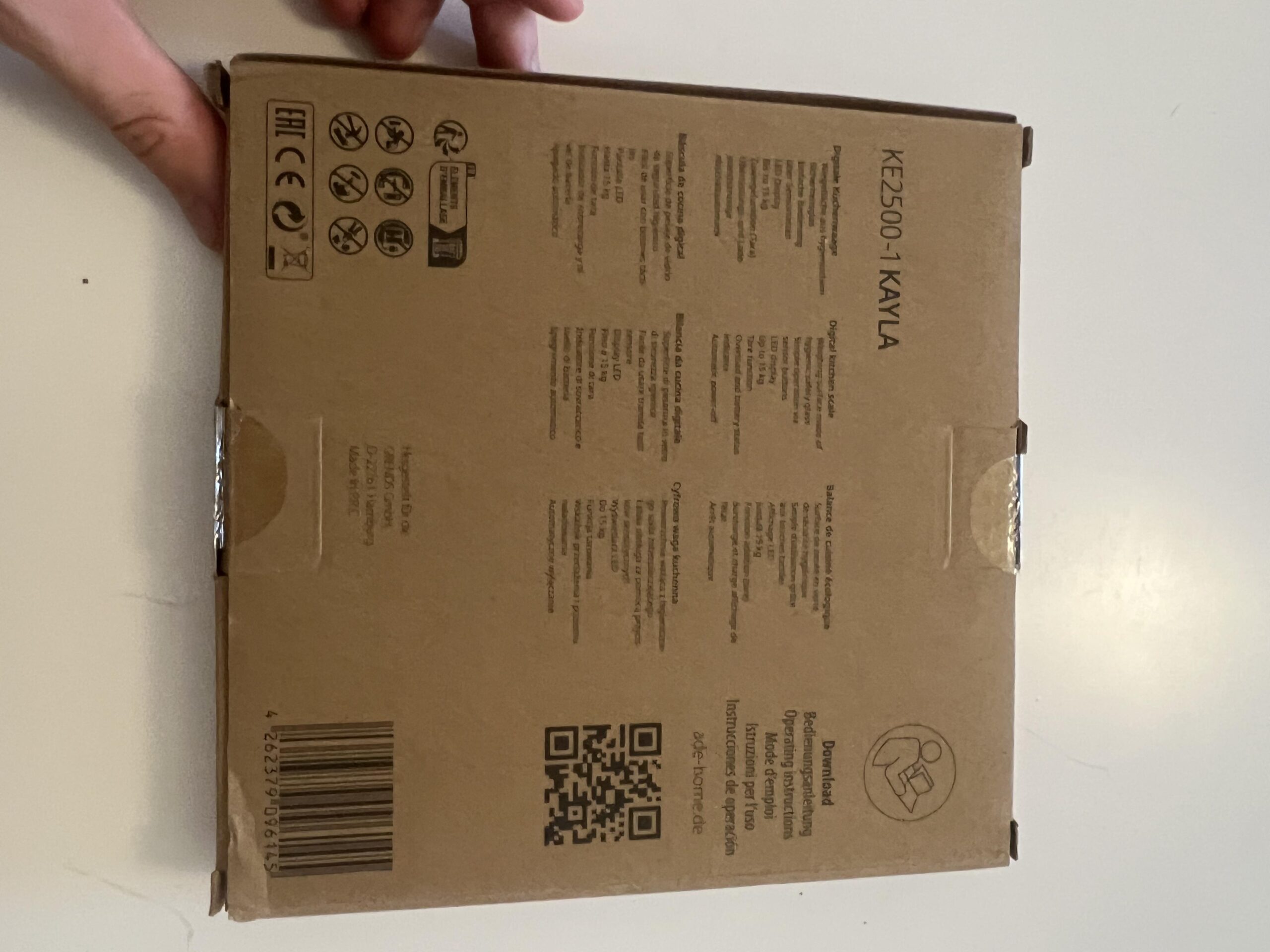
Test disclosure, October 2026: I bought the exact ADE KE2500-1 for €7.95 without compensation or discount and evaluated it on one day with real household items. The photographs are my own. No certified test weights, calibrated instrument cross-check, multiple-unit reliability sample, 15 kg maximum-load test or multi-month durability trial was performed. I have other kitchen scales for a future, separately evidenced buying guide, but I am not ranking those models here. Amazon purchase links use the exact owner-supplied https://link.amazon/B0cwVlarW and sponsored/nofollow attributes; the shortlink redirect, live price and tracking were not independently verified.
Compare the other scales I bought: See my Best Kitchen Scales 2026 guide for an original-photo comparison of 10 weighing tools, the actual small-item readouts, capacity trade-offs and the model I ultimately kept. This individual review remains the full source for this product’s first-hand evidence.